
Last Updated on August 14, 2026 by Sam Wood Worker
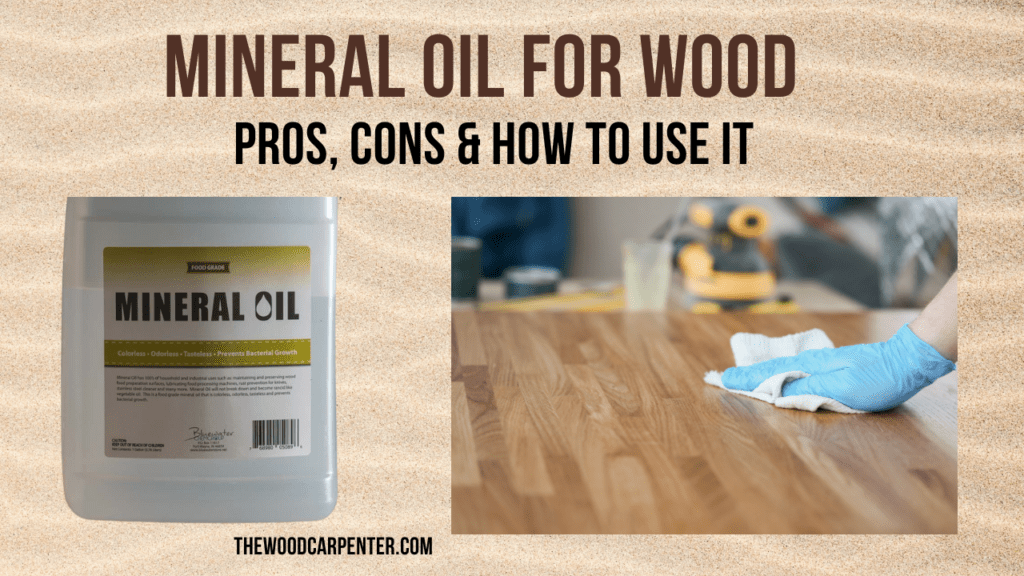
If you’ve ever admired the soft glow of a well-oiled cutting board or the warm tone of a handcrafted salad bowl, you’ve probably seen mineral oil at work. This humble, colorless liquid is one of the easiest and most affordable ways to protect and preserve wood — but is it really the best option? Let’s dig deep into what mineral oil actually is, how it works, when to use it (and when not to), and how to apply it the right way for the best results.
So let’s dig deep into what mineral oil is, how it works, when to use (and when not to use) it and —how to apply this old-school skin savior so you snag all its benefits.
🌿 What Is Mineral Oil?
Mineral oil is a clear, odorless oil that’s made from highly refined petroleum. Now, before that makes you pause — not all petroleum products are bad. Food-grade mineral oil, the kind sold for kitchen and wood-care use, has been purified so thoroughly that it’s completely non-toxic and safe for direct food contact.
It’s the same type of oil often used in cosmetics, baby oil, and certain medical products. Because it doesn’t go rancid like vegetable oils can, it’s a stable and reliable choice for wood that needs regular conditioning — especially in kitchens.
There’s also non-food-grade mineral oil, which is meant for industrial or mechanical use. This version is not safe for wooden utensils or cutting boards, so always look for bottles labeled “food-grade” or “white mineral oil.”
🧠 Why Wood Needs Oil in the First Place
Wood might look solid, but it’s actually full of tiny pores that absorb and release moisture depending on the environment. That’s why wood expands in humid weather and shrinks when it’s dry. Over time, this constant change can cause cracks, warping, and dullness.
Mineral oil helps prevent that. When you rub it into the wood grain, it seeps into those microscopic pores and forms a barrier that locks in moisture — while still allowing the wood to “breathe.” It doesn’t create a plastic-like coating; instead, it keeps the surface looking natural, smooth, and hydrated.
Think of mineral oil as lotion for your wood — keeping it supple and healthy rather than dry and brittle.
🪚 Benefits of Using Mineral Oil on Wood
1. Safe for Food Contact
The top reason people pull mineral oil off of pantry shelves is that it’s food-grade safe for surfaces — cutting boards, butcher blocks, rolling pins and salad bowls. It’s say that these boxes are made with 🌿 food-grade mineral oil that do not contain anything harmful or an allergen so it will leave your ingredients safe to use.
2. Enhances Natural Beauty
Mineral oil deepens the color of wood slightly and brings out the grain pattern without adding gloss or altering the texture. It’s perfect if you love that raw, matte look rather than a shiny finish.
3. Prevents Cracking and Drying
Regular oiling keeps moisture balanced, helping wood resist warping and splitting. This is especially important in dry climates or heated indoor spaces where humidity is low.
4. Easy to Apply and Maintain
Unlike varnish or polyurethane, mineral oil doesn’t require sanding between coats or special tools. You can apply it with a cloth in minutes, and touch-ups are quick whenever the wood starts looking dull.
5. Odorless and Non-Sticky
Properly refined mineral oil has no scent and leaves no residue when applied correctly — perfect for kitchen use.
⚠️ The Drawbacks You Should Know
While mineral oil is great in many ways, it’s not a miracle solution. Here are the downsides to keep in mind:
- Needs frequent re-application: Mineral oil doesn’t harden or form a solid film. Over time, it evaporates or wears off, so you’ll need to re-oil regularly — monthly for cutting boards and every few months for furniture.
- Not very protective: It guards against moisture but not against scratches, stains, or heat. For high-traffic furniture or outdoor pieces, a stronger finish like hardwax oil or polyurethane might be better.
- Petroleum-based origin: Although food-grade mineral oil is safe, some people prefer plant-based or natural oils (like walnut or linseed) to avoid petroleum products altogether.
🧴 How to Properly Apply Mineral Oil to Wood (Step-by-Step)
Applying mineral oil is easy, but doing it right makes all the difference. Here’s a simple process you can follow:
Step 1: Clean the Surface
Wipe your wood clean with a damp cloth to remove dust, crumbs, or old residue. If the wood has been used for food prep, clean it with a mild soap and allow it to dry fully — typically overnight.
Step 2: Sand If Necessary
If the surface feels rough, lightly sand it using fine-grit sandpaper (220-grit works well). Always sand along the grain.
Step 3: Apply the Oil
Pour a small amount of mineral oil onto a soft, lint-free cloth or paper towel. Gently rub it onto the surface, moving in the direction of the grain. Make sure you cover all sides, edges, and corners.
Step 4: Let It Soak
Allow the oil to penetrate for at least 15–30 minutes. For dry or untreated wood, leave it overnight for a deeper soak.
Step 5: Wipe Off Excess
After the soak, use a clean cloth to remove any remaining oil. The surface should feel smooth but not greasy.
Step 6: Repeat for Best Results
New or neglected wood often needs two or three coats, applied several hours apart. Once conditioned, a monthly refresh is usually enough for kitchen items.
💡 Pro Tip: For cutting boards, consider a follow-up coat of beeswax and mineral oil blend. This seals the pores even better and adds a soft sheen that repels water.
🪑 Where You Can Use Mineral Oil
- Cutting boards & butcher blocks
- Wooden utensils and bowls
- Salad servers and rolling pins
- Indoor furniture that needs a natural matte look
- Children’s wooden toys (with food-grade oil)
However, mineral oil is not ideal for:
- Outdoor furniture (it won’t withstand rain or UV exposure)
- High-heat items (like trivets)
- Surfaces that need heavy-duty protection, like dining tables
🌻 Mineral Oil vs. Natural Oils and Waxes
You’ve got choices when it comes to wood finishes. Let’s see how mineral oil compares to natural alternatives.
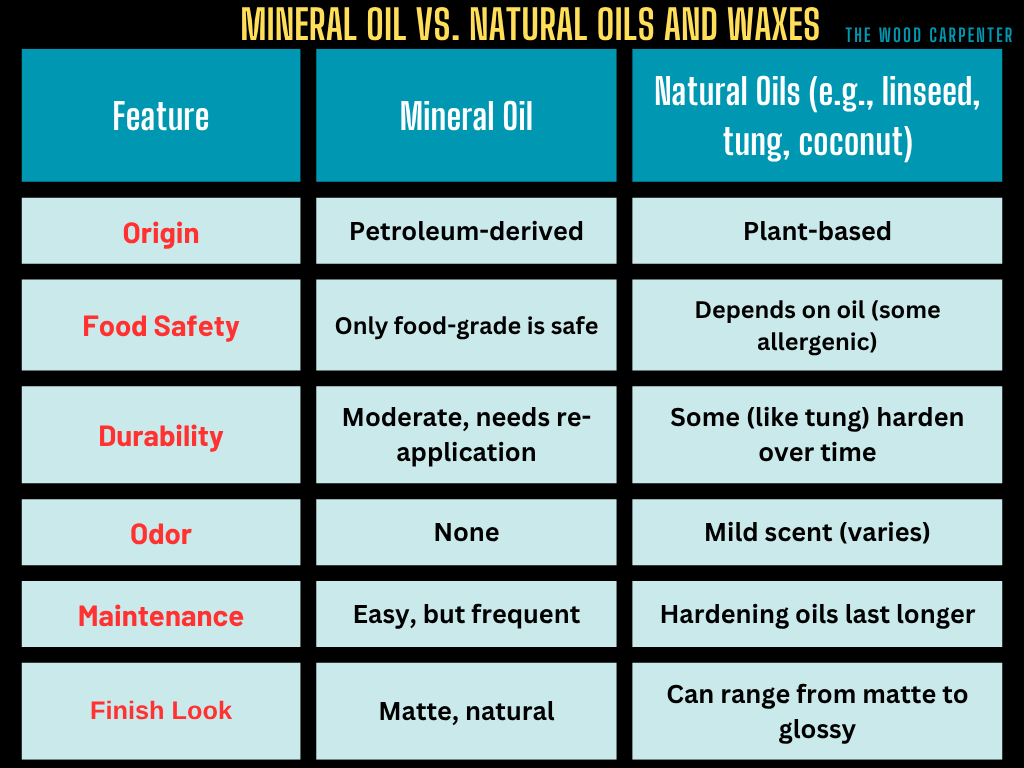
Natural oils like tung or linseed cure into a harder finish that lasts longer but take more time to dry. Mineral oil remains soft and simple to maintain, making it great for beginners or everyday kitchen care.
If you want eco-friendly protection, mix natural oils, or use a hardwax oil — which is a mixture of natural oils and waxes, that offers more pronounced protection but stays food safe.
💡 Pro Tips for Long-Lasting Results
- Re-oil regularly. When the surface starts to look dry or loses its sheen, it’s time for another coat.
- Avoid soaking in water. Do not submerge oiled wood. After cleaning, wipe clean and dry at once.
- Use warm oil. Slightly warming mineral oil before applying helps it absorb faster (don’t microwave it — use a warm-water bath).
- Store properly. Keep oiled wooden items in a dry, cool place. Excess humidity can still cause swelling.
- Buff with beeswax. A light beeswax polish over mineral oil adds extra water resistance and a soft glow.
🌍 Is Mineral Oil Eco-Friendly?
Here’s where things get complicated. Though mineral oil is petroleum-based, food-grade mineral oil is non-toxic and won’t harm humans or pets. But because it’s not renewable, a lot of eco-minded shoppers gravitate toward plant-based options instead.
That said, since mineral oil never spoils for several years and gets used sparingly, this is not a large environmental price to pay — especially if you purchase in bulk (as I do) and use it responsibly.
Also read:
Best Food Safe oil for cutting Boards
❓Frequently Asked Questions (FAQs)
1. Is mineral oil safe for all types of wood?
Yes, mineral oil is safe for most of the woods, and especially closed-grain species like maple, cherry, or walnut. Open-grain woods (like oak) will absorb more oil, so they may do require some extra coats.
2. Can I use baby oil instead of mineral oil?
Technically, baby oil is mineral oil, but it often contains fragrances and additives — so it’s not food-safe. Only you must use pure, food-grade mineral oil for the kitchen wood.
3. How often should I oil my cutting board?
Once a month is a good rule of thumb, but high-use boards may need more frequent oiling. If water no longer beads on the surface, it’s time to re-oil.
4. Can I mix mineral oil with beeswax?
Absolutely! In fact, a mix of beeswax and mineral oil creates a richer, more protective finish that’s still food-safe. Melt one part beeswax to three parts oil and apply warm.
5. What happens if I apply too much oil?
If there’s excess oil on a surface, it may feel sticky and need removing with a wipe of a clean cloth – allow additional drying time before proceeding further with this step.
🏁 Final Thoughts
Mineral oil may sound old-fashioned — and that’s part of its charm. It’s also cost effective, safe and simple to apply, and it helps wood look beautiful longer. If you are preserving a family cutting board that is due to be handed down through the generations, or restoring an antique carving board as a special gift for someone special in your life, this thing gets it done.
If you’re on the hunt for a natural matte finish and aren’t phased by as small amount of maintenance, mineral oil is for sure worth it. Only remember: food-grade, apply often and keep clean and dry. Your wood will thank you — one smooth, silky surface at a time. 🪵✨