
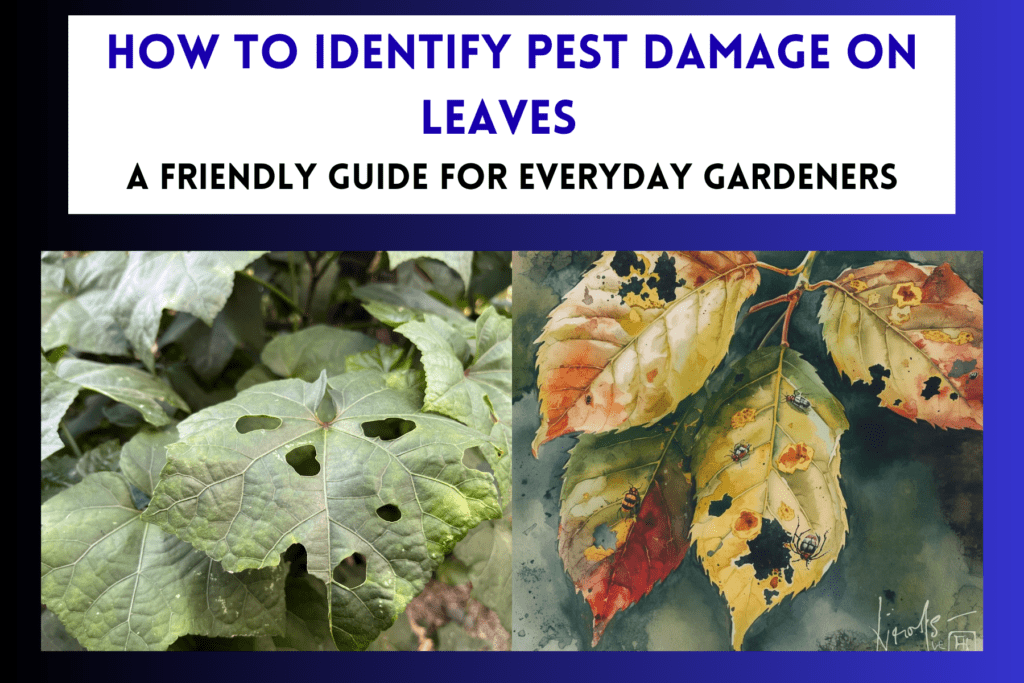
Identifying Pest Damage: A few summers ago, I walked out to my small backyard garden in Ohio. I had imagined picking crisp lettuce and checking on my thriving tomato plants. Instead, I froze. The leaves looked like someone had taken tiny scissors and punched holes everywhere.
Some leaves were curled like they were trying to roll away from the world. Others looked faded and tired, as if they had been awake all night worrying.
If you’ve ever had that moment — the “Oh no, what did I do to my plants?” moment — you’re not alone. Leaf damage is one of the most significant hints that pests have descended upon your garden. And the good news? Once you know what to look for, identifying pest damage becomes way easier than you think.
Today I’m going to teach you how to identify pest damage on leaves like a pro and old-fashioned know-how that gardeners actually use. Imagine you’re sitting on the porch with a gardening friend who just tells it like it is.
Why You Should Learn to Identify Pest Damage Early
Before digging into what each type of damage means, let’s talk about why it matters.
Garden pests don’t show up politely. They don’t knock. They don’t ask permission. They appear quietly, multiply fast, and before you know it, the leaves you were so proud of start to look like salad gone wrong.
Early identification helps you:
- Save your plants before the infestation becomes severe
- Treat the right pest — not all damages come from insects
- Avoid unnecessary chemicals by using targeted solutions
- Improve plant health by solving the problem quickly
If you can learn to “read the leaves,” you’ll feel like you’ve unlocked a secret language in your garden.
The Most Common Types of Pest Damage on Leaves (and What They Mean)
Let’s break down the signs you’re most likely to see on leaves in a backyard garden.
1. Holes in Leaves
This is usually the first thing gardeners notice. But not all holes are equal.
💬 What It Looks Like
- Small, rounded holes
- Jagged or irregular edges
- Window-pane–like patches where only the thin leaf film remains
- Holes mainly between veins
🐛 Likely Culprits
- Caterpillars
- Beetles
- Slugs & Snails
🌱 Real-Life Example
My collard greens once looked like lace. It turned out a family of cabbage loopers were having an all-you-can-eat buffet. The tiny green caterpillars were hiding on the underside of leaves, invisible at first glance.
2. Yellow or Speckled Leaves (Leaf Stippling)
This is one of the most overlooked signs because it looks gentle at first.
💬 What It Looks Like
- Tiny yellow or white dots
- Leaves may appear dusty or faded
- Sudden loss of vibrancy
🐛 Likely Culprits
- Spider mites
- Thrips
- Aphids
These tiny sap-sucking pests don’t chew — they “sip.” They remove chlorophyll, creating those speckles.
🔍 Tip
Check the underside of leaves. If you see something that looks like fine sand or dust that moves, you may have mites.
3. Leaf Curling or Distortion
Sometimes the leaf doesn’t show holes at all. It just starts curling like it wants to roll up.
💬 What It Looks Like
- Leaves curling inward or downward
- Weird twists, puckers, or bubbles
- Deformed new growth
🐛 Likely Culprits
- Aphids
- Whiteflies
- Leaf miners (inside the leaf)
- Viral infections delivered by pests
🌱 Real-Life Example
One spring, my pepper plants looked like they were pouting. The new leaves were wrinkled and curled. A closer look revealed clusters of small green aphids hiding on tender stems.
No Chemicals Pesticides: 7 Natural Pest Hacks that Works
4. Trails, Tunnels, or Scribbles on Leaves
These markings look almost like a child doodled on the plant.
💬 What It Looks Like
- Thin, squiggly white lines
- Blotchy translucent patches
- Internal “tunnels”
🐛 Likely Culprits
- Leaf miners
Leaf miner larvae actually tunnel inside the leaf, leaving behind a little roadmap of destruction.
5. Sticky Leaves or a Shiny, Wet Appearance
If you touch a leaf and it feels like someone sprayed syrup on it, you’re dealing with a different kind of clue.
💬 What It Looks Like
- Sticky coating
- Shiny or glossy surface
- Black sooty mold growing on top
🐛 Likely Culprits
- Aphids
- Whiteflies
- Scale insects
These pests excrete “honeydew,” a sugary liquid that lands on leaves — and ants often gather around it.
Ultimate Guide to Home Gardening: Everything You must know
6. Chewed Edges
Damage on the edges of leaves means something different than holes in the middle.
💬 What It Looks Like
- Notches missing from the sides
- Half-moon shapes
- A leaf that looks bitten cleanly
🐛 Likely Culprits
- Slugs and snails
- Grasshoppers
- Caterpillars
🐌 How to test for slugs
Go outside at night with a flashlight — that’s when slugs party.
7. Skeletonized Leaves
This one looks dramatic, almost like a Halloween decoration.
💬 What It Looks Like
- Only the veins remain
- Thin, lace-like leaf structure
🐛 Likely Culprits
- Japanese beetles
- Skeletonizing beetles
- Caterpillars
8. Browning, Wilting, or Burn-Like Spots
When leaves look scorched but you know you didn’t over-fertilize, consider pests.
💬 What It Looks Like
- Brown spots
- Dead patches
- Crispy edges
🐛 Likely Culprits
- Thrips (rasp the leaf surface)
- Spider mites
- Leafhoppers
Garden Pests: Spot, Prevent & Control Naturally – A Detailed Guide
How to Confirm Which Pest Is Causing the Damage
Sometimes multiple pests leave similar marks. So how do you know which one is guilty?
Here’s how gardeners investigate.
1. Check the Underside of Leaves
90% of pests hide there. Flip leaves gently and look for:
- Eggs
- Tiny clusters
- Webbing (spider mites)
- Moving dots
2. Look for Frass (Insect Poop)
Caterpillars leave tiny black droppings, often right below chewed areas.
3. Tap the Plant Over White Paper
If tiny insects fall onto the paper, you may have thrips or spider mites.
4. Inspect at Different Times of Day
- Slugs: night
- Beetles: morning
- Aphids: any time
5. Use a Simple Hand Lens
A cheap magnifier reveals more than you’d expect.
What Isn’t Pest Damage (Common Misunderstandings)
Before you jump to conclusions, note that not all leaf changes come from bugs.
Not pests if…
- Leaves are turning pale evenly → could be nutrient deficiency
- Leaf edges are brown and dry → may be heat stress
- Random brittle spots → could be sunscald
- Spots with circles → often fungal disease
Understanding the difference prevents unnecessary treatments.
How to Prevent Pest Damage in the Future
Once you know what pest damage looks like, prevention becomes much easier.
1. Inspect plants weekly
Think of it like checking email — small effort, big payoff.
2. Encourage beneficial insects
Ladybugs, lacewings, and parasitic wasps are natural pest hunters.
3. Remove damaged leaves early
It can stop pests from spreading.
4. Space plants properly
Airflow discourages many insects.
5. Avoid over-fertilizing
New growth attracts pests like a magnet.
6. Use row covers (lightweight fabric)
Especially for brassicas like cabbage and kale.
Final Thoughts
Spotting pest damage isn’t about being perfect — it’s about catching little signs early. When you start paying attention, you’ll start to notice patterns — which plants attract which pests, when damage unfolds and how quickly the problem spreads. In time, gardening will become an instinct and you’ll feel a connection to your plants.
And keep in mind, every gardener — even the most experienced one — has walked into a garden and said, “What on earth ate this?”
Now, you’ll know exactly where to start.
FAQ: Identifying Pest Damage on Leaves
1. What is the easiest way to identify pest damage on leaves?
Begin by inspecting for holes, discoloration, sticky residue, curling or strange patterns such as squiggly trails. Then look at the undersides of leaves for pests or eggs.
2. How can I tell if the damage is from insects or disease?
- Insects usually create holes, bite marks, sticky residue, or tunnels.
- Diseases typically create uniform spots, circular patches, or mold-like growth.
3. Should I remove leaves with pest damage?
Yes — removing damaged leaves can reduce spreading and make it easier to monitor new growth.
4. Can pests hurt my entire plant?
Absolutely. Some pests can cause stunted growth, leaf loss, poor fruiting, or even plant death if left untreated.
5. How often should I inspect my plants?
A weekly schedule works for most home gardens, but do check more frequently during warm, humid months when pests can reproduce quickly.