Last Updated on December 9, 2025 by Sam Wood Worker
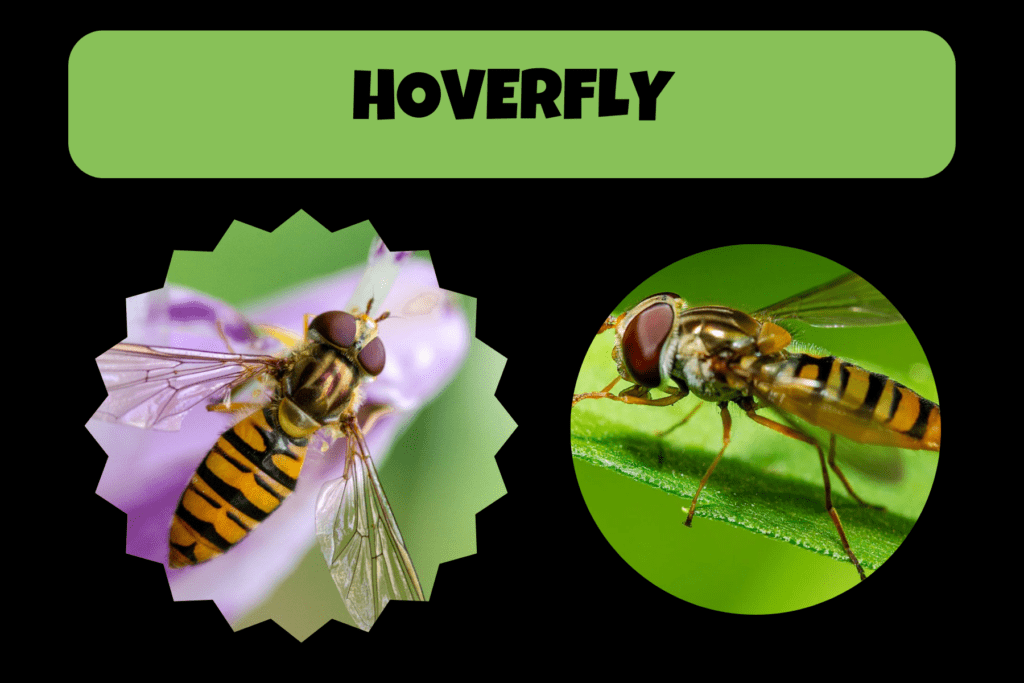
Last summer, I stepped out into our small balcony garden. The air smelled sweet — jasmine and fresh earth after a little drizzle. I glanced at my basil pot and noticed a small insect hovering just a few inches above the flower, then gently landing to sip nectar.
Its black-and-yellow pattern and almost-bee-like buzz made me pause. But when it sat still on my finger (yes, on my finger!), I realized something: this wasn’t a bee. It was a hoverfly.
And that little creature, hovering like a minute helicopter, would prove to be one of nature’s uncelebrated garden heroes. And when I found out what hoverflies actually do — that is, eat pests and pollinate my herbs — I thought: long live the hoverfly.
🐞 What Are Hoverflies — Nature’s Double-Duty Insects
- Hoverflies belong to a big insect family (Syrphidae).
- Globally, there are more than 6,000 species. They thrive in almost any environment: from coastal plains to high mountains, and both temperate gardens and tropical climes.
- Adults are generally known as flower flies (or simply hoverflies) because they cruise midair — like petite helicopters — before delicately settling upon blooms.
- Many look like bees or wasps: yellow, black stripes, sometimes bold bands or spots. But — big but — they are harmless. No sting, no bite. They’re a classic case of “don’t judge by looks.”
So: hoverflies = flies, not bees. Yet, thanks to their looks and behaviors, they often steal the spotlight from other insects.
🔄 Life Cycle: From Egg to Helpful Gardener
Hoverflies go through four main stages — and each stage has a role:
| Stage | What Happens |
| Egg | Laid on leaves (usually near aphid colonies or pest-infested plants), often on the underside, so hatchlings immediately find food. |
| Larva | A small, leg-less, maggot-like creature that eats pests — mostly aphids, mites, and other soft-bodied insects. Some larvae can devour hundreds of aphids in their lifetime. |
| Pupa | After larval feeding, they pupate — a quiet, still phase where transformation happens. |
| Adult | Emerges as a delicate insect with transparent wings, sipping nectar and pollen, visiting flowers, and helping with pollination. Then the cycle repeats. |
In many species, the entire cycle completes in a few weeks — which means hoverflies can produce several generations in a single year.
🌸 Why Hoverflies Are Gardeners’ Best Friends
✅ Natural Pest Controllers
- The larvae — tiny as they are — are voracious predators of pests. Aphids, mites, thrips, and other soft-bodied pests vanish when hoverfly larvae are around.
- This means fewer chemical sprays, fewer worries about pesticide damage, and a healthier balance in the garden ecosystem.
🌼 Pollination — Without the Sting
- Adult hoverflies feed on nectar and pollen. While doing so, they move pollen between flowers — helping plants reproduce and set fruits or seeds.
- In many ecosystems and gardens, hoverflies are considered the second-most important pollinator group after bees.
- They often visit plants that have open, easily-accessible flowers (like herbs, daisies, carrots, parsley, dill, and many wildflowers) — making them especially useful for vegetable gardens, herb patches, and mixed flower beds.
🔁 Balancing Ecosystems
- Some species’ larvae feed on decaying plant matter or help with decomposing organic material — contributing to nutrient recycling and soil health.
- As a food source: hoverflies are prey for birds, spiders, and other insects, so they support wildlife and biodiversity.
🌍 Why Hoverflies Matter (Beyond Just My Garden)
A recent article highlighted how undervalued hoverflies are — even though they’re essential to healthy ecosystems and agriculture.
- Hoverflies help pollinate important crops like strawberries, vegetables, and many fruits — not just wildflowers.
- Their pest-eating larvae reduce reliance on chemical pesticides. For many gardeners and farmers, that’s a win for food safety, soil health, and biodiversity.
- In some regions, hoverfly populations and habitats are under pressure — habitat loss, pesticide overuse, and environmental changes threaten them.
That’s why conservation of hoverflies — and creating garden spaces where they can thrive — is not just “nice to have.” It’s smart ecology.
🌿 How to Welcome Hoverflies in Your Garden (The Easy Way)
If I had to recommend one simple rule to gardeners everywhere, it’d be: “Make your garden hoverfly-friendly.” Here’s how:
- Plant flowers with open, easy-access blooms — herbs (dill, parsley), daisy-like flowers, marigolds, yarrow, alyssum, and many wildflowers. Hoverflies love these.
- Avoid broad-spectrum pesticides. These kill not only pests, but also hoverflies (larvae and adults alike).
- Maintain plant diversity and allow parts of the garden to stay a bit “wild” — a mix of flowering plants, leafy shrubs, maybe some compost / leaf litter for species that need shelter or decaying matter.
- Let nature regulate itself: when aphids appear, hoverfly larvae often follow — keeping pests under control naturally.
In my case, after I planted a small patch of dill and marigold near my tomato pots — I saw more hoverflies within a week. Aphids? Almost gone. Tomatoes? Happier than ever.
🧠 10 Fascinating Hoverfly Facts You Might Not Know
- There are 6,000+ species of hoverflies globally — they live nearly everywhere except extremes like Antarctica.
- Hoverflies are often mistaken for bees or wasps, thanks to their yellow-black stripes or spots. But they are harmless: no sting, no bite.
- Adults are excellent pollinators, often ranked right after bees in importance for many plants and crops.
- The larvae of many species are voracious pest eaters: aphids, mites, thrips — you name it.
- Some hoverfly larvae don’t hunt pests — they feed on decaying matter or help recycle organic waste, aiding soil health and nutrient cycling.
- Hoverflies have only one pair of wings (unlike bees/wasps that have two). That — and their hovering behavior — is a quick way to tell them apart.
- They can fly and remain active in cooler, cloudier weather — times when bees might be less active.
- Some species are migratory — moving between regions and helping pollinate crops over long distances.
- In many ecosystems, hoverflies serve as bioindicators — their presence (or absence) tells us about the health of the environment.
- At a time when insect decline is worrying scientists worldwide, supporting hoverflies is a simple step every gardener can take to boost biodiversity.
How to Get Rid of Hoverflies
If hoverflies are becoming too many, you can reduce them by keeping sugary drinks covered, cleaning up food spills, and removing flowers close to doors and windows. Use natural repellents like citronella candles or essential oils such as eucalyptus and peppermint.
Installing window screens and reducing standing water also helps keep them away. Remember, hoverflies are harmless and useful pollinators, so it’s best to gently discourage them rather than eliminate them completely.
Garden Pests: Spot, Prevent & Control Naturally
🐝 Sweat Bee vs Hoverfly — How to Tell Them Apart
People often confuse hoverflies with sweat bees, especially because both are small, fast-moving, and attracted to flowers.
Here’s how to tell the difference:
1. Body Structure
- Hoverflies: Slender, smooth, fly-like bodies with big reddish eyes.
- Sweat Bees: More bee-like bodies, sometimes metallic green or blue, with visible segmentation.
2. Wings
- Hoverflies: Only one pair of wings.
- Sweat Bees: Two pairs of wings — like all true bees.
3. Behavior
- Hoverflies: Hover mid-air like tiny helicopters before landing.
- Sweat Bees: Land more directly, flitting between flowers quickly.
4. Sting
- Hoverflies: Do not sting or bite — completely harmless.
- Sweat Bees: Can sting mildly if trapped or provoked, though they are generally gentle.
5. Diet
- Hoverfly larvae: Eat pests.
- Sweat bee larvae: Fed by adult bees with pollen and nectar.
6. Attraction to People
- Hoverflies: Usually ignore you and stick to flowers.
- Sweat Bees: Sometimes attracted to human sweat (for the salts).
❓ FAQs: All You Want to Know About Hoverflies
Q: Are hoverflies harmless? Do they sting or bite?
A: Yes — harmless. There are no venom, no bite and no dangerous chemicals in adults. They’re peaceful pollinators.
Q: What do hoverflies eat?
A: As adults — nectar and pollen from flowers. As larvae — pests such as aphids, mites and thrips (depending on species).
Q: Why do hoverflies look like bees or wasps?
A: It’s a clever trick: they mimic stinging insects so predators avoid them. This mimicry (called Batesian mimicry) gives them extra safety — even though they don’t sting.
Q: When and where do hoverflies appear?
A: A: Depending on where you are, you’ll likely see them in the warmer months (spring through autumn) as they gather nectar from flowers. They appear in gardens, fields, wild meadows — anywhere there are flowers or prey insects.
Q: Should I encourage hoverflies in my garden?
A: Absolutely — especially if you want less pesticide use, better pollination, and a natural balance. Plant colorful, open-flowering plants; avoid harsh sprays; let some wild corners stay wild. Your garden (and earth) will thank you.
🌱 Final Thoughts: Why I Think Hoverflies Deserve More Credit
They may be tiny, and they may look like basic garden-variety flies — but hoverflies are burdened with lots of responsibility. They pollinate flowers, eat pests, recycle nutrients across the landscape, support other wildlife and can even keep gardens and farms healthier.
In a time when insect populations are declining, giving hoverflies some room can be like hiring an invisible wise gardener who doesn’t demand a salary.
The next time you notice a hovering in or near your herbs or flower pots — stop. That little bug may be doing a lot more than you ever knew.