
Last Updated on December 5, 2025 by Sam Wood Worker
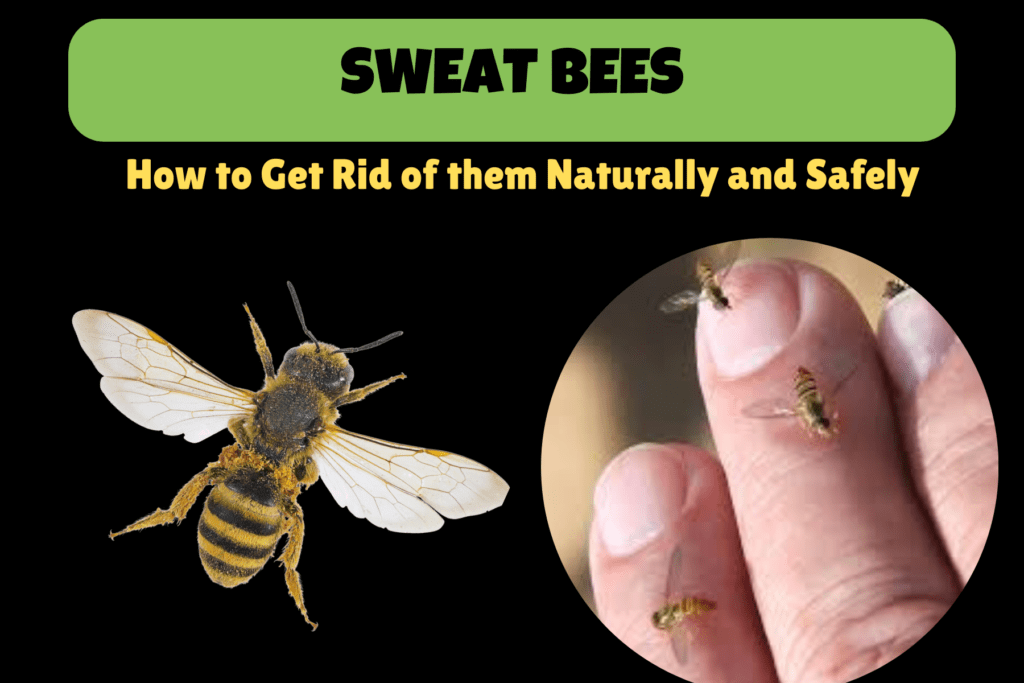
If you’ve ever been outside on a warm afternoon and felt a tiny tickle on your arm — only to look down and see a little metallic-green bee happily sipping your sweat — then you’ve met a sweat bee.
The encounter is usually harmless. Sweat bees are not aggressive, and much of the time they just want to check out the salt on your skin. Yet, when begin to swarm in large numbers around your garden, porch or backyard gatherings — “cute little bee” can turn into “please leave me alone.”
The problem? Most internet guides provide us with robot-ed, one-size-fits-all advice such as “eliminate attractants” or “use repellents.” But sweat bees are just one species of a large, complex family of bees — and managing them would involve knowledge about their behavior, nesting sites and why they appear in the first place.
This guide explains some easy, science-backed and humane methods for removing sweat bees — without killing these essential pollinators.
I’ll incorporate some of what field researchers have discovered, what naturalists are able to observe about these creatures and even a personal anecdote or three — because it makes dealing with the bees seem more manageable, and less scary once you actually understand them.
What Exactly Are Sweat Bees? (And Why They Keep Landing on You!)
Sweat bees belong to the Halictidae family, one of the largest bee families in the world. Some are shiny metallic green or blue. Some are tiny black bees you wouldn’t even notice if they weren’t buzzing by your face.
Here’s the part most people don’t know:
Sweat bees are attracted to human sweat because of the salt.
Not the sugar. Not the moisture alone. The salt.
Many species drink sweat for nutrients, and they’re surprisingly gentle while doing it.
When I learned this years ago while gardening, it made me feel just a tiny bit less annoyed when I felt that familiar tickle on my shoulder. They’re not trying to sting me—they’re literally having a salty drink.
But even gentle bees can become a nuisance if they build nests near doorways, children’s play areas, vegetable beds, or footpaths. Knowing why they gather in a particular spot is the first step toward moving them away.
How to Get Rid of Sweat Bees Naturally and Safely
These methods follow ecological best practices, keep pollinators safe, and reduce sweat-bee presence around your space.
1. Reduce What Attracts Them (Especially Sweat and Scent)
Sweat bees don’t randomly pick humans. They’re guided by:
- Salt in sweat
- Human scent
- Bright colors
- Floral perfumes, lotions, and shampoos
- Warmth
Practical Ways to Reduce Attraction:
✔ Shower after outdoor work
If you’ve been exercising or gardening, rinse off sweat, especially from arms, neck, and legs.
✔ Skip sweet or floral fragrances
Perfumes and strong lotions can draw them in.
✔ Wear light-colored clothing
Darker colors absorb heat and attract insects.
✔ Use unscented detergent and sunscreen when possible
These tiny changes reduce landings dramatically.
2. Identify and interrupt the nesting area
Most sweat bees nest in the ground, especially in:
- Dry, loose soil
- Sandy patches
- Garden edges
- Bare earth around flower beds
- Sloped or well-drained soil
If you’ve ever seen tiny holes in the ground, like the opening of a pencil, that’s typically a bee burrow.
What to do:
✔ Mulch bare soil generously
This is one of the easiest and most effective ways to discourage sweat-bee nesting.
They cannot dig through mulch.
✔ Water the area lightly
Sweat bees prefer dry, crumbly soil for digging tunnels. Moist soil becomes unattractive.
✔ Cover unused open soil
Plant grass or groundcovers to take away their nesting habitat.
Avoid disturbing active nests directly—they are pollinators, and aggressive removal can cause unnecessary harm. Instead, make the area less appealing over time.
3. Use Natural Repellents (Safe for Kids, Pets, and Gardens)
You don’t need harsh chemicals. Natural repellents work surprisingly well.
Best natural options:
✔ Peppermint oil spray
Mix 10–15 drops of peppermint oil with water in a spray bottle.
Spray around patios, entryways, and seating areas.
✔ Citronella candles or torches
They help deter most flying insects, including sweat bees.
✔ Vinegar wipes
Wipe outdoor table surfaces with diluted vinegar to remove sweat/salt residue.
✔ Cucumber peels
Sweat bees dislike the scent—place peels near high-traffic areas.
These methods keep bees away rather than harming them.
4. Keep Outdoor Spaces Clean and Dry
Sweat bees are drawn to:
- Drinks spilled on tables
- Food residue
- Sticky surfaces
- Damp workout gear hanging outside
- Damp towels
A quick wipe-down works wonders.
What helps:
✔ Rinse outdoor tables after eating
✔ Don’t leave sweaty clothes outside
✔ Empty trash cans regularly
✔ Keep compost bins sealed
Small daily habits lead to big improvements.
5. Adjust Your Garden to Reduce Their Interest
Sweat bees are major pollinators, especially for flowers in the Aster and Mint families. If your yard is full of daisies, sunflowers, purple thistles, or other pollen-heavy plants, sweat bees will naturally flock to them.
We don’t want to remove all flowers—they are essential for ecology—but we can manage their placement.
Smart garden adjustments:
✔ Move sweat-bee-favorite flowers farther from patios
For example:
Sunflowers → move to the back of the yard
Lavender → plant away from seating areas
✔ Add tall shrubs as visual/flight barriers
Shrubs redirect bees upward rather than toward your porch.
✔ Provide alternate floral zones
Create a pollinator corner far from doorways. Bees will naturally congregate there.
This method keeps both humans and bees happy.
6. Use Fans Outdoors
A simple house fan on your porch can drastically reduce sweat-bee activity.
Bees don’t fly well in strong airflow.
A gentle breeze from a fan makes your sitting area a “no-fly zone.”
This is one of the most underrated tricks—and it works instantly.
7. Wear Sweat-Bee-Resistant Clothing
If you do outdoor work regularly, especially gardening or farming, consider:
- Long sleeves
- Loose cotton clothing
- Light colors
- Hats with ventilation
Sweat bees rarely sting, but they might if trapped against skin. Clothing minimizes accidental stings.
8. When to Consider Professional Help
Sweat bees rarely need extermination, and you should avoid exterminators unless:
- The nest is in a high-traffic area
- There are allergies in the household
- Bees have nested inside wall voids (rare but possible)
- There’s a large colony near doorways
Professionals can relocate or reduce the population without destroying beneficial species.
Avoid chemical sprays unless absolutely necessary—they harm pollinators, pets, and the environment.
Garden Pests: Spot, Prevent & Control Naturally
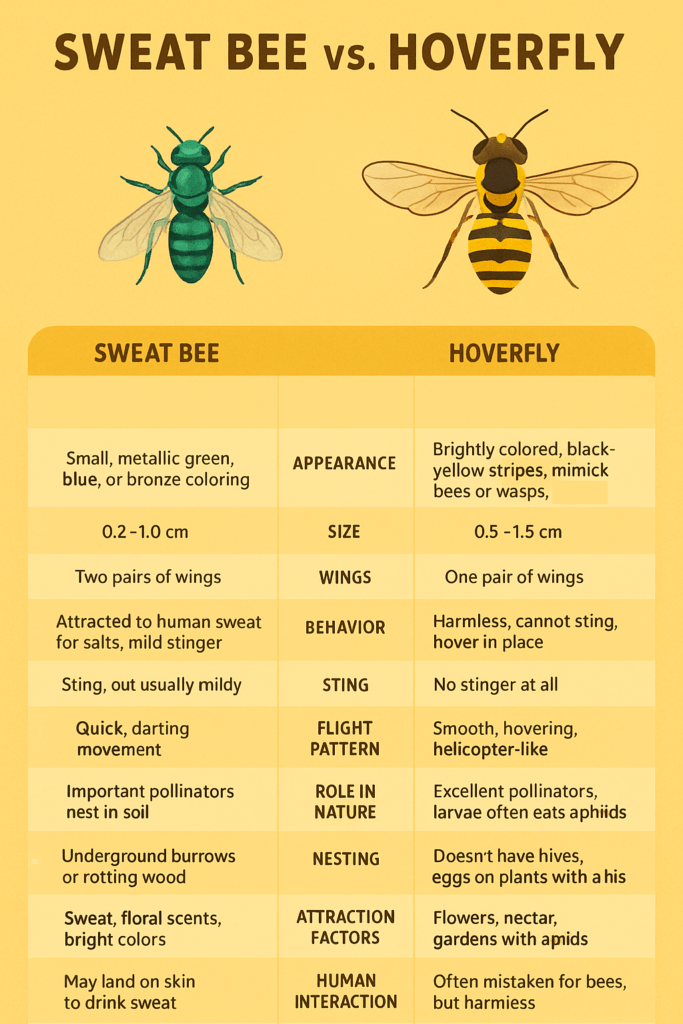
Sweat bee vs Hoverfly
A Small Personal Story
Last summer, I had a patch of bare soil near my vegetable garden, and every warm afternoon I’d see little shimmering green bees hovering around it. At first, it made me nervous—who wants bees right where their kids play?
After researching, I discovered they were sweat bees nesting in the loose soil.
Instead of panicking, I:
- Added mulch
- Moved a couple of flowering plants away
- Planted creeping thyme over the bare patch
Within a few weeks, the bees naturally relocated to a different part of the yard—away from where my family spends time.
That experience taught me something important:
Sweat bees aren’t pests. They’re guests… just guests who sometimes choose the wrong room.
Guiding them gently is far more effective (and kinder) than trying to eliminate them.
How to Prevent Sweat Bees from Returning
Long-term prevention checklist:
✔ Keep soil covered (mulch, plants, or groundcover)
✔ Maintain good outdoor hygiene
✔ Keep sweat off skin when outdoors
✔ Wear light-colored clothing
✔ Avoid strong fragrances
✔ Move high-attraction flowers away from living spaces
✔ Use fans on porches
✔ Plant a designated pollinator corner elsewhere
Once your yard becomes less appealing for nesting or feeding, sweat bees naturally move on.
Frequently Asked Questions (FAQ)
1. Do sweat bees sting?
Yes, but only if pressed or threatened. Their sting is mild compared to honeybees.
2. Why are sweat bees so attracted to me?
They’re drawn to the salt in human sweat and may land on exposed skin for a quick drink.
3. Are sweat bees dangerous?
They are generally harmless and non-aggressive. Most stings cause only mild irritation.
4. How do I get rid of sweat bees without harming them?
Use mulch, natural repellents, fans, garden adjustments, and proper outdoor hygiene.
5. Why are there so many sweat bees in my yard?
You may have bare soil for nesting, sweat-bee-favorite flowers, or spilled foods and drinks attracting them.
6. Can I remove a sweat bee nest myself?
It’s better to discourage the area by mulching or watering the soil. Direct destruction isn’t recommended.
7. Will killing sweat bees harm the environment?
Yes. They are valuable native pollinators. Avoid extermination whenever possible.
Final Thoughts
Sweat bees might be a bit of an annoyance at first, particularly when they won’t leave your skin alone on a hot day. But with some knowledge and a few sneaky strategies, you can nudge them away from your living quarters without trapping or harming them or disrupting your local ecosystem.
You don’t need chemicals.
You don’t need traps.
All you need is a good mix of prevention, habitat adjustment and natural deterrents.
And with these maneuvers, you can rescue your porch, garden and outdoor time — even as you keep these sparkly occasional pollinators safe and thriving where they belong.