
Last Updated on August 14, 2026 by Sam Wood Worker
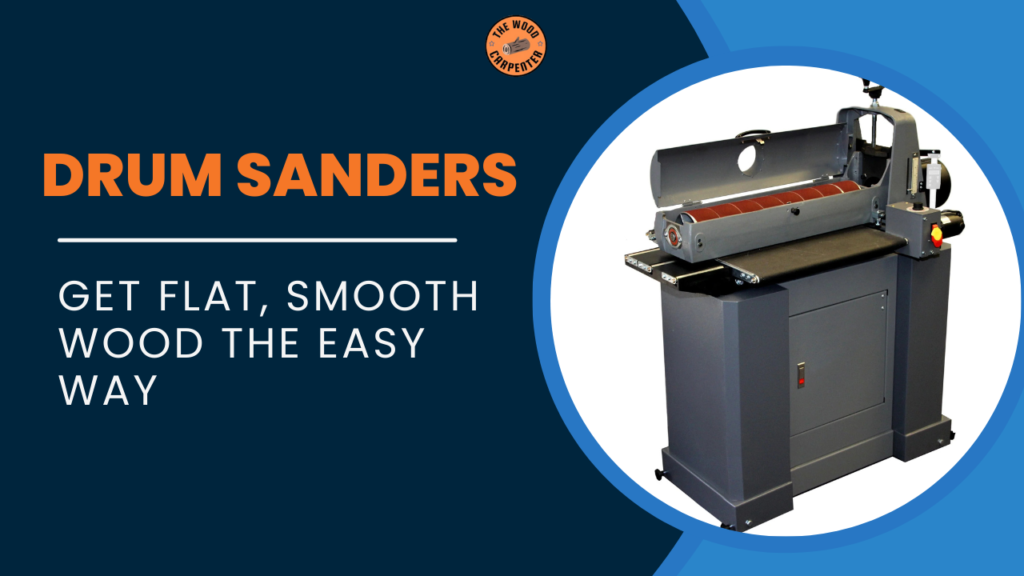
A drum sander is a powerful woodworking machine used to make wood very flat and smooth. It is much faster and more even than hand sanders. Woodworkers use drum sanders to prepare tabletops, panels, cabinet doors, and flooring.
Instead of sanding by hand, a drum sander feeds wood through a spinning drum wrapped with sandpaper. This removes material evenly and avoids swirl marks. For serious DIYers and professional shops, drum sanders save time and give professional results.
How a Drum Sander Works
A drum sander has a round metal drum covered with sandpaper. The drum spins while a conveyor belt slowly feeds the wood underneath it. You control how much wood is removed by adjusting the height and feed speed.
Key parts include:
- Sanding drum – Holds the sanding belt
- Motor – Powers the drum (usually 1.5 to 5 HP)
- Conveyor belt – Moves wood evenly through the machine
- Dust ports – Remove sanding dust
Some drum sanders are open-end, which lets you sand wider boards by flipping them. Others are closed, with one or two drums for faster work.
Drum Sanders vs Other Sanding Tools
Drum sanders work best after rough cutting and planing. They are not meant for heavy material removal, but for making wood flat and smooth.
| Tool | Material Removal | Finish Quality | Best Use | Speed |
| Drum Sander | Light | Very smooth and flat | Panels, tabletops | Slow and steady |
| Thickness Planer | Heavy | Rough lines left | Sizing lumber | Very fast |
| Orbital Sander | Very light | Can leave swirl marks | Curves, edges | Fast by hand |
Best results come from using a planer first, then a drum sander for final smoothing.
Best Drum Sanders for Different Shops
- Jet 16-32 Plus – Great for small to medium shops, quiet and reliable
- Powermatic PM2244 – Heavy-duty machine for professional use
- Grizzly Open-End Models – Good value for wide panels
- Shop Fox Drum Sanders – Solid choice for home garages
- SuperMax Drum Sanders – Large machines for serious production
Always check dust collection needs and power requirements before buying.
Best Projects for a Drum Sander
Drum sanders are perfect for:
- Dining tables and countertops
- Cabinet doors and panels
- MDF and plywood sheets
- Hardwood flooring
- Thin stock and veneers
Hardwoods like oak and walnut work best with slow feed speeds. Soft woods need sharp sandpaper to avoid burn marks.
How to Use a Drum Sander (Simple Steps)
- Flatten one side first
Use a jointer or planer before sanding. - Set light sanding depth
Remove very small amounts each pass. - Start with coarse grit
Begin with 60–80 grit. - Move up slowly
Progress to 120, 150, then 220 grit. - Clean sanding belts often
Use a rubber belt cleaner. - Use dust collection
This prevents clogging and burning.
Always sand the full width of the board to avoid uneven spots.
Sandpaper and Belt Tips
- Aluminum oxide – Good for soft woods
- Zirconia – Better for hardwoods
- Open-coat belts – Clog less
- Replace belts when sanding slows or burns appear
Never force the cut. Light passes give better results.
Common Problems and Easy Fixes
- Burn marks – Use fresh sandpaper and slow the feed
- Uneven thickness – Check table alignment
- Lines across wood – Clean or replace belt
- Vibration – Level the machine and tighten belts
Testing on scrap wood prevents mistakes.
Maintenance and Safety Tips
- Clean dust ports weekly
- Store sanding belts flat
- Wear eye and hearing protection
- Use a dust mask or respirator
- Keep hands clear of the feed area
Drum sanders need good dust collection to stay safe and work well.
Final Thoughts
A drum sander is one of the best tools for getting flat, smooth wood surfaces. It turns rough boards into finish-ready pieces with less effort and better accuracy. While it requires patience and care, the results are worth it.
For anyone serious about woodworking, a drum sander is a powerful upgrade.
FAQs
What is the difference between open and closed drum sanders?
Open-end sanders allow wider boards by flipping them. Closed models sand faster with one pass.
Should you use a planer or drum sander first?
Use the planer first, then the drum sander for smooth finishing.
How much wood can a drum sander remove per pass?
Very little—about 0.001 to 0.005 inches is safest.
What sanding belts are best?
Zirconia for hardwoods, aluminum oxide for softwoods.
Can drum sanders handle thin wood or veneer?
Yes, with slow feed speed and light passes.
How do you prevent burn marks?
Use clean, sharp belts and reduce sanding pressure.
 Thomas Steve