
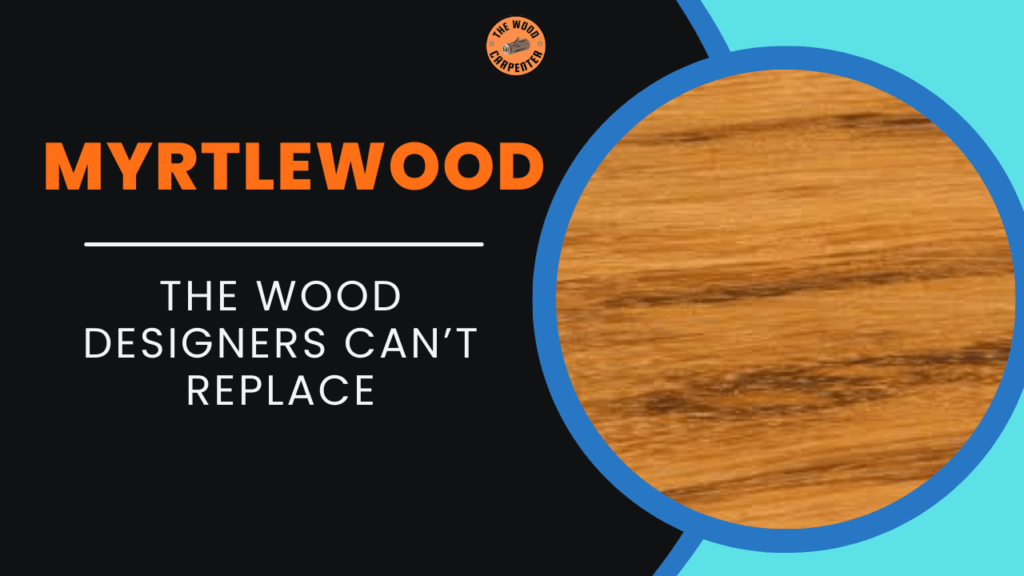
Myrtlewood Wood Properties (Quick Overview)
| Property | Details |
| Common Name | Myrtlewood / Oregon Myrtle |
| Scientific Name | Umbellularia californica |
| Wood Type | Hardwood |
| Natural Range | Southern Oregon coast, California coast |
| Average Weight | ~40 lbs per cubic foot |
| Janka Hardness | 1,270 lbf |
| Grain Pattern | Straight, wavy, figured, burl |
| Color Range | Blonde to dark brown, olive, gray |
| Rot Resistance | Low |
| Typical Uses | Furniture, guitars, bowls, flooring |
| Sustainability Status | Not endangered |
Myrtlewood is not a loud, flashy material. You won’t see it piled up outside hardware stores or in those big lumber yards. But if you’ve driven the southern Oregon coast, you probably seen it everywhere — shops and galleries small factories all focused on one wood.
It’s the same wood that in earlier times had been used as money during the Great Depression. It is used today in high-end guitars and collector pieces. And it grows in such a specific location that the soil itself controls the color of the wood.
So what’s the deal with myrtlewood, what makes it so special and why is it so rare? Let’s break it down simply.
The Tree Behind Myrtlewood
That myrtlewood is made from one species of tree, called Umbellularia californica. It’s a member of the laurel family, which also includes bay leaves, cinnamon and camphor.
It is frequently confused with “true myrtle,” but they are not even related. The name is shared; not the biology.
You may hear it called by different names:
- Oregon Myrtle
- California Bay Laurel
- Pepperwood
The leaves have a strong, spicy smell and were once used in cooking and to repel insects.
Myrtlewood trees are tall, but they don’t spread out very far.
They usually reach 60 to 120 feet in height, but the trunk stays fairly narrow. Because of this, wide boards are rare.
The tree grows slowly. It can take 80 to 120 years to fully mature. This slow growth is one reason the wood is expensive.
Myrtlewood only grows near the Pacific coast. In Oregon, its northern limit is near the Umpqua River. It does not grow well farther inland or in colder climates.
One saving grace is the fact that it can re-sprout from its stump. The new foliage often regenerates within a year even if the tree has been cut down.
Why Myrtlewood Has So Many Colors
This is where myrtlewood really stands out.
The color of myrtlewood depends heavily on the minerals in the soil where the tree grows. Trees growing just a short distance apart can produce very different wood colors.
The color range includes:
- Pale blonde
- Golden honey
- Olive green
- Warm brown
- Dark chocolate
- Gray and smoky tones
Because of this, matching pieces is very difficult. Two boards rarely look the same. But this also makes the wood very flexible in design. It often works well next to other woods, even if it does not match exactly.
The grain can be straight, wavy, or highly figured. Curly and fiddleback myrtlewood is especially valuable. Burl pieces are rare and can be extremely expensive.
Strength and Technical Characteristics
Myrtlewood is an true hard wood, and it is much harder than some people think. Its Janka hardness is 1,270 lbf (5,650 N), making it harder than red oak.
It is not commonly used for strength bearing structures, however, the overall performance of the wood makes it perfect for furniture and home interior use.
Something you should understand is that myrtlewood moves with the humidity. If it is not dried properly, it can warp or twist. When kiln-dried and acclimated correctly, it becomes stable and reliable.
A Short but Fascinating History
Myrtlewood has been used along the Oregon coast since the late 1800s. Early artisans made it into decorations and household objects.
In 1933, during the Great Depression, the town’s only bank closed its doors. The city was out of cash to pay its workers. So it made wooden coins from myrtlewood. The “money” was actually spent by local traders, and quickly became referred to as Myrtlewood Money.
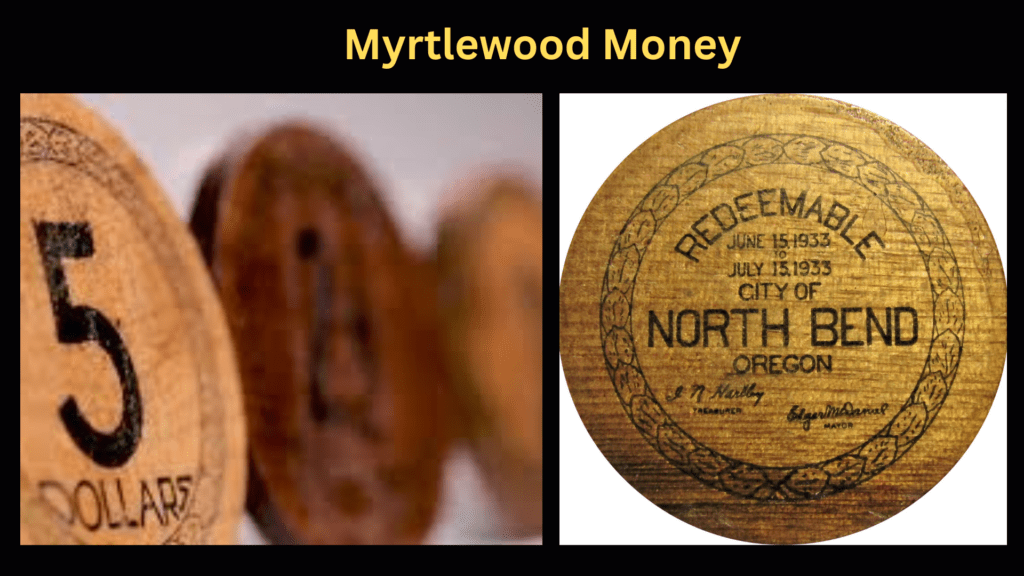
Most people never returned the coins. Today, complete sets are extremely rare and highly collectible.
The wood also appeared in American history earlier. In 1869, the ceremonial railroad tie used during the Golden Spike event was made from this same species.
Even author Jack London valued the wood and commissioned furniture made from Oregon myrtlewood in the early 1900s.
How Myrtlewood Is Used Today
Most people first encounter myrtlewood through small items. Bowls, cutting boards, picture frames, and decorative pieces are common along the Oregon coast.
Higher-end uses include:
- Furniture and cabinetry
- Interior trim and veneer
- Flooring tiles
- Musical instruments
Guitar makers have taken special interest in myrtlewood. Companies like Breedlove Guitars use it for backs and sides. Musicians describe its tone as warm and balanced, making it a popular domestic alternative to rosewood.
Some suppliers now sell FSC-certified myrtlewood, sourced from responsibly managed forests, including tribal lands in Oregon.
Working With Myrtlewood
Myrtlewood is generally pleasant to work with. It cuts cleanly, glues well, and takes finishes evenly. It turns nicely on a lathe and polishes to a smooth surface.
A few things to keep in mind:
- Figured grain can tear out if tools are dull
- Drilling and routing can cause burn marks if rushed
- The dust may irritate sensitive skin or lungs
Basic dust protection is recommended, especially for long sessions.
Frequently Asked Questions
Is myrtlewood a hardwood or softwood?
It is a hardwood. Despite growing in Oregon, it is harder than red oak.
Why is myrtlewood so expensive?
They mature slowly and require many decades to reach maturity, and grow along a narrow coastal strip. Figured and burl examples are particularly scarce.
Is myrtlewood good for outdoor use?
No. It is rated as non-durable to perishable in regard to decay resistance, and it is also susceptible to insect attack. It is best used indoors.
Why do the colors vary so much?
The wood’s color is directly influenced by the minerals in the soil. Different ground chemistry results in different colors.
Is myrtlewood endangered?
No. It is not listed as endangered or restricted, but responsible sourcing is still recommended.
Final Thoughts
Myrtlewood is not common, not fast-growing, and not easy to standardize. That is exactly why it is valuable.
If you ever see a piece of wood with color you cannot quite describe and grain that seems to move in the light, there is a good chance it came from a slow-growing tree along the Oregon coast—turning soil minerals into something people collect, play music with, and pass down for generations.
 Sam Wood Worker