
Last Updated on August 14, 2026 by Sam Wood Worker
| Property | Details |
| Common Name | Port Orford Cedar |
| Scientific Name | Chamaecyparis lawsoniana |
| Wood Type | Softwood (Cypress family) |
| Natural Range | Southern Oregon, Northern California |
| Average Weight | ~29 lbs per cubic foot |
| Janka Hardness | 590 lbf |
| Rot Resistance | Very high |
| Insect Resistance | High |
| Dimensional Stability | Good when properly dried |
| Typical Uses | Decking, boats, arrows, instruments |
| Sustainability Status | Vulnerable (IUCN Red List) |
Port Orford Cedar is the strongest and most durable soft wood in North America. Despite its excellent quality, most people have never heard of it. It is a very local growing wood, which has a long history and is known for surviving harsh weather with better results than most of its competitors.
If you are in the market for lumber for deck, boat or long-term outdoor projects Port Orford Cedar deserves consideration.
What Is Port Orford Cedar?
Port Orford Cedar is a softwood that grows in a small belt on the Pacific coast in southern Oregon and northern California. Despite having “cedar” in its name, it is not a true cedar. It is in the cypress family, as are such woods as Alaskan Yellow Cedar.
These are extremely tall trees, growing to heights ranging from 150 to 200 feet, and carrying thick and strong trunks. The wood was so named after it was first observed near Port Orford, Oregon.
This tree is thought to originate from Asia. The majority of the trees in the same genus occur in Asia, and Port Orford Cedar is the lone member native to North America.
Strength, Weight, and Stability
Port Orford Cedar is light but quite strong. This makes it ideal for applications where strength is important, but heavy wood won’t work.
Its Janka hardness rating is 590, making it moderately hard.
However, hardness alone does not define durability. What makes this wood special is its excellent strength-to-weight ratio, similar to Sitka Spruce.
Once properly dried, the wood stays stable and keeps its shape well. It can warp if used green, but seasoned boards perform reliably over time.
Why It Performs So Well in Wet Climates
Port Orford Cedar is also naturally adapted to wet rainy environments of the Pacific Northwest. It also has oils and tannins that repel decay and bugs.
Even fallen logs left on damp forest floors can remain solid inside for many years. This level of rot resistance is rare in softwoods.
The wood also dries more quickly than pressure-treated pine and is less likely to hold moisture. Through routine maintenance, such as the application of an oil-based stain every couple years, a Port Orford Cedar deck will last 25 years or longer.
Color and Aging Appearance
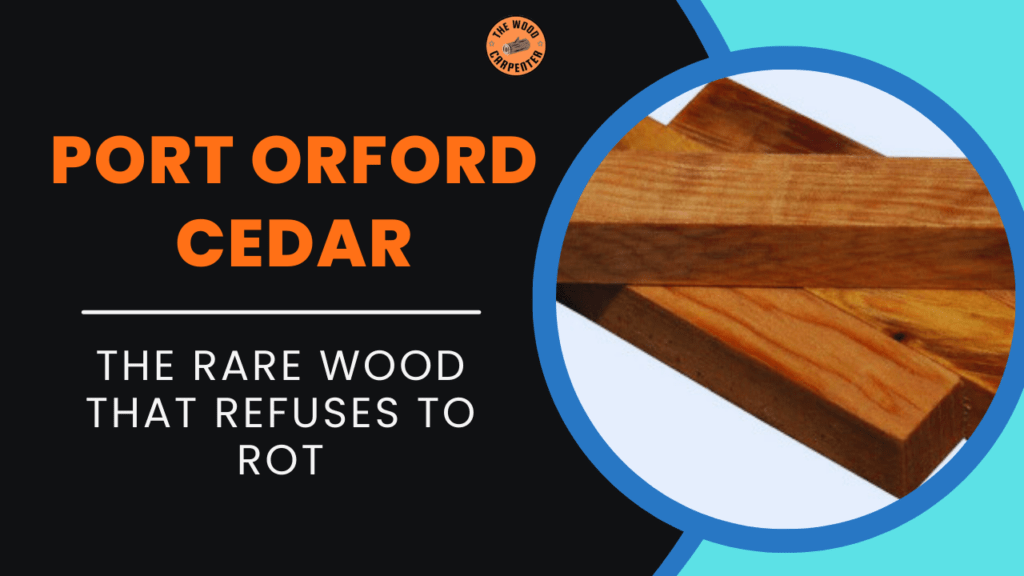
Fresh Port Orford Cedar has a very light color. It ranges from pale yellow to almost white. After the air and sunlight exposure, turns golden.
Over time, untreated wood weathers into a smooth silver-gray color. Both stages look attractive, and many people prefer the natural aging.
If you wish to preserve a particular color, stains and sealers are effective. The wood finishes well and doesn’t blotch.
Common Uses of Port Orford Cedar
Port Orford Cedar is used in more ways than most people expect.
It is best known for wooden arrow shafts because the grain is extremely straight and consistent. Many archery companies still use it today.
The wood is also used in:
- Boatbuilding, where rot resistance and low weight are important
- Musical instruments, especially guitar soundboards
- Decking and outdoor structures in wet climates
Its mix of durability, beauty, and workability makes it suitable for both functional and decorative projects.
Sustainability and Environmental Concerns
Port Orford Cedar is a vulnerable species, according to the IUCN Red List. It has been declining in population due to historical over-logging and root fungal disease present in forests up to the present day.
Old growth trees are no longer sold commercially. Ever since, most of the timber comes from forests that are managed, logs recovered or private landowners.
Due to its restricted availability, this timber will cost more than Western Red Cedar or treated pine. Buying it responsibly and applying it to long-lasting projects is perhaps the best way to justify its use.
Working With Port Orford Cedar
This wood is easy to handle. It can be cut cleanly, planed smoothly and it glues well. It’s a favorite of many woodworkers who use hand tools, since it produces a clean surface.
One important warning is the dust. When cut or sanded, Port Orford Cedar releases a strong smell. Yes, irritation is associated with inhaling the fine dust for long intervals. Always use a mask or respirator during long sessions.
Frequently Asked Questions
Is Port Orford Cedar good for decking?
Yes. It is very resistant to rot and insects, especially when used in wet locations. The primary drawback is cost and limited availability.
How does it compare to Western Red Cedar?
Port Orford Cedar is more dense and offers better impact resistance. Western Red Cedar is inexpensive and readily available, so it tends to be more popular.
Can it be used outdoors without treatment?
Yes, it can be left untreated and will slowly turn silver-gray. However, applying oil or stain helps preserve color and extend life.
Is Port Orford Cedar endangered?
It is classified as vulnerable, not endangered. Sustainable sourcing is important.
Final Thoughts
Port Orford Cedar is rare, hardy and inherently perfect for extended outdoor use. It isn’t easy to source and it’s more expensive than standard lumber but the performance is worth the price in the right project.
If you need wood that can withstand decades of rain, sweat and the test of time only very few things will compare to what Port Orford Cedar has to offer.