
Last Updated on July 7, 2026 by Sam Wood Worker
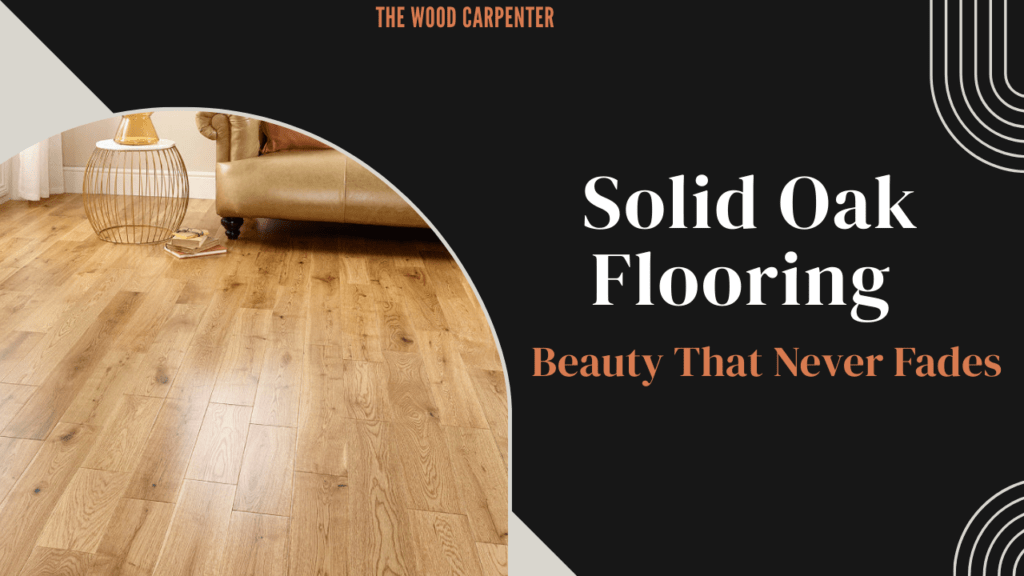
Some home upgrades look good for a few years. Solid oak flooring looks good for a lifetime.
We love real oak underfoot, and there’s something special about it. It is warm, strong and permanent. And unlike trendy styles of flooring that emerge and fade away, solid oak has been a standard in American homes for more than a century — and with good reason.
If you’re considering solid oak flooring, here’s everything you want (or need to know)
What Is Solid Oak Flooring?
Solid oak flooring is made from one single piece of real oak wood. Each plank is solid hardwood from top to bottom.
Most boards are ¾-inch thick and can be sanded and refinished many times over the decades.
This is not the same as engineered wood, which has a thin layer of oak on top of plywood or fiberboard. Solid oak is hardwood from top to bottom.
Oak flooring is available in two main types:
- Red Oak
- White Oak
Both are strong, durable, and beautiful, but they look slightly different.
Red oak has a more visible grain pattern with warm, reddish tones.
White oak has a tighter grain and more neutral brown or slightly gray tones.
Why Oak Became America’s Favorite Hardwood
Oak hits the perfect balance between strength, beauty, and cost.
On the Janka hardness scale (which measures how resistant wood is to dents):
Oak is strong enough to handle daily life but not so hard that it becomes extremely expensive.
Another reason oak is popular in the U.S. is availability. Oak trees grow widely across North America, which keeps pricing more reasonable than exotic hardwoods.
It also takes stain very well. Whether you want light natural tones, rich browns, gray-washed finishes, or deep espresso colors, oak adapts beautifully.
Red Oak vs White Oak
The choice between red and white oak is about look and performance.
| Feature | Red Oak | White Oak |
| Grain Pattern | More visible, dramatic | Tighter, subtle |
| Undertone | Warm, reddish | Neutral, slightly cool |
| Water Resistance | Good | Better |
| Cost | Slightly lower | 10–20% higher |
White oak is naturally more moisture-resistant, which makes it popular for kitchens and modern designs.
Real Cost of Solid Oak Flooring (USA)
Solid oak is an investment. Here’s what you can expect in the United States:
| Item | Average Cost per Sq Ft |
| Unfinished Red Oak (material) | $4 – $6 |
| Unfinished White Oak (material) | $5 – $8 |
| Prefinished Oak | $6 – $10 |
| Professional Installation | $4 – $8 |
| Sanding & Finishing (if unfinished) | $2 – $4 |
Total installed cost usually ranges between $8 and $16 per square foot depending on wood type and project complexity.
Example room estimates:
| Room Size | Estimated Total Cost |
| 150 sq ft Bedroom | $1,200 – $2,400 |
| 300 sq ft Living Room | $2,400 – $4,800 |
While the upfront cost is higher than laminate or vinyl, oak can last 100 years or more. That long lifespan makes it one of the most cost-effective flooring options over time.
Installation Realities
Solid oak cannot float like laminate. It must be nailed down to a wooden subfloor.
Important things to know:
- Wood must acclimate in your home for 5–7 days before installation
- Planks are nailed at a 45° angle through the tongue
- Expansion gaps (½–¾ inch) must be left around walls
- Installation over concrete requires a plywood subfloor
Unfinished oak is sanded and finished after installation. This gives a smooth, seamless look but requires several days of work and drying time.
Prefinished oak is ready to use immediately after installation but may have small bevels between boards.
Finish Options That Protect Your Floor
The finish affects both appearance and durability.
Oil-Based Polyurethane
Adds warmth and amber tone. Extremely durable. Longer drying time.
Water-Based Polyurethane
Clear finish. Keeps natural color. Lower odor and faster drying.
Hardwax Oil
Natural matte look. Easier spot repairs but requires more maintenance.
Most homeowners choose satin sheen because it hides scratches better than glossy finishes.
Maintenance That Actually Works
Taking care of oak floors is simple.
- Sweep or vacuum regularly using a soft brush attachment.
- Use a lightly damp mop with hardwood floor cleaner.
- Never soak the floor with water.
- Avoid steam mops.
- Use felt pads under furniture.
- Keep indoor humidity between 30–50%.
Small seasonal gaps are normal in winter. Wood naturally expands and contracts with humidity changes.
Refinishing is usually needed every 10–20 years depending on wear.
Solid Oak vs Other Flooring Options
| Aspect | Solid Oak | Engineered Oak | Laminate |
| Cost per Sq Ft | $8–$16 installed | $6–$12 installed | $3–$8 installed |
| Refinishing | 6–10 times | 1–3 times | Not possible |
| Lifespan | 100+ years | 25–40 years | 15–25 years |
| Humidity Stability | Moderate | Better | Moderate |
| Resale Value | High | Moderate | Moderate |
Solid oak offers the highest long-term value because it can be refinished many times and rarely needs full replacement.
Common Problems and Solutions
Gaps between boards typically show up when it’s cold and dry in the winter. This is normal seasonal movement.
Cupping (edges raised) usually means moisture from below. Fix the moisture issue first before sanding.
Tiny scratches can usually be fixed with touch-up kits. Damage that goes deep may need to be sanded and refinished.
Wood is also subject to slow color changes under the sun. Rotate the rugs and furniture to promote even aging.
Environmental Benefits
Oak is a sustainable domestic hardwood when sourced responsibly.
Search for FSC-certified, sustainably managed wood.
Because oak lasts for decades and can be refinished instead of replaced, its long lifespan reduces waste compared to carpet or laminate that may need replacement every 10–20 years.
Solid oak is also biodegradable and can be recycled once it has reached the end of its life.
Does Solid Oak Increase Home Value?
Yes.
Houses with hardwood floors tend to sell faster, and for more money, than those with carpet or synthetic flooring.
Real estate statistics prove that hardwood floors can increase the value of your house by up to 3-5% and make your home more appealing to potential buyers.
Buyers appreciate solid oak as a luxury, durable option.
Frequently Asked Questions
Is solid oak flooring waterproof?
No. It is water-resistant when properly sealed, but standing water can cause damage.
How long does solid oak flooring last?
With proper care, 100 years or more.
How often should it be refinished?
Every 10–20 years depending on traffic.
Can it be installed over concrete?
Not directly. A plywood subfloor must be added.
Is DIY installation recommended?
Solid oak installation requires experience and proper tools. Professional installation is strongly recommended.
Final Thoughts
Solid oak flooring is not the cheapest option, but it is one of the smartest long-term investments you can make in your home.
It offers:
- Natural beauty
- Incredible durability
- Refinishing flexibility
- Strong resale value
- Timeless style
Unlike many modern flooring trends, solid oak never feels outdated.
If you plan to stay in your home for years — or even decades — solid oak flooring is not just a purchase. It’s a legacy feature that can truly last a lifetime.