
Last Updated on July 7, 2026 by Sam Wood Worker
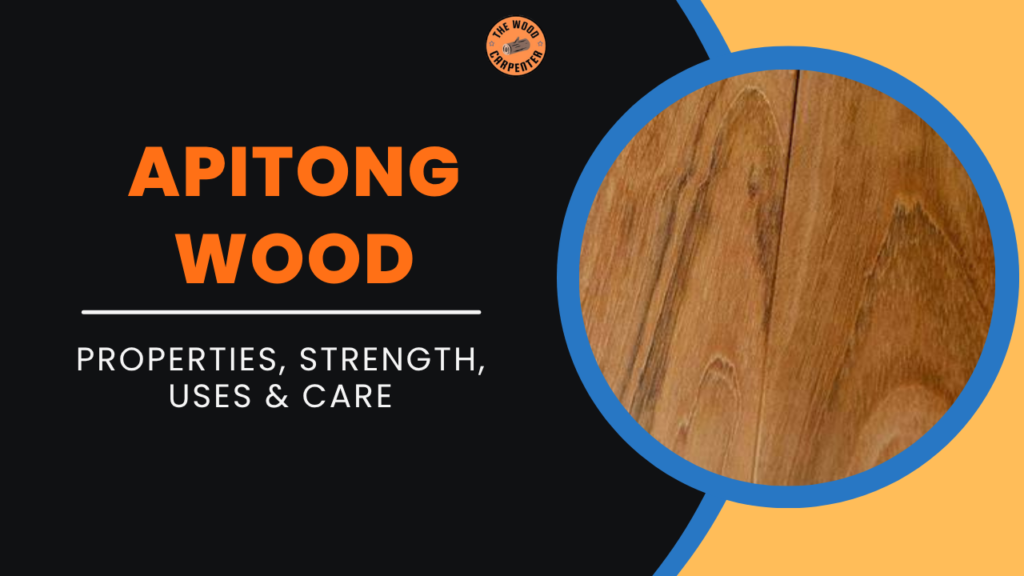
One of Southeast Asia’s toughest hardwoods — trusted by industry, built to last.
If you’ve ever walked across a flatbed trailer deck that’s been hauling heavy freight for years and still feels rock solid, chances are you were standing on Apitong. It’s not trendy. It’s not new. It’s just a timber that keeps showing up in the hardest jobs because it handles them better than most alternatives.
What Is Apitong Wood?
Apitong — pronounced ah-pee-tong — comes from trees in the Dipterocarpus genus, native to the tropical forests of the Philippines, Malaysia, and Indonesia. You might also know it as Keruing. Same wood, different country, different name.
These trees grow tall — up to 200 feet — and fast, adding 30 to 40 inches a year. That growth rate actually matters, because it makes responsible harvesting more realistic than with slower tropical species.
Cut into a fresh plank and you’ll catch a faint resinous smell — earthy, slightly oily. That’s not just interesting trivia. Those natural oils are what make Apitong resist moisture, repel insects, and fight off fungal decay without any chemical treatment. That’s the real reason it keeps getting specified for tough outdoor and industrial work.
Physical Properties
Here’s how Apitong compares to Brazilian Apitong and red oak — a common benchmark for domestic hardwoods:
| Property | Apitong (Keruing) | Brazilian Apitong | Red Oak |
| Janka Hardness (lbf) | 1,390 | 3,160 | ~1,290 |
| Ultimate Strength (psi) | 19,000 | 22,550 | 14,300 |
| Density (lbs/ft³) | 46 | 67 | ~44 |
| Stiffness (psi) | 2.07M | 2.81M | 1.82M |
| Crushing Strength (psi) | 8,900 | 12,450 | ~6,800 |
Apitong is roughly 20% denser than red oak, significantly stiffer, and far stronger under compression. Brazilian Apitong pushes those numbers even further — but it’s heavier and harder to machine. For most trailer and construction work, standard Keruing hits the sweet spot.
Why Apitong wood Dominates Trailer Decking
Strength That Holds Up
Apitong handles load capacities of 1,300 to 1,800 pounds per square foot. Its density means the surface doesn’t compress and develop soft spots the way lighter hardwoods do under repeated forklift traffic. It’s heavier to install, yes — you feel it when you’re moving planks. But that weight is the weight of durability. Fewer replacements, less downtime, better long-term economics.
Built-In Decay Resistance
Apitong sits at Class 1–2 for natural durability — meaning 25-plus years of decay and pest resistance under reasonable conditions. Most untreated domestic hardwoods sit at Class 3 or 4 and need chemical preservatives to come close. Apitong does it naturally.
That said, “reasonable conditions” matters. It’s not indestructible. Give it basic care and it earns its reputation. Ignore it completely and it’ll still outlast most things, but not what it’s capable of.
Common Sizes
- Rough sawn: 10 to 23-foot lengths
- S4S (Surfaced 4 Sides): 1-5/8″ × 7-3/8″
- Shiplap profile: 1-5/16″ × 7″, available 8 to 22 feet
Shiplap is popular for trailers because the interlocking edges minimize gaps where water and debris collect.
Other Uses
Beyond trailers, Apitong shows up wherever loads are heavy and conditions are rough:
- Industrial flooring and subflooring — forklift and pallet jack traffic that would scar softer floors
- Marine structures — dock boards, boat decking, waterfront platforms where moisture is constant
- Bridge decking — temporary and permanent crossings on construction and forestry sites
- Commercial warehouses — anywhere the floor takes mechanical punishment daily
How Environment Affects It
Sun and UV
Prolonged sun exposure greys the surface as UV breaks down the lignin. Left alone, that greying turns into fine surface cracks, which then let moisture in. Horizontal surfaces — trailer decks, dock boards — face the worst of it because they’re exposed all day. Catch it early and it’s a quick fix. Ignore it and the repair gets expensive.
Moisture and Movement
Wood moves with humidity. When it’s wet, it swells. When it dries, it contracts. Over time this cycle opens gaps, causes cupping, and sometimes splits planks along the grain. The target moisture content for Apitong decking is around 15% — stable enough for outdoor use without being so dry that it reacts dramatically when it takes on moisture. Ask your supplier for this number. A good one will know it. A vague answer is worth noticing.
Protecting It: Sealing and UV Coatings
For moisture: Use a quality penetrating oil-based sealant — one that soaks into the wood rather than forming a surface film. Film coatings look good initially but trap moisture once they start peeling, and they peel sooner than penetrating finishes.
- Seal all surfaces before installation, including cut ends — ends absorb moisture fastest
- Reapply every two years; annually near the coast or in high humidity
- Ensure airflow beneath the decking — trapped moisture on undersides undoes the best surface sealing
For UV: Semi-transparent oil-based stains with built-in UV blockers are the best option. They let the grain show while the pigment does real protective work. Many include antifungal agents too — worth checking the label.
Reapply roughly every two years, or sooner if the surface starts fading or showing early checks. Don’t wait for the scheduled date if the wood is telling you it needs attention.
Load Distribution Tips
Even the best decking fails early if loads constantly hammer the same spots. A few habits that extend deck life:
- Put roughly 60% of cargo weight in the front half of the trailer for even axle distribution
- Spread loads side to side — one-sided loading wears planks unevenly
- Use wide forks or pads; narrow tines concentrate pressure
- Never drag loads across the surface — it strips coatings and cuts into the wood fast
- Heavy cargo low, lighter goods stacked above
Maintenance Routine
Inspections: Quarterly, or after any punishing haul. Look for cracking, warping, soft spots, and loose fasteners. Pay extra attention to plank ends and around fastener holes — that’s where moisture gets in first. Where the coating has worn through, clean and reseal before the next wet season.
Cleaning: Stiff brush, mild detergent, clean water rinse. Keep it simple. One thing to skip: high-pressure washing at close range. It drives water into the grain, strips coatings faster than normal weathering, and raises surface fibers. A medium-pressure rinse from a reasonable distance is fine.
Apitong vs. Red Oak
| Apitong | Red Oak | |
| Density | ~20% higher | Base reference |
| Moisture resistance | High (natural oils) | Moderate |
| Decay resistance | Class 1–2, 25+ years | Class 3–4 |
| Janka hardness | 1,390 lbf | ~1,290 lbf |
| Best use | Industrial / transport | Furniture / interior flooring |
Red oak is a great wood — just not for this kind of work. It belongs in furniture and indoor floors. Put it where Apitong lives and it’ll struggle.
Choosing a Supplier
Not all Apitong is equal. Poor storage, inconsistent drying, and vague sourcing all affect what shows up on your job site. When evaluating suppliers:
- Ask about moisture content at delivery. Wood arriving too wet will move significantly once it adjusts — gaps, cupping, fastener problems follow.
- Check sustainability credentials. FSC certification links your purchase to operations with actual forest management accountability, not just claims.
- Look for product range. Rough sawn, S4S, and shiplap in multiple lengths. Narrow inventory usually means limited sourcing.
- Test their knowledge. Can they tell you where the timber came from and how it was processed? Vague answers to specific questions say something.
Is It Eco-Friendly?
Honest answer: tropical hardwoods have a complicated history, and Apitong is part of that story. Demand from Southeast Asian forests drove real deforestation over the past century, and glossing over that isn’t useful.
What’s changed: Dipterocarpus trees grow relatively fast for tropical hardwoods, making responsible plantation harvesting more viable. And Apitong’s durability means far less total timber consumed over time — one 25-year deck versus multiple shorter-lived replacements is a meaningful difference.
Buy from FSC-certified suppliers. That certification isn’t flawless, but it creates real accountability. For projects that genuinely need this level of performance, responsibly sourced Apitong is a reasonable choice.
Common Questions
How long does it last outdoors?
25-plus years with proper sealing and maintenance. In heavy trailer use, 10–15 years before replacement is typical — which is strong for that kind of daily punishment.
Does it work in salt-water marine settings?
Yes, well. The natural oils and density handle moisture and marine organisms better than most timbers. In salt environments, watch your coatings closely — salt accelerates degradation and coatings need renewal before they fail, not after.
Is it hard to work with?
It’s dense, and some boards contain silica that dulls blades faster than you’d expect. Use carbide-tipped bits and blades. Always pre-drill fastener holes near plank ends — Apitong will split if you don’t. Not a difficult wood once you know its temperament, but it doesn’t forgive laziness with tooling.
How does it compare to bamboo composite?
Composite products have improved and often score better on sustainability. But for structural, load-bearing applications — freight transport, heavy industrial decking — they don’t match Apitong’s strength or repairability. A damaged Apitong plank can be replaced individually. Composite failures often require more disruptive fixes.
Final Thoughts
Apitong earns its reputation the straightforward way — it works hard, lasts long, and doesn’t ask for much in return. The upfront cost is higher than softer alternatives, but when you’re calculating real cost over a decade of service, the math usually favors it.
Buy quality timber from a supplier who knows what they’re selling. Seal it properly before it ever sees weather. Manage loads sensibly. Do those three things and Apitong will quietly outlast most of the structures around it.