
African Blackwood is not just a hardwood. It is among the toughest, densest and most valuable woods in the world. For hundreds of years, artisans and musicians have relied on it because it is very durable and precise.
Its scientific name is Dalbergia melanoxylon. This wood is mainly used to make professional musical instruments like clarinets, oboes, and bagpipes. It is also popular with woodturners and carvers because it is smooth, strong, and long-lasting.
In this guide, I will introduce African Blackwood, discuss its characteristics and uses, how easy it is to work with, environmental consideration and why such an expensive species remains so prized.
African Blackwood at a Glance
- Scientific name: Dalbergia melanoxylon
- Common names: African Blackwood, Mpingo, Grenadilla
- Origin: Central and Southern Africa
- Color: Deep black to dark brown or purple
- Hardness: Extremely hard (one of the hardest woods on Earth)
- Density: So dense it sinks in water
- Main uses: Musical instruments, guitar bridges, turning, carving
- Conservation status: CITES Appendix II, Near Threatened
What Is African Blackwood?
African Blackwood is a slow-growing wood found in central and southern Africa, from Senegal east to South Sudan and south to the northern territories of South Africa. It is locally referred to as Mpingo and Grenadilla which are very popular in the music field.
Despite its jet-black appearance, African Blackwood is not a true ebony. It belongs to the Dalbergia genus, the same family as rosewood. However, it behaves very differently from typical rosewoods, both in appearance and performance.
This wood was historically used since ancient Egypt, where it has been identified as the original ebony. Its image of strength, beauty and stability has only increased since that time.
Appearance and Color: More Than Just Black
African Blackwood appears nearly black at first sight. When sanded and polished, subtle shades of dark brown or deep purple often appear under the surface. The grain is very fine and generally straight, creating a glassy smooth finish when worked.
The sapwood, which is rarely used, is pale yellow or cream-colored and sharply contrasts with the dark heartwood. Because many buyers want a uniform black look, pieces with visible sapwood are often less valuable.
It is worth noting that not all African Blackwood is totally black, and suppliers typically charge more for guaranteed all-black stock.
Physical and Mechanical Properties
African Blackwood is famous for its extreme density and strength.
It is one of the hardest woods (extremely hard) in the world, with a janka hardness of 3,670 lbf. In terms of early hardness testing, it even placed higher than Lignum Vitae.
Its density is so great it sinks in water, which all but a few species of wood do. It’s this amazing density that helps account for the rich, stable sound that musical instruments made of ebony produce.
Dimensional Stability
One of African Blackwood’s greatest advantages is its exceptional stability. It resists warping, cracking, and shrinking far better than many other exotic woods, including true ebony.
That makes it good for instruments that need to stay on pitch regardless of temperature and humidity levels.
Tree Size and Natural Growth
African Blackwood trees are relatively small, usually growing 20 to 30 feet tall with narrow trunks. They are exceptionally slow-growing in dry savanna conditions, sometimes taking many decades to reach a usable size.
And most trees are twisted instead of straight, so getting a long, wide plank is unusual.
As a result, African Blackwood is commonly sold in small blocks, turning blanks, or instrument sets rather than large planks.
Working With African Blackwood
Machining and Cutting
African Blackwood is difficult to work with, even for experienced woodworkers. Its hardness quickly dulls tools, and carbide or high-speed steel tools are highly recommended.
This wood makes extremely fine dust, so be sure you have good dust collection and ventilation.
Despite these difficulties, experienced tradespeople typically find the process rewarding once proper methods are applied.
Turning and Carving
African Blackwood is considered one of the best turning woods in the world. When tools are sharp, it cuts cleanly and holds incredibly fine detail.
This makes it perfect for:
- Decorative turning
- Pens and small boxes
- Ornamental carvings
- Precision components
It polishes naturally to a deep shine, often without any finish at all.
Gluing and Finishing Tips
African Blackwood contains natural oils that can interfere with glue. Before gluing, surfaces should be wiped with acetone to improve adhesion.
For finishing, many craftsmen choose no finish at all, relying instead on sanding and buffing to bring out the wood’s natural luster. Oil finishes work well, but thick film finishes are usually avoided.
Why African Blackwood Is the Gold Standard for Musical Instruments
African Blackwood is the industry standard for professional woodwind instruments.
Acoustic Advantages
Its density and uniform structure produce:
- Rich, warm tones
- Excellent projection
- Stable tuning
- Long-lasting precision
Clarinet and oboe makers rely on African Blackwood because it can hold extremely precise internal dimensions for decades.
Because of this, many manufacturers process it using metal-working equipment, treating it almost like steel rather than wood.
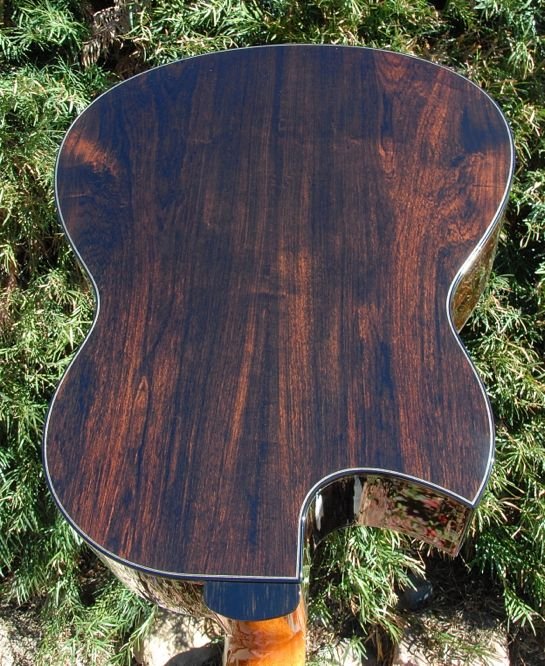
Other Common Uses
Beyond musical instruments, African Blackwood is widely used for:
- Knife handles
- Walking sticks and canes
- Custom tool handles
- Fine inlay work
- Pool cues
- Decorative furniture accents
Its durability and water resistance make it especially popular for items that experience frequent handling.
Price and Availability
African Blackwood is one of the most expensive wood in the world. Prices are pushing ever higher due to slow growth and conservation restrictions.
Larger, all-black pieces are extremely rare and command premium prices. Even small pieces are considered luxury materials.
Conservation Status and Sustainability
African Blackwood is in CITES Appendix II (international trade strictly regulated). It is listed here as Near Threatened by the IUCN.
While the species is not yet biologically endangered, it faces serious risk of commercial extinction. Only a small percentage of harvested trees meet instrument-grade standards, leading to high waste and unsustainable practices.
Health and Safety Considerations
African Blackwood dust can cause irritation in some people. Common issues include skin, eye, or respiratory irritation.
Basic safety measures include:
- Wearing a dust mask or respirator
- Using dust extraction
- Working in well-ventilated spaces
- Wearing eye protection
African Blackwood vs Ebony
Although often confused, African Blackwood is not true ebony.
Compared to ebony, it offers:
- Better dimensional stability
- Greater resistance to cracking
- Higher hardness
- Slightly visible grain patterns
These qualities are why many professionals prefer it over traditional ebony.
Is African Blackwood Right for Your Project?
African Blackwood is unmatched in quality, but it’s not for every project.
It’s best suited for:
- Musical instruments
- High-end turning and carving
- Small precision components
- Projects where performance matters more than cost
For general woodworking, more affordable alternatives often make more sense.
Frequently Asked Questions (FAQ)
Is African Blackwood the hardest wood in the world?
It is one of the hardest known woods, ranking among the top in Janka hardness tests.
Why is African Blackwood so expensive?
Its sluggish growth, modest tree size, narrow availability and conservation restrictions make it expensive.
Is African Blackwood endangered?
It is classified as Near Threatened and protected under international trade laws.
Can African Blackwood be used for furniture?
It is rarely used for large furniture due to size limitations but works well for accents and details.
Does African Blackwood need a finish?
Often no. It naturally polishes to a deep shine without additional finishing.
Final Thoughts
Rather than merely being wood, African Blackwood is a legendary material whose timeline extends back over millennia. It has helped shape music, craft and culture in everything from the elements that make up ancient societies to modern concert halls.
If you are interested in working with African Blackwood, then you have chosen one of nature’s most magnificent products – rare and difficult to work, but unique beyond compare.
 Sam Wood Worker