
Ask most woodworkers to name a few species of wood and they can rattle off oak, walnut, or teak in short order. These types of woods are very generic and available often. However, ask anyone outside the Caribbean about blue mahoe and they may look puzzled.
In Jamaica, it is very different.
Go to a Kingston small furniture store You find a human who makes guitars by hand. Blue mahoe is, quite literally, something to be proud of. It’s more than just another hardwood. It is part of Jamaica’s identity and history.
Blue mahoe originate from a native tree named Talipariti elatum. Previous called Hibiscus elatus. This is also the National Tree of Jamaica It is native in Jamaica and grown on some Caribbean islands and in Cuba.
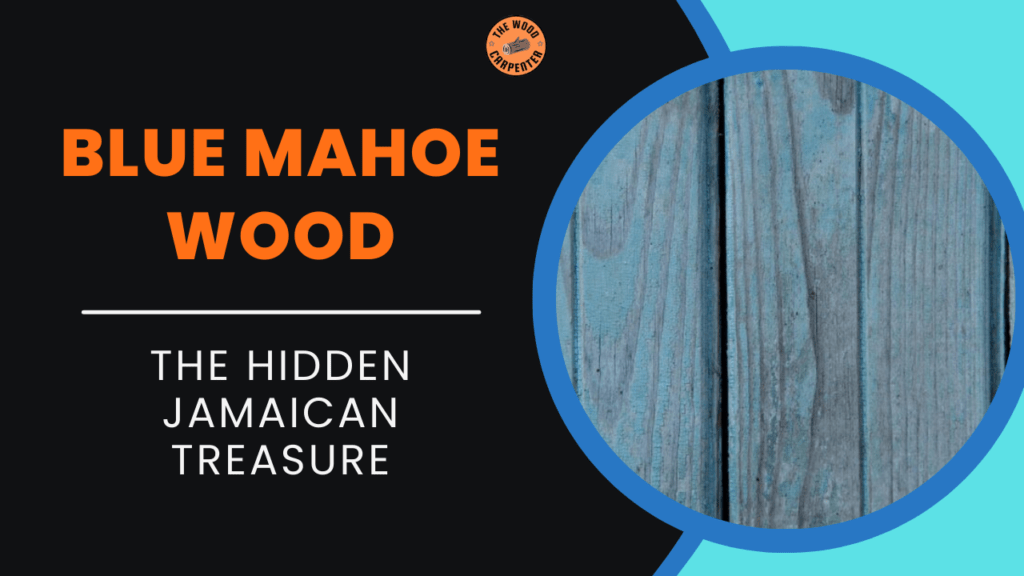
The reason this wood is special is quite simple. It resembles no other timber. The wood turns blue, green, purple, olive, and gray when you slice it open. Occasionally, you can spot multiple colors in one board. Each piece looks slightly different.
In this guide, we help you understand blue mahoe. We will consider the tree and the wood physical properties, the working characteristics in the shop, where it is used and what to be aware of when purchasing it.
The Tree Behind the Timber
Blue mahoe is a member of the mallow plant family. This is from the same family as hibiscus and cotton. If you ever see the tree when it is flowering, the connection is clear.
It has yellow flowers that open in the morning. They gradually redden to crimson as the day wears on. And by the afternoon, they fall from the tree. These are gorgeous flowers that do not last for long.
In nature, the tree grows tall and straight. It commonly reaches between 60 and 100 feet in height. It thrives in the moist tropical forests. It is particularly fond of limestone soil as well as river valleys.
Relative to many other tropical hardwood trees, blue mahoe has a relatively fast growth rate. This allows for its cultivation in plantations around Jamaica instead of only being harvested from the wild.
Neither the bark nor the leaves inspired the name “blue mahoe.” This is coming from the heartwood — the darker inner part of the tree that you see once it is cut. It is those colors that appear within that inner wood, which is what sets blue mahoe apart from the others.
What Makes Blue Mahoe Wood So Unique
When you cut into blue mahoe heartwood, the color is immediate. The base tone is usually olive or greenish-brown, but streaks of blue, blue-green, purple, and gray run along the grain. Under certain lighting, the surface can even appear slightly metallic or marble-like.
The blue tones are most prominent in freshly cut wood. As time goes by and with exposure to light and air, the hue gradually shifts to warmer brown and golden color. The appeal never fades; rather it gets matured.
Sapwood is pale yellow to light cream and clearly separated from the darker heartwood. Many woodworkers prefer using mostly heartwood for decorative pieces, though some intentionally highlight the contrast.
Grain is generally straight to slightly interlocked, has a fine to medium texture and good natural luster. Most boards do not have dramatic flame or curl — the color variations does the drama.
No two pieces look exactly alike. That unpredictability is part of its appeal.
Physical Properties and Strength
Blue mahoe sits in the moderate-to-hard range among hardwoods. It is strong enough for serious furniture but not so dense that it becomes frustrating to work.
| Property | Blue Mahoe Details | What It Means in Real Use |
| Janka Hardness | ~1,420–1,600 lbf | Harder than walnut, similar to or slightly above white oak |
| Density | 40–47 lbs per cubic foot | Solid feel without extreme weight |
| Grain | Straight to shallow interlock | Usually smooth machining |
| Texture | Fine to medium | Polishes very well |
| Natural Durability | Moderately durable | Handles moisture better than many woods |
In practical terms, it dents less easily than pine or cherry but is still workable with standard shop tools.
Shrinkage rates are moderate, meaning it stays reasonably stable once dried properly. In humid climates — like Caribbean regions or coastal cities — that stability matters.
Working with Blue Mahoe in the Shop
One reason craftspeople enjoy blue mahoe is that it behaves well.
Sawing and routing produce clean cuts with sharp blades. It doesn’t burn easily and doesn’t chip excessively. Interlocked grain can cause minor tearout, but light passes and sharp tools solve the issue.
Planing gives smooth surfaces, and hand tools perform beautifully. Scrapers leave a glassy finish before sanding even begins.
Turning is where the wood truly shines. On a lathe, blue mahoe cuts smoothly and reveals its color in a way that feels almost three-dimensional. Bowls, pens, vases, and decorative spindles often show dramatic color transitions that look far more complex than the shape itself.
Gluing is straightforward. It bonds well with standard wood glues. Fasteners hold securely, though pre-drilling near edges is smart practice.
The sawdust has a mild spicy-citrus smell — many describe it as pleasant rather than harsh.
Finishing and Color Changes
Finishing decisions affect how the color presents.
Oil finishes like tung oil or Danish oil deepen the blues and purples and enhance contrast without hiding the grain. Hardwax oils also work beautifully. Film finishes such as polyurethane or lacquer provide strong protection but can slightly flatten the visual depth.
Because the brightest blues appear right after milling, many woodworkers apply finish soon after final sanding to preserve vibrancy.
Over years, the wood naturally shifts toward warmer tones. This aging process is normal and part of its character.
Traditional and Cultural Importance in Jamaica
Blue mahoe is more than decorative wood in Jamaica. It has been used for generations in furniture, cabinetry, carvings, and interior construction. In 1964, it was officially declared the national tree — a symbol of resilience and natural beauty.
Traditional Jamaican furniture often showcased the wood’s natural color rather than hiding it under heavy stain. Hand-carved items, ceremonial pieces, and fine household furniture frequently featured blue mahoe.
In music, it has been used as a tonewood for guitars. Some boutique guitar builders outside the Caribbean now experiment with it as an alternative to more restricted tropical species.
Modern Uses and Where It Excels
Today, blue mahoe is chosen primarily for appearance combined with solid performance.
Fine furniture makers use it for tables, cabinets, and statement pieces where color becomes the main design feature. A dining table made from well-figured blue mahoe does not need heavy ornamentation — the wood itself draws attention.
Bowl and pen makers use it for its shifting colours.
Veneer producers slice it into thin sheets for decorative panels and cabinet doors, allowing the look of blue mahoe without requiring thick solid stock.
It also finds its way into small craft pieces such as jewelry boxes, knife handles and inlays, as even a small piece can be very effective.
Sustainability and Availability
Blue mahoe is not listed under international trade restrictions, but it is not widely available in large commercial quantities outside the Caribbean.
In Jamaica, it is cultivated in both natural forest and plantation management systems. Large amounts of the export market is now supplied by plantation-grown stock.
Outside of the Caribbean it is often sold by specialty tropical hardwood retailers. Most suppliers will have small boards, turning blanks, or veneer, rather than wide structural lumber.
Reclaimed blue mahoe from old buildings or furniture is an excellent option when available.
Prices are generally above those of domestic hardwoods, due to limited supply.
Common Challenges and Practical Solutions
| Issue | What Happens | Simple Solution |
| Color fading | Blue tones warm over time | Use UV-protective finish, limit direct sun |
| Minor tearout | Interlocked grain areas | Sharp tools, lighter passes |
| End checking | Cracks while drying | Seal ends, dry slowly |
| Dust irritation | Sneezing during sanding | Wear mask, use ventilation |
| Sapwood insect risk | Pale wood more vulnerable | Prefer heartwood for heirloom work |
Most challenges are easy to manage with normal woodworking care.
Frequently Asked Questions
What makes blue mahoe blue?
The color comes from natural mineral deposits and chemical processes in the heartwood. The pigment runs through the wood, not just on the surface.
Is blue mahoe the same as mahogany?
No. This can be confusing since the names sound similar but the two are different species and not botanically related.
Is blue mahoe hard to work with?
No. It also cuts and shapes nicely, especially in comparison to extremely hard tropical hardwoods.
Does it last outdoors?
It has natural durability but not much, so it is advisable to seal it and protect it if it is used outdoors for a long time.
Where can I buy it?
Other than Jamaica and Cuba, specialty tropical wood suppliers are the next most common source.
Final Thoughts
Blue mahoe feels special the first time you see it planed smooth. The colors don’t look stained or artificial. They look natural, layered, and alive. It’s rare to find a wood that offers both strong working properties and such unusual beauty.
It may not be as common as oak or walnut. It may require more effort to source. But for projects where you want something people haven’t seen a hundred times before — a statement table, a handcrafted bowl, a custom guitar — blue mahoe delivers something few timbers can.
Not all the best materials are the most recognizable ones. Other times, they are the ones you find once and for all, and never forget.