
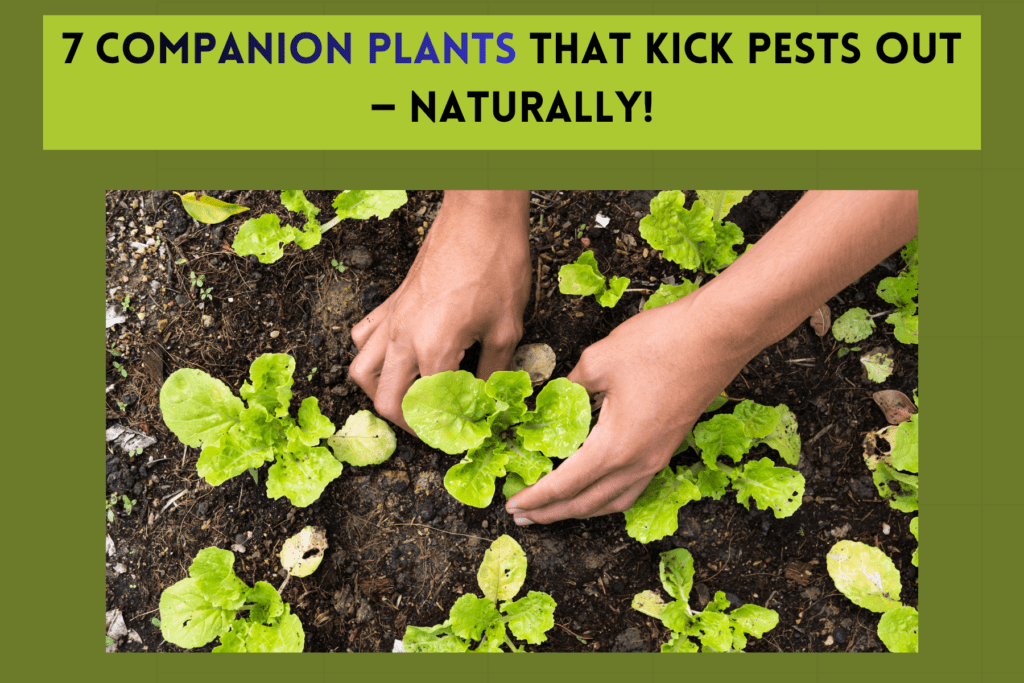
Companion plants for natural pest control: If you’ve ever walked into your garden and asked yourself why some plants just seem to take off when planted next to one another, and others not so much, well, my friends, you are already half-way there with understanding the concept of planting companions.
Think of it as making nice little friends for your plants — some to protect them, some to bring in the good bugs and and some simply keep the troublemakers away.
I remember the first time I planted basil next to my tomatoes. I didn’t have high expectations — I had just read the tip in a gardening group and thought, “Why not?” Within a couple of weeks, my tomato patch smelled amazing, pests stopped hanging around and — for the first time ever — the leaves stayed that deep green instead of ragged and chewed. That’s when I became a companion-planting believer.
And I’m sharing 7 of the best companion plants for natural pest control today so you can grow a healthier garden without resorting to chemicals. Let’s dig in — literally.
What Is Companion Planting? (Quick Simple Explanation)
Companion planting involves growing certain plants together so that they can help each other out. Some drive away pests, others draw in beneficial predators, and some do both themselves — soil health or act as camouflage.
This method is:
- Natural
- Eco-friendly
- Budget-friendly
- Pet, kid and pollinator friendly
- Surprisingly effective
It is one of the oldest organic pest controls — and it still works beautifully.
Why Use Companion Plants for Pest Control?
Because they help your garden in ways sprays and pesticides never can. Companion plants:
✔ Keep pests at bay from vegetables
✔ Attract ladybugs, lacewings, parasitic wasps and more “garden heroes.”
✔ Reduce plant stress
✔ Improve harvest quality
✔ Support pollination
✔ Create a more diverse, balanced garden ecosystem
And once you plant them, they work for you season after season — without being reapplied.
Also read:
Garden Pests: Spot, Prevent & Control Naturally
7 Best Companion Plants for Natural Pest Control
Here are the seven go-to plants that American gardeners trust. They each have their own superpower, and working together, they are a formidable natural defense system.
1. Marigolds — The Pest-Repelling Superstar
If a plants had celebrity spokesperson, it’d be marigolds. They’re tough, hardy and scent that bugs want to steer clear.
Pests They Repel
- Nematodes (tiny soil pests)
- Aphids
- Whiteflies
- Cabbage worms
- Mosquitoes
Why They Work
Marigolds release thiophenes, these natural compounds repel soil-dwelling pests and flying insects.
How to Use Them
- Plant alongside tomatoes, peppers, squash and beans
- Create a border around garden beds
- Mix into vegetable patches for continuous protection
Story tip:
My Grandmother always planted marigolds around her tomato beds. She would say, “They are the little soldiers who guard the garden.” And she was right — it worked “like a charm.” No more nematodes.
2. Basil — The Tomato Bodyguard
Basil is among the most smelling pest repellents you will grow. And tomatoes absolutely love it.
Pests It Repels
- Mosquitoes
- Flies
- Thrips
- Tomato hornworms
Why It Helps
Basil’s strong essential oils confuse pests looking for host plants.
How to Use It
- Plant basil around tomatoes, peppers, and beans
- Place a several basil plants near patios to deter mosquitoes
- Harvest frequently — basil becomes bushier and more productive
Bonus: You’ll always have fresh basil whenever you need it for pasta, pizza, and summer salads.
3. Nasturtiums — The Perfect “Trap Crop”
Nasturtiums are beautiful, edible, and surprisingly clever. They’re not pest repellants — they draw pests away from your crops.
Pests They Attract (and Trap)
- Aphids
- Cabbage worms
- Flea beetles
- Whiteflies
- Squash bugs
Why They Work
Pests prefer nasturtiums over vegetables. They gather on the nasturtiums instead of your main crops, making them easy to remove.
How to Use Them
- Plant next to brassicas (kale, cabbage, broccoli)
- Surround squash, cucumbers, and pumpkins
- Remove heavily infested nasturtium leaves
It’s like giving pests a tasty distraction buffet — far away from your actual harvest.
4. Rosemary — The Woody Scent That Bugs Hate
Rosemary smells wonderful to us, but pests? Not so much.
Pests It Repels
- Cabbage moths
- Carrot flies
- Mosquitoes
- Bean beetles
9 Must-Have Mosquito Repelling Plants
Why It Works
Strong aromatic oils create a natural barrier that flying insects avoid.
How to Use It
- Plant next to carrots, cabbage, broccoli, and beans
- Use as a border around herb gardens
- Trim often to release fresh scent
Plus, rosemary is drought-tolerant and low maintenance — perfect for busy gardeners.
5. Chives — The Quiet Protector
Chives may look delicate, but they’re one of the strongest insect deterrents.
Pests They Repel
- Aphids
- Spider mites
- Japanese beetles
- Carrot rust flies
Why They Work
Chives release sulfur compounds that pests dislike.
How to Use Them
- Plant near roses to prevent aphids
- Add around carrots and onions
- Surround strawberries for healthier leaves
Chives also attract pollinators when they bloom — a double win.
6. Lavender — Fragrant, Beautiful, and Tough on Pests
Lavender is more than just a pretty face. Its scent repels a wide range of insects while attracting tons of beneficial ones.
Pests It Repels
- Moths
- Fleas
- Mosquitoes
- Whiteflies
Why It Works
Lavender’s essential oils are naturally pest-repelling but pleasant to humans and bees.
How to Use It
- Plant near cabbage, onions, and fruit trees
- Use as a border along walkways
- Dry flowers for DIY sachets and home use
Few plants are this useful indoors and outdoors.
7. Dill — The Beneficial Insect Magnet
If you want an army of helpful insects in your garden, grow dill. It attracts some of the most powerful natural predators.
Good Bugs It Attracts
- Ladybugs
- Lacewings
- Hoverflies
- Parasitic wasps
Pests It Helps Control
- Aphids
- Tomato hornworms
- Cabbage loopers
How to Use It
- Plant near tomatoes and cabbage
- Let a few dill plants flower — that’s when they attract the most beneficial insects
- Avoid planting too close to carrots (they cross flavor)
Dill practically brings nature’s pest control straight to your backyard.
Ultimate Guide to Home Gardening: Everything You must know
How to Combine These Companion Plants for Maximum Effect
Here’s an easy formula for a pest-resistant garden bed:
🌱 Around Tomatoes
- Basil
- Marigolds
- Dill
🌱 Around Cabbage and Brassicas
- Nasturtiums
- Rosemary
- Lavender
🌱 Around Carrots
- Rosemary
- Chives
🌱 Around Squash and Cucumbers
- Nasturtiums
- Marigolds
Mixing these plants makes your garden harder for pests to navigate — they get confused, distracted, or repelled entirely.
Do Companion Plants Really Work? (Yes — Here’s Why)
Companion planting isn’t magic. It’s biology.
Plants communicate through:
- Chemical signals
- Scents
- Root exudates
- Flower structures
These attract predators, confuse pests, and alter the garden ecosystem in subtle but powerful ways.
And when used consistently, companion plants reduce pest problems dramatically.
FAQs About Companion Plants for Pest Control
1. Do companion plants replace pesticides?
Often yes, especially for small home gardens. They can reduce or eliminate the need for chemical sprays.
2. How close should companion plants be planted?
Within the same bed — 6 to 12 inches is ideal.
3. Do companion plants help potted plants too?
Absolutely. Basil, lavender, and chives grow beautifully in containers.
4. Can I plant all seven together?
Yes — variety improves pest control and supports beneficial insects.
5. How long do they take to work?
Most start repelling pests within 2–3 weeks as they release scent compounds.
6. Are these plants safe for pets?
Yes, except marigolds and lavender may irritate sensitive pets if eaten.
Final Thoughts: Let Nature Help You Garden Smarter
Companion planting is one of those gardening tricks that feels almost too simple — until you try it. Once you see how basil protects tomatoes, how marigolds stop nematodes, or how dill brings in ladybugs, you’ll wonder why you didn’t start sooner.
These seven plants act as your garden’s natural defense system. They reduce pests, support pollinators, and make your garden look and smell incredible along the way.
Companion planting is one of those gardening tricks that seems almost too simple — until you try it. When you witness how the basil shelters tomatoes, marigolds repel nematodes or dill brings in ladybugs, you will wonder why you did not start sooner.
These seven plants serve as your garden’s weapons of natural defense. They’ll cut down on pests, help out pollinators, and make your garden look and smell incredible along the way.