
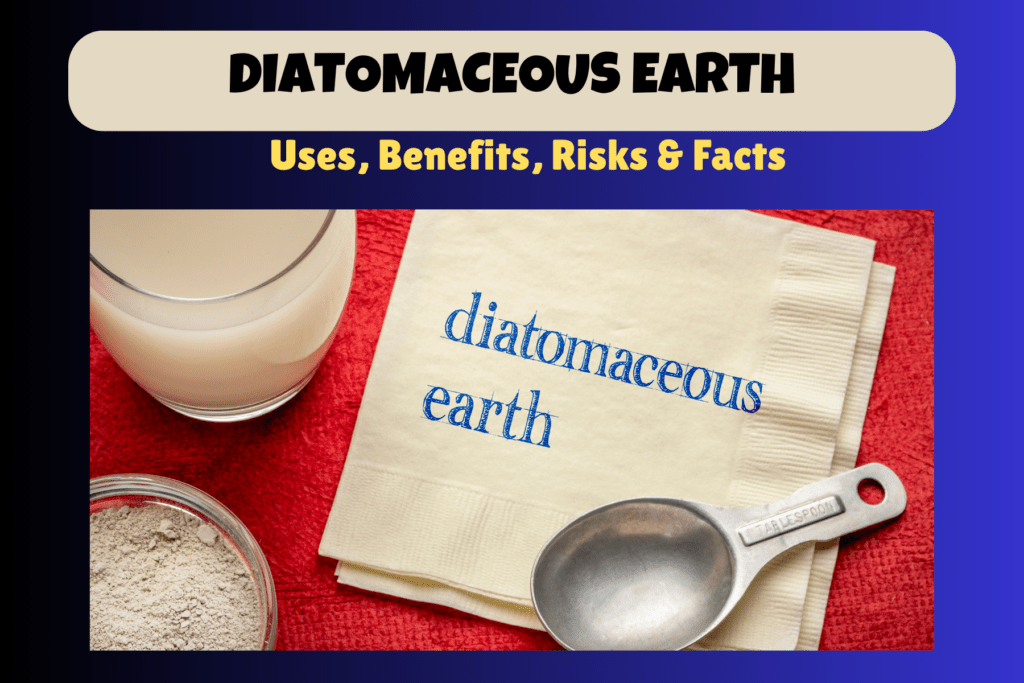
If you’ve ever researched natural pest control, healthy soil or even support wellness, chances are you’ve seen the term “diatomaceous earth” (often shortened to simply DE). It’s everywhere — from gardening videos to methods for natural cleaning to the contents of supplement shelves. But what exactly is it? How does it work? And is it truly safe?
I’ll guide you through the everything you must know about Diatomaceous Earth in this comprehensive post using easy to understand language. You will learn what it is, how it works, what science says, where it can help and — equally important — where it cannot.
Let’s dive in.
What Is Diatomaceous Earth?
Diatomaceous earth is a naturally occurring powder made from the fossilized remains of tiny aquatic algae known as diatoms. These ancient organisms had hard shells rich in silica, a mineral that forms the structure of DE.
Over millions of years, diatoms settled at the bottom of oceans and lakes, building thick deposits. When mined and crushed, these deposits produce a soft, white or off-white powder that looks harmless—almost like flour—but has powerful physical properties.
What Makes DE Unique?
DE is:
- Highly absorbent
- Porous
- Abrasive on a microscopic level
- Rich in natural silica
- Chemically neutral (pH-balanced)
These qualities make DE useful in a wide range of settings: agriculture, homes, industry, and even certain health practices.
Types of Diatomaceous Earth
Not all DE is the same. The type you choose matters—especially for safety.
1. Food-Grade DE
- Contains very low crystalline silica, which makes it safer for household use.
- Used in grain storage, gardening, and sometimes as a dietary supplement.
- Approved by the FDA as an anti-caking agent in food.
2. Filter-Grade (Pool-Grade) DE
- Heated at high temperatures to create crystalline silica, which improves filtering ability.
- Used in pool filters, industrial filtration, and manufacturing.
- Not safe for ingesting or breathing in.
Always check the label carefully. If you plan to use DE in your home, garden, or around pets, choose food-grade only.
How Diatomaceous Earth Works
DE does not work like chemical pesticides or cleaners. Instead, it works through a physical mechanism, which is part of why it remains effective even when bugs become resistant to chemical sprays.
How It Kills Insects
Insects have a thin waxy coating on their exoskeleton that keeps moisture inside their bodies. When insects crawl over DE:
- The sharp particles scratch and absorb this protective layer.
- The insect begins to lose moisture.
- Within hours to days, the insect dehydrates and dies.
This means DE:
- Works only through direct contact
- Works only when dry
- Doesn’t need to be eaten by insects
- Doesn’t create chemical resistance over time
It’s commonly used against:
- Ants
- Bed bugs
- Fleas
- Cockroaches
- Beetles
- Earwigs
- Spiders
- Grain pests
While it’s effective, it is not a fast kill like chemical sprays. It requires patience and the right application.
Common Uses of Diatomaceous Earth
1. Pest Control (Most Popular Use)
This is where DE really shines. Because insects must walk through the powder for it to work, people often sprinkle it:
- Along baseboards
- Around bed frames
- Near pet beds
- Under appliances
- In garden soil
- Around plants
- In cracks and crevices
For outdoor use, it’s best applied during dry weather, since moisture reduces effectiveness.
2. Gardening and Soil Improvement
Gardeners use DE because its natural porous structure helps:
- Improve drainage
- Hold moisture
- Reduce compaction
- Support root aeration
It is also sometimes mixed into potting soil for indoor plants, succulents, and bonsai.
3. Grain and Food Storage
Food-grade DE is legally allowed as an anti-caking agent, so it’s used to:
- Coat grain in storage bins
- Prevent insect infestations
- Keep feed dry and loose
Farmers have used DE safely for this purpose for decades.
4. Household Cleaning and Deodorizing
Because DE is mildly abrasive, people use it:
- As a gentle scrubbing powder
- To polish metal
- To freshen carpets
- To absorb oil spills
- To deodorize trash cans
It works similarly to baking soda but with extra scrubbing power.
5. Filtration
Filter-grade DE is used in larger industries for filtering:
- Swimming pool water
- Beer
- Wine
- Oils
- Chemicals
This type is never for home use unless you know exactly what you’re doing.
Possible Health Uses (But Limited Evidence)
Some people use food-grade DE as a supplement for:
- Digestion
- Detox
- Improved skin, hair, and nails
- Better bone health
- Lower cholesterol
However, major sources clearly state that scientific evidence is weak or insufficient for these uses.
What Research Shows
- A small older study suggested DE may help reduce cholesterol levels, but the study lacked a control group and was too small to draw strong conclusions.
- Claims about detoxification, skin improvement, or digestive support are mostly anecdotal, not proven.
- DE passes through the digestive system without being absorbed, so any internal effects are likely limited.
If you are considering DE as a supplement, talk to a healthcare professional first. It should never replace medical treatment.
Is Diatomaceous Earth Safe?
DE can be safe when used correctly—but misuse can be harmful.
Safe When:
- Using food-grade DE
- Applying it in well-ventilated areas
- Keeping powder dry
- Avoiding inhalation
- Wearing a mask during application
- Keeping it away from eyes
Not Safe When:
- Using filter-grade DE for home or health use
- Breathing in large amounts of DE dust
- Applying it around people with asthma
- Using it in enclosed, unventilated rooms
Health Risks
According to sources
- Inhaling DE can irritate or damage lungs.
- DE may irritate eyes and skin.
- Long-term inhalation of crystalline silica (from filter-grade DE) can cause serious lung disease.
- Pregnant or breastfeeding individuals should avoid supplements due to lack of safety research.
Handled responsibly, DE is considered low-risk—but not risk-free.
How to Use Diatomaceous Earth Safely
Here are simple, practical tips:
For Pest Control:
- Lightly dust thin layers (don’t pile it).
- Keep it dry.
- Reapply after rain or cleaning.
- Use around cracks, edges, and insect pathways.
For Gardening:
- Mix small amounts into soil or sprinkle around plant bases.
- Avoid applying during windy conditions.
For Home Cleaning:
- Wear a mask to avoid inhaling dust.
- Use small amounts and wipe surfaces clean afterward.
For Pets:
- Never apply directly to a pet’s fur without professional guidance.
- Use around bedding and sleeping areas instead.
Diatomaceous Earth: Pros and Cons
Pros
- Natural, non-chemical pest control
- Safe around children and pets when used correctly
- Insects do not develop resistance
- Long-lasting as long as it stays dry
- Useful in soil, cleaning, and deodorizing
- Affordable and widely available
Cons
- Ineffective when wet
- Requires direct contact with insects
- Works slowly
- Can irritate lungs if inhaled
- Health supplement claims are weakly supported
- Messy if overapplied
Who Should Use DE?
DE is a great option for:
- Homeowners dealing with ants, roaches, fleas, or spiders
- Gardeners wanting natural pest control
- Pet owners wanting non-chemical treatments for living areas
- Anyone looking for a natural cleaning or deodorizing powder
- Farmers storing grain
- People who prefer low-toxicity solutions
It is not ideal for people who want fast results or those with respiratory conditions.
Final Thoughts
Diatomaceous Earth (DE) is a wonderful natural substance with many uses depending on specific situational needs. From pest control and soil enhancing to surface cleaning and water absorption, DE is a treasure to both the home gardener as well as to larger agricultural enterprises.
If used proper — particularly the selection of food-grade DE and not inhaling it — it can be both safe and effective.
But let’s be real: DE is no magic potion and there isn’t a ton of strong scientific evidence to support many of the internal health claims you may read about. Its best known uses are external, particularly for pest control and sanitation.
Used responsibly, DE can be a valuable addition to your natural living toolkit.
FAQs About Diatomaceous Earth
1. Is food-grade DE safe to eat?
Food-grade DE is considered safe in small amounts, but research is limited. Always talk to a healthcare provider before using it as a supplement.
2. Can DE harm pets?
Food-grade DE is safe around pets, but breathing in dust can irritate their lungs. Avoid applying it directly on fur without vet guidance.
3. How long does DE take to kill insects?
Anywhere from a few hours to several days. It depends on the insect type, humidity, and how much contact occurs.
4. Does DE lose effectiveness?
Yes—when it’s wet. Once dry again, it becomes active.
5. Is DE safe for gardens?
Yes. Many gardeners use it as a natural insect control method and soil conditioner.
6. Can DE kill beneficial insects?
Unfortunately, yes. It can harm bees, ladybugs, and other insects if applied directly where they travel. Use targeted applications.
7. Is DE eco-friendly?
Yes. Because it works physically, not chemically, it does not pollute soil or water.