
If you walk through an oak-hickory forest in the eastern United States, you might be standing under a Mockernut Hickory tree and not even know it. It does not have bright flowers or bark that peels in big strips. It grows slowly and quietly, sometimes living for hundreds of years.
But when you learn about this tree, you start to see how strong it is. You also see how important it is for wildlife and how much it means to American forests. Many homeowners who plant this tree say the same thing after some years: “It grew slowly at first, but now it is the strongest and healthiest tree in my yard.”
This quiet strength is what makes the Mockernut Hickory so special.
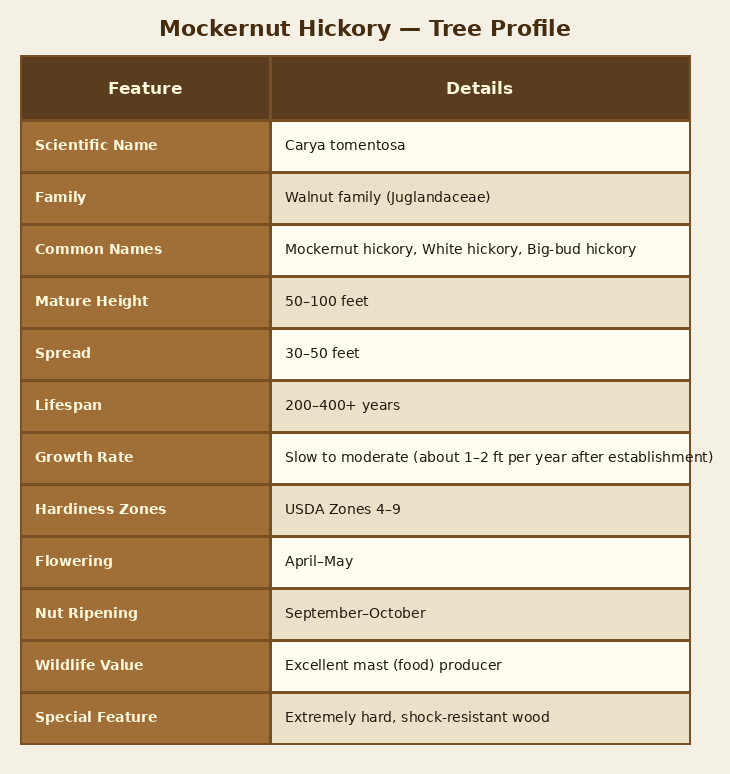
Quick Facts at a Glance
What Is Mockernut Hickory?
Mockernut Hickory is a large native deciduous tree in the walnut family. It is one of the “real hickories,” meaning its wood is very dense, trunks are stout, and life span is protracted.
Every time I see the name mockernut (which I do frequently), it has a story to tell. The nuts appear big and inviting, but upon breaking through the thick outer husk the kernel within is tiny. The tree might as well be mocking you.
Native Americans valued hickory nuts so much that they crushed them into a rich drink or porridge called pocohicora. Early settlers adopted both the food and the name, which later became the word “hickory.”
In the wild, this is the tree of long life. It withstands drought for poor soil, wind, and heat. With the right amount of time and the right amount of space, this tree becomes one of the most reliable trees in the entire forest.
How to Identify Mockernut Hickory
At first glance, many hickories look similar. But Mockernut has a few reliable clues.
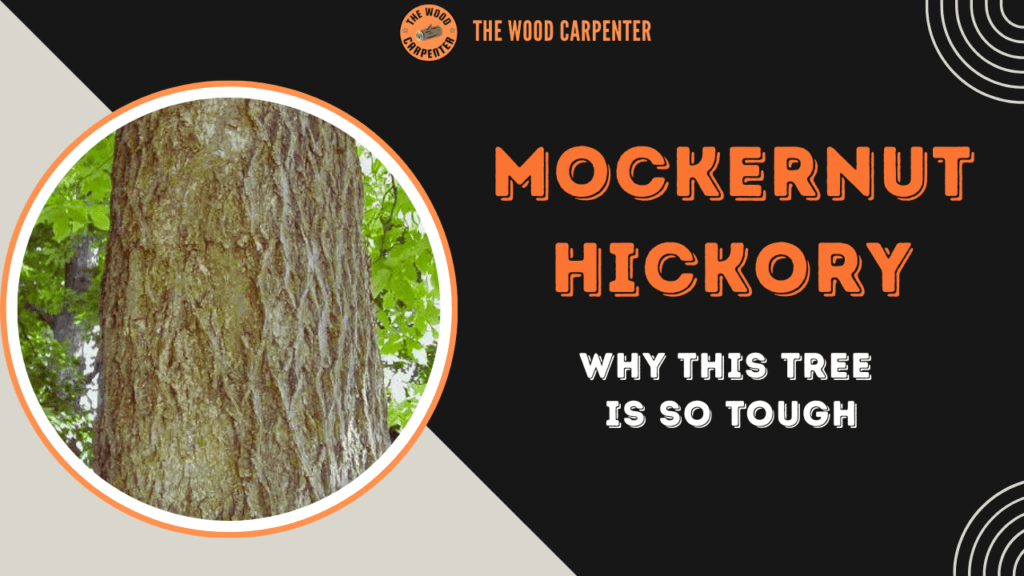
The bark is tight and ridged, forming a rough net-like pattern. Unlike shagbark hickory, it never peels into long strips.
Leaves are compound and usually have 7 to 9 leaflets. The underside feels fuzzy and slightly lighter in color. If you crush a leaf, you may notice a mild spicy or citrus-like scent.
In winter, the buds stand out. They are large, rounded, and covered with fine hairs, almost like tiny velvet caps.
The nuts appear in fall. It has a thick outer husk and a very hard shell on each fruit. It contains a sugary but small kernel within.
A simple field tip: if the bark is tight (not shaggy) and the leaf undersides are fuzzy, you’re likely looking at Mockernut.
Native Range and Habitat
Mockernut Hickory has an extensive range throughout eastern United States, ranging from the Northeast region on down to Florida and then west to Texas and part of the Midwest.
It prefers the uplands such as ridges, slopes, and dry, well-drained hillsides. The tree loves full sun and prefers fertile, well-drained soil, but can withstand drought better than most hardwood trees.
You’ll often find it growing alongside oaks, shortleaf pine, and other hickories. Because it does not tolerate shade well, it grows slowly under a forest canopy but speeds up when it gets more sunlight.
What does this mean for the homeowner — the tree needs space to grow and needs some sun.
Why Wildlife Depends on It
Foresters refer to Mockernut Hickory as a mast tree, a producer of highly nutritious nuts that feed wildlife.
Squirrels, chipmunks, deer, black bears, foxes, rabbits, turkeys, ducks, and quail all depend on hickory nuts—particularly in fall and winter when other food is scarce.
Squirrels have an important role to play as well. They bury nuts for the future and forget where they have buried some of them, which helps new trees to grow naturally.
The leaves also support many insects and moth species, including the luna moth and the giant regal moth. Birds often nest in cavities that form in older trees.
For someone that wants to create a wildlife-friendly property Mockernut Hickory is the best true long-term (hundreds of years) option.
Wood: One of the Toughest in North America
Mockernut Hickory wood is famous for one reason: strength.
It is extremely hard, tough, and flexible at the same time. That rare combination allows it to absorb heavy impact without breaking.
About 80% of harvested hickory is used for tool handles such as axes, hammers, and ladders. It is also used for:
- Furniture and flooring
- Sporting equipment
- Dowels and industrial products
- Firewood and charcoal
- Smoking meats
Anyone who has cooked with hickory knows the rich, smoky flavor it adds.
In everyday terms, if you want wood that lasts through heavy use, hickory is hard to beat.
Are the Nuts Worth Eating?
Yes, Mockernut Hickory nuts are edible and nutritious. They contain healthy fats, protein, vitamin E, magnesium, and energy-rich oils.
The challenge is the shell. It is thick and extremely hard, and the kernel inside is small. Most people collect them in fall when the husk splits open and use a heavy hammer or nutcracker.
The flavor is sweet and rich. Some people roast the kernels, grind them into butter, or mix them into trail snacks.
Think of it this way: the reward is good, but you’ll work for it.
Growing Mockernut Hickory in Your Yard
This tree is best for large properties, farms, or long-term landscape plans.
It needs full sun and well-drained soil. Space trees at least 30–50 feet apart. Water regularly during the first year, then the tree becomes quite drought-tolerant.
One important detail is the deep taproot. Because of this, mature trees are difficult to transplant. Planting young nursery stock or starting from stratified seed works best.
Another reality check: patience is required. Trees may take around 20–25 years to produce nuts. But once established, they can continue for centuries.
This is not a tree for quick results. It is a tree you plant for future generations.
Pests, Diseases, and Care
Mockernut Hickory is generally hardy, but a few problems can appear, especially when trees are stressed by drought.
Possible issues include hickory bark beetles, nut weevils, borers, twig girdlers, and occasional leaf diseases such as anthracnose or leaf blotch.
Healthy trees in good soil usually resist most problems. Minimal pruning and proper spacing help maintain strong growth.
Seedlings are sensitive to late frost, but mature trees handle harsh weather well.
Mockernut vs. Other Hickories
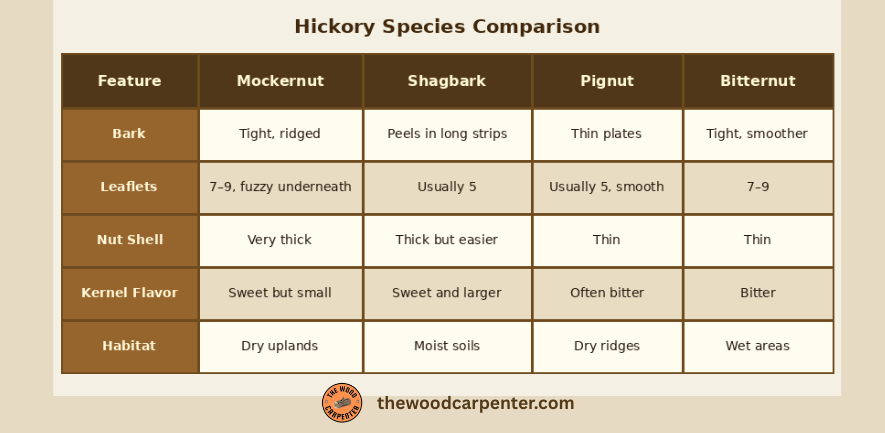
The easiest difference to spot is the bark. If it isn’t shaggy, you’re probably not looking at shagbark.
Real-Life Perspective
So many landowners plant these fast-growing trees only to regret when branches break or the tree begins to decline after 20 years. Mockernut Hickory is the opposite. It is a slow starter, but once it takes root, it is one of the toughest, most reliable trees on the property.
This is not the ideal option if you want shade next summer. For a legacy tree that feeds the wildlife, holds up in harsh weather and is still standing centuries down the road, it’s hard to find a better option.
Final Thoughts
Mockernut Hickory doesn’t grow fast. It doesn’t produce easy-to-crack nuts. But what it does provide is mightiness, steadfastness, environmental usefulness, and stability.
This tree, with its slow growth has a lesson to impart to us: In a world of instant landscaping, all good things come from nature comes slowly.
You plant it once, give it plenty of space, and it may outlive everyone who planted it.