
Last Updated on August 14, 2026 by Sam Wood Worker
It is one of the most widely used softwoods in the world. Whether it’s a house frame, a musical instrument, something as small or even an unassuming cardboard box — spruce is found everywhere.
But what exactly makes spruce so popular? And why do some builders swear by it while others prefer sturdier substitutes?
Having researched several industry sources, expert guides and forestry sites – we have compiled this definitive guide that brings you all the details
Let’s dive in.
🌲 What Is Spruce Wood?
Spruce wood comes from spruce trees, which belong to the pine family (Pinaceae). There are more than 35 species of spruce found across North America, Europe, and parts of Asia. Some of the well-known ones include:
- Norway spruce
- Sitka spruce
- White spruce
- Black spruce
- Red spruce
These trees grow tall—often between 20 to 60 meters—and produce straight, clean logs that are ideal for timber. Because the wood is usually light in colour, uniform in texture, and easy to work with, spruce has become a favourite in carpentry, construction, and woodworking.
🎨 Appearance: What Spruce Wood Looks Like
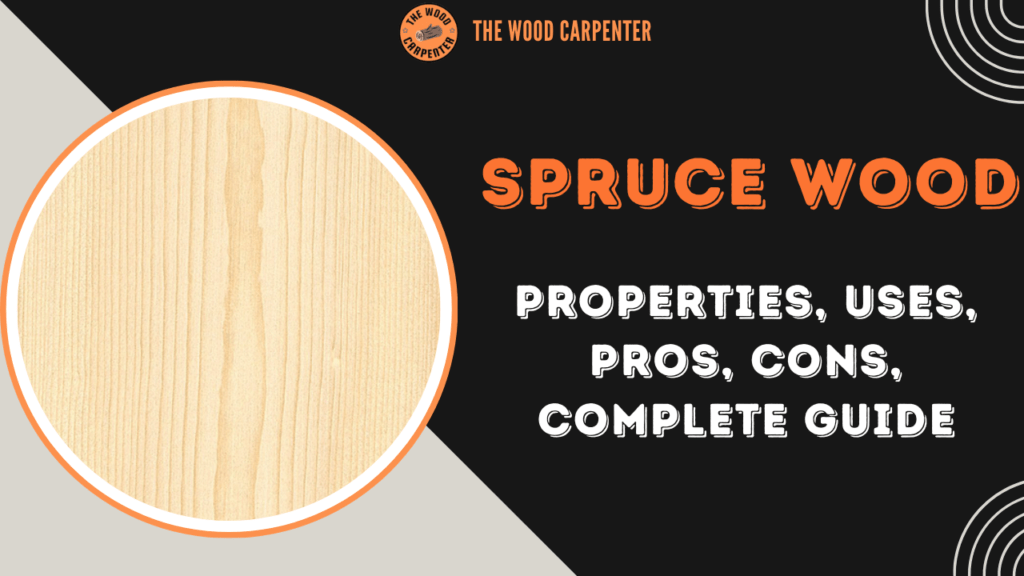
Spruce is a bright, clean and fresh color. When you examine a piece of spruce more carefully, here’s what you’ll see:
- Colour: Creamy-white to pale yellow. Sometimes a little reddish or pinkish depending on the species.
- Grain: Mostly straight; fine and even.
- Uniformity: Sapwood and heartwood often look alike, giving spruce a smooth, consistent look.
This even grain and natural colour make spruce a good “blank canvas” to stain, paint or leave natural.
🧰 Physical Properties of Spruce Wood
Spruce is a softwood, technically speaking but that doesn’t make it weak. In truth, spruce has a remarkably favorable strength-to-weight ratio —reason builders use it for framing and structural components.
Here are its main properties:
1. Lightweight
Spruce is noticeably lighter than most hardwoods. This makes it easy to transport, lift, and work with.
2. Soft and Easy to Work
Carpenters like spruce because it:
- Cuts cleanly
- Sands smoothly
- Glues well
- Nails and screws easily
- Accepts paint or sealer evenly (with proper preparation)
It’s especially great for beginners who are learning woodworking because the tools glide through it without much resistance.
3. Low Density
Its low density means it can dent, scratch, or compress under heavy pressure. This is the biggest reason it’s not ideal for flooring or heavy-use furniture.
4. Good Acoustic Qualities
High-quality spruce—especially Sitka spruce—is used for soundboards in:
- Guitars
- Violins
- Pianos
- Mandolins
Musical instrument makers value spruce for its clarity, resonance, and ability to vibrate freely without cracking.
5. Dries Quickly
Spruce dries faster than many woods and doesn’t warp easily when seasoned properly.
The Ultimate Guide to Woodworking: Types of Wood
⚠️ Durability: The Weak Side of Spruce
Spruce has many strengths, but durability is not one of them.
Here’s what you need to know:
❌ Poor Rot Resistance
Spruce does not naturally resist fungi, moisture, or insects.
❌ Not Good Outdoors Without Treatment
If left untreated outdoors, spruce will absorb moisture, swell, and eventually rot.
❌ Not Ideal for Ground Contact
Using spruce for fencing posts, outdoor benches, or garden beds without pressure-treatment is usually a bad idea.
However…
With proper sealing, finishing, and regular maintenance, spruce can survive outdoors for moderate periods.
🌍 Sustainability and Environmental Impact
Spruce can be found in cold and temperate climates across the northern hemisphere. In many countries, particularly Europe, spruce is under stringent sustainability laws. Spruce is an environment-friendly material; it grows quite fast, and there are many available timbers of this kind.
Forests in countries like Norway, Sweden, Germany, and Canada follow replanting guidelines that ensure a balance between harvesting and regeneration.
🧱 Common Uses of Spruce Wood
Spruce is extremely versatile. Here are the major ways it is used:
1. Construction and Framing
Spruce is widely used in construction lumber, especially in North America and Europe.
Builders choose spruce because it is:
- Strong relative to its weight
- Affordable
- Readily available
- Easy to saw and cut
Typical uses include:
- Wall framing
- Roof trusses
- Beams
- Interior partition walls
- Joists
Many lumber yards sell SPF (Spruce-Pine–Fir), which is a mix of softwoods used for general construction.
2. Furniture and Interior Woodwork
Although not as strong as hardwoods, spruce is suitable for:
- Light furniture
- Cabinets
- Shelves
- Drawers
- Tables (light-use)
- Bed frames
- Interior trim
Because spruce accepts stains and paints well, it’s popular for decorative projects too.
3. DIY Projects and Crafts
Carpenters and home hobbyists love spruce for:
- Picture frames
- Wooden toys
- Storage boxes
- Floating shelves
- Simple home décor projects
It’s a great “starter wood” for people learning woodworking because mistakes are easy to fix and the material is forgiving.
4. Musical Instruments
Sitka spruce, Red spruce, and Engelmann spruce are highly prized for musical instrument soundboards. They offer clear tones and excellent resonance.
5. Paper and Pulp Industry
Spruce fibres are long and strong, making them perfect for:
- Paper
- Cardboard
- Packaging materials
This makes spruce an economically important species for the paper industry.
👍 Advantages of Spruce Wood
Here is why spruce remains so popular:
✔ Affordable and Widely Available
Because spruce grows in many countries and is harvested responsibly, it is relatively inexpensive.
✔ Lightweight Yet Strong
This makes it excellent for framing and woodworking.
✔ Easy to Work
Tools glide through spruce, making it a pleasure for carpenters—especially beginners.
✔ Smooth and Attractive
Its light colour and fine grain make it suitable for both rustic and modern interior designs.
✔ Great for Acoustics
Instrument makers still use spruce for top-quality guitars and violins.
👎 Disadvantages of Spruce Wood
No wood is perfect. Here’s where spruce falls short:
✘ Poor Natural Durability
Not recommended for long-term outdoor exposure without treatment.
✘ Prone to Dents and Scratches
Because it’s soft, spruce gets damaged under heavy use.
✘ Can Stain Unevenly
If you want a dark, stain-heavy finish, you must use wood conditioner first to avoid blotchy results.
✘ Not Suitable for High-Wear Surfaces
Items like floors or heavy kitchen countertops should ideally be made from harder woods.
💡 Tips for Working With Spruce Wood
If you’re planning a project using spruce, these tips will help:
✔ Pre-drill holes
This prevents splitting, especially near edges.
✔ Use a sanding sealer or wood conditioner before staining
Spruce can absorb stain unevenly—conditioner evens out the result.
✔ Avoid heavy loads or high-impact uses
Choose hardwoods for furniture that carries weight.
✔ Seal outdoor projects
If spruce MUST be used outdoors, apply at least two coats of outdoor sealant.
✔ Protect surfaces
Using mats, pads, or tablecloths reduces dents and scratches.
🏡 Is Spruce Wood Right for You?
Spruce is a wonderful choice if you need:
- Affordable lumber
- Easy-to-cut material
- Wood for DIY or beginner-friendly projects
- Light furniture
- Construction framing material
- Wood that looks clean and bright
- Timber for musical instruments
But it might not be ideal if your project requires:
- High durability
- Outdoor exposure
- Heavy loads
- Hard, impact-resistant surfaces
Think of spruce as a “light-duty, indoor-friendly, budget-friendly” wood. It shines when used correctly and disappoints only when forced into situations it wasn’t made for.
FAQs About Spruce Wood
1. Is spruce a good wood for furniture?
Yes, spruce is fine for light furniture — shelves, cabinets, frames and small tables. But it’s not as well suited for heavy-use furniture, like a dining table that gets daily wear.
2. Can spruce be used outdoors?
Yes, but only if it is pressure-treated or well-sealed. Untreated spruce will rot quickly when exposed to moisture.
3. Is spruce hard or soft?
Spruce is a softwood, which means it is easier to dent but also easier to work with.
4. How does spruce compare to pine?
Spruce is usually straighter-grained and slightly stronger than pine, but pine is slightly easier to stain.
5. Why is spruce used in musical instruments?
Spruce has excellent natural resonance and vibration properties, making it perfect for soundboards.
6. Does spruce warp easily?
It dries well and usually does not warp much if seasoned correctly.
Final Thoughts
Spruce Wood is one of the most valuable softwoods that exist in the world today. It’s cheap, workable, and surprisingly strong for how light it is. While it’s not the hardest or strongest, spruce is a star in indoor workbenches, amateur woodworking, building framing and — why wouldn’t it be? — making music instruments.
Proportioned properly, spruce remains modest, attractive and cost-effective wood that can lend warmth and beauty to numerous applications.