
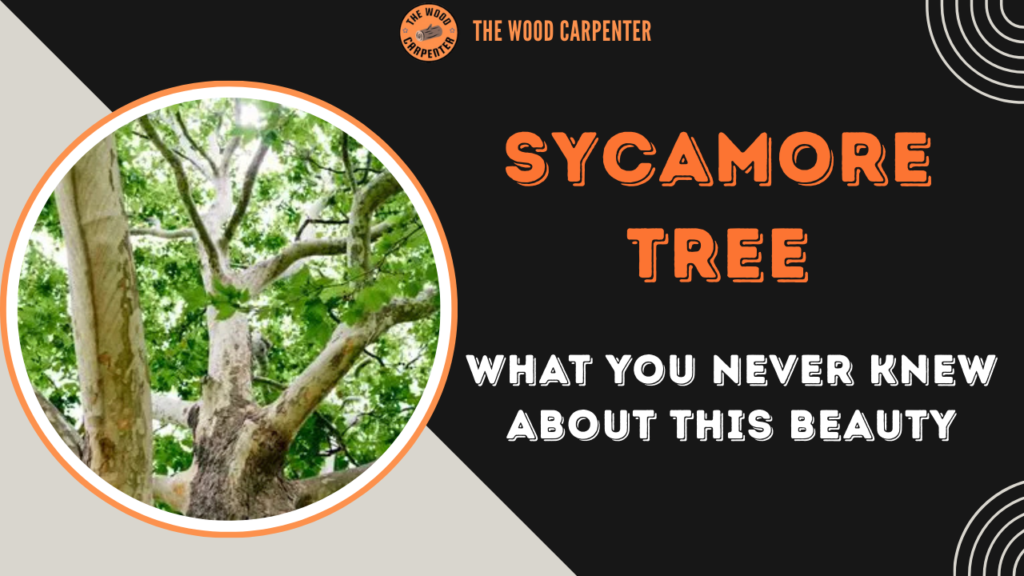
Sycamore trees are some of the largest and most noticeable trees in the United States. They often grow near rivers and streams, where they stand tall with thick trunks, peeling bark, and wide leafy crowns that move gently in the wind.
These fast-growing deciduous trees are native to the eastern United States. They belong to the Platanus family, mainly Platanus occidentalis, also known as the American sycamore. Sycamores grow well in floodplains and provide shade, shelter for wildlife, and useful wood for builders and crafters.
What Makes the Sycamore Tree Stand Out?
Sycamore trees are easy to recognize because of their peeling, patchy bark. The trunk shows a mix of white, green, tan, and brown colors, giving it a camouflage look. Because of this, people also call it buttonwood or plane tree.
The leaves are large and wide, sometimes reaching up to 10 inches across. In autumn, the leaves turn a soft yellow before falling, leaving behind smooth, pale branches.
The majority of sycamore trees grow 75 to 100 feet tall, and in mature forests, a few may grow as high as 170 feet.
Their strong roots hold tightly to wet soil and help the tree survive floods that kill many other trees. In swampy areas, these roots can even absorb air to stay alive.
Sycamores produce fuzzy seed balls that often stay on the tree through winter. These seeds feed birds like finches and cardinals.
Sycamore trees in places like New York and Atlanta cool the air by as much as 10 degrees through the release of moisture. They are also better than many other trees at trapping air pollution.
In part because of these attributes, sycamores have been planted by people since colonial times — especially in places that flood easily.
Key Traits of the Sycamore Tree
Sycamores grow fast—about 2 to 3 feet per year—and can reach full size in just 20 years. Their deep roots help them stand strong in storms, while their wide canopy blocks up to 70% of sunlight, making great shade.
The bark peels off naturally, which helps prevent disease. Inside, the wood is light-colored with a twisted grain that adds strength. Sycamores slightly improve soil quality for nearby plants.
They can get leaf diseases like anthracnose during wet springs, but the tree usually recovers on its own without treatment.
| Trait | Sycamore Detail | Compared to Maples |
| Height | 75–100 ft | Taller than sugar maple |
| Growth Rate | Fast (2–3 ft/year) | Faster than oaks |
| Bark | Peeling, mottled | Smooth gray |
| Flood Tolerance | Excellent | Poor |
| Lifespan | 200–300 years | Shorter |
Types of Sycamore Trees Across America
The American sycamore (Platanus occidentalis) is common in eastern wetlands. The California sycamore (P. racemosa) grows along the West Coast and has fuzzier seed balls.
The London plane tree (Platanus × acerifolia) is a hybrid that thrives in cities because it handles pollution well. The Oriental sycamore (P. orientalis) is smaller and often used in southern landscapes.
Native species are best for natural gardens, while hybrids work well along streets.
Where Sycamore Trees Shine in Nature and Yards
In the wild, sycamores grow along rivers, where their roots help stop erosion. One acre of sycamore roots can trap up to 20 tons of soil each year.
Parks plant them for shade, and farms for windbreaks. Homeowners like to burst their boundaries with them and line driveways or streets, a single mature tree enough to protect an entire tennis court.
Wildlife loves them too. Squirrels ravage seed balls, birds build nests in tree hollows, and fallen leaves are excellent for mulch as they decompose rapidly while also suppressing weeds.
Mulch vs Wood Chips: Which Should You Choose for Your Garden?
Floodplain forests for erosion control.
Urban streets to reduce heat buildup.
Backyards with climbable trunks kids enjoy.
Woodlots that provide usable lumber after about 40 years.
Planting and Caring for Your Sycamore Tree
Plant sycamores in full sun with moist, well-drained soil. Keep them away from sewer lines since their roots spread far. Dig a hole twice as wide as the root ball and water deeply every week during the first year.
Apply about 3 inches of mulch, keeping it away from the trunk. Shape young trees with light pruning. Mature trees usually only need dead branches removed in winter.
Fertilizer isn’t usually needed—compost works fine. During long dry spells, water deeply. Healthy sycamores rarely have pest problems.
Give them room to grow—expect a 50-foot spread, so plant trees at least 40 feet apart.
Common Challenges with Sycamore Trees
Because they grow so large, heavy branches can break during storms. Large trees may need support cables.
Anthracnose can cause early leaf drop in spring, but raking leaves usually solves the problem. Fungicide is rarely needed.
Roots can lift sidewalks, so plant at least 20 feet away from pavement. Seed balls and fallen twigs can be messy, so they’re best for homeowners who don’t mind cleanup.
In dry western climates, extra watering may be needed.
Sycamore Trees vs. Other Shade Giants
Oaks live longer but grow slower. Maples have brighter fall color.
| Feature | Sycamore | Red Oak | Silver Maple |
| Shade Coverage | Massive crown | Dense | Open |
| Growth Speed | Fast | Slow | Fast |
| Fall Color | Yellow | Red | Gold |
| Mess Level | High (seed balls) | Acorns | Seeds |
| Urban Tolerance | Good (hybrid) | Fair | Excellent |
Sycamores are best known for their bold bark and ability to handle flooding.
Sycamore Trees in U.S. Landscapes and History
George Washington planted sycamores at Mount Vernon. Lewis and Clark wrote about their pale trunks, calling them “ghost trees.”
Today, champion sycamores are found in arboretums. One in Illinois stands 152 feet tall with a 106-foot spread.
They support over 40 butterfly species, provide homes for bats, and absorb about 48 pounds of CO₂ per year per mature tree.
Everyday Benefits and Long-Term Care
Sycamores cool neighborhoods and can increase property value by up to 10% when mature. Twigs can be used for crafts, and leaves can be brewed into a mild herbal tea.
Prune every 3–5 years and inspect for insects. With space and care, a sycamore planted today can shade future generations.
Frequently Asked Questions (FAQ)
How fast do sycamore trees grow?
They grow 2–3 feet per year when young and slow down as they mature.
Are sycamore trees messy?
Yes. They throw down seed balls, leaves and twigs, but wildlife loves what falls.
Can sycamore trees handle flooding?
Yes. They are also among the best trees for flood-prone areas.
What’s the sycamore tree’s lifespan?
200-300 years, or sometimes even longer in the wild.
Do sycamore trees attract pests?
They may receive leaf diseases in spring, but significant insect issues are not common.
Best spot to plant a sycamore tree?
A sunny, moist area away from buildings and sidewalks.
Do sycamore leaves change color?
Yes. They turn yellow in fall.
Is the sycamore tree native to the USA?
Yes. It’s native to the eastern United States, with one related species in California.