
Last Updated on August 14, 2026 by Sam Wood Worker
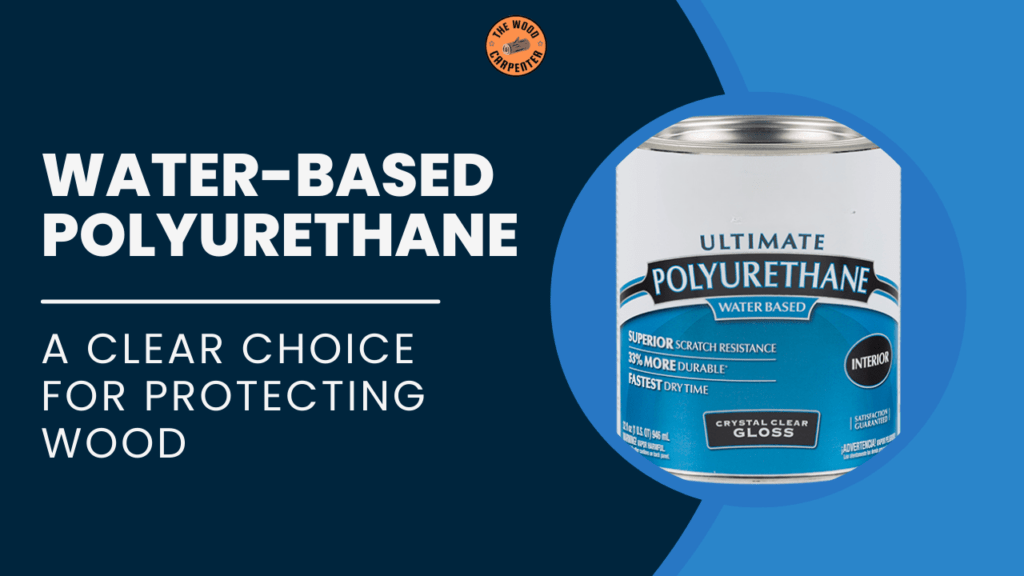
For those who seek to preserve wood without the unpleasant odor, yellowing or lengthy drying times of oil-based stains, water-based polyurethane stands out as one of the best choices. It provides an incredibly clear finish, dries quickly and can be used indoors.
It can be used on floors, furniture, cabinets, shelves and nearly any wooden surface. Because it is water-based and not loaded with heavy solvents, it leaves a smooth, strong see-through finish without the harsh fumes of older finishes.
What Water-Based Polyurethane Is and How It Works
Think of water-based polyurethane as a milky liquid that turns clear and hard as it dries. When you brush or roll it onto wood, the water evaporates and the acrylic or polyurethane resins form a durable film. This sheet guards against scratches, scuffs and spills.
Compared to oil-based polyurethane, the water-based version:
- Has much lower VOCs (the chemicals that cause strong fumes)
- Dries several times faster
- Remains clear rather than yellowing
- Expands and contracts with the wood, making it long-lasting in humid or hot climates
This makes it a great choice for active households, such as those with children or pets.
Why Water-Based Polyurethane Is Better for Most Indoor Projects
Here’s why many homeowners and woodworkers prefer it today:
✔ Low odor
You can apply it inside your home without filling the room with strong chemical smells.
✔ Fast drying
Most coats dry in about 2 hours. You can finish a whole piece of furniture in one day instead of waiting overnight.
✔ Stays crystal clear
Oil-based poly turns wood yellow over time. Water-based poly stays clear, which is perfect for light woods like maple, birch, and pine.
✔ Easy cleanup
You only need soap and water to clean brushes and rollers—no need for paint thinner.
✔ Good durability
After 3–4 coats, it resists scratches, dog claws, kids’ toys, and everyday bumps.
✔ Better for sunny areas
Most versions contain UV protection, which helps prevent fading on window frames and doors.
✔ Heat and chemical resistance
Once fully cured, it can handle warm cups, kitchen spills, nail polish remover accidents, and more.
Also read:
Oil vs Water-based Polyurethane – Which Finish Wins?
Types of Water-Based Polyurethane (Choose What Fits Your Project)
Different formulas work best for different uses:
| Type | Best For | Recoat Time | VOC Level | Finish Options |
| Acrylic | Light woods, crafts, indoor furniture | 1–2 hours | Very low | Matte to Gloss |
| Oil-Modified | Floors, heavy-use tables | 3–4 hours | Low | Satin, Semi-Gloss |
| 2K Waterborne | Bar counters, kitchen cabinets | 4–6 hours | Very low | High Gloss |
| Pre-Catalyzed | Professional builds | ~2 hours | Medium | All sheens |
How to Apply Water-Based Poly Like a Professional
You don’t need to be an expert to get a smooth finish. Just follow these steps:
1. Prep the wood
- Sand the wood to 220-grit.
- Wipe it with a damp cloth to raise the grain.
- Lightly sand again with 320-grit.
- Remove dust using a vacuum and a clean cloth.
2. Stir gently
Do not shake the can—shaking creates bubbles.
3. Use the right tools
A synthetic bristle brush, foam brush, or foam roller works best.
4. Apply thin coats
Brush with the grain using light pressure. Thick coats can leave streaks.
5. Sand between coats
After each coat dries (usually 2 hours), lightly sand with a fine pad and wipe clean.
6. Build up 3–4 coats
Floors and tabletops may need an extra coat for added strength.
7. Cure time
The surface feels dry quickly, but full cure takes 2–4 weeks. Avoid rugs or heavy use until fully cured.
Tips for difficult weather
- High humidity: use a fan or dehumidifier
- Cold temperatures: warm the product to room temperature
- Bubbles: avoid over-brushing
Water-Based Poly vs Oil-Based Poly, Lacquer, and Wax
Here’s how water-based polyurethane compares to other popular finishes:
| Finish | Dry Time | Clarity | Durability | Ease of Use |
| Water-Based Poly | Hours | Excellent | High | Easy |
| Oil-Based Poly | Days | Yellows | Very High | Strong smell |
| Lacquer | Minutes | Good | Medium | Best sprayed |
| Wax / Oils | Hours | Warm look | Low | Needs frequent reapplication |
For most indoor projects, water-based polyurethane offers the best balance of speed, clarity, and strength.
Safety and Storage
- Use gloves when applying.
- Keep windows open during application.
- An N95 mask helps if you’re spraying.
- Safe for children’s toys and kitchen surfaces once fully cured.
- Store cans in a cool, dry place—do not let them freeze.
Real-World Uses: Where Water-Based Poly Shines
- Teak doors during monsoon months resist swelling and stay bright.
- Kid’s study tables stay clean even after crayon marks.
- DIY sellers love the quick drying time for faster shipping.
- Plywood wardrobes gain a clear, modern finish without yellowing.
- Dining tables gain a strong protective coat that stands up to daily wear.
Common issues and easy fixes:
- Bubbles: Apply thinner coats and avoid shaking.
- Milky look: Happens in cold rooms—warm the product slightly.
- Edges wearing through: Add one extra coat on corners.
Disadvantages of water-based polyurethane
- Usually more expensive per gallon than oil-based polyurethane.
- Often needs more coats to give the same level of protection.
- Can be less durable in very high-traffic or heavy-use areas.
- Dries very fast, so it can be harder for beginners to apply without streaks or brush marks.
- May raise the wood grain, so extra sanding between coats is often needed.
- Gives a clear look but does not deepen the wood color as much as oil-based finishes.
- Can be more sensitive to application conditions like temperature and humidity.
How to Make Your Finish Last Longer
- Sweep or dust the surface often.
- Wipe it down with a wet microfiber cloth.
- Avoid harsh cleaners or bleach.
- For scratches that are minor, buff gently and reapply.
- Floors might require a recoat every two or three years.
FAQs
Does water-based polyurethane turn yellow?
No. It remains clear, even on light woods, unlike oil-based polyurethane.
Can I apply it over wood stain?
Yes. Let oil-based stain dry 8 hours; water-based stain needs only about 1 hour.
How many coats do floors need?
Usually 3–4 thin coats.
Is it safe for kitchen counters?
Yes, once fully cured. It handles heat, spills, and cleaning products well.
Is water-based poly better for beginners?
Yes. It’s faster, easier to clean up, and much more forgiving than oil-based finishes.