
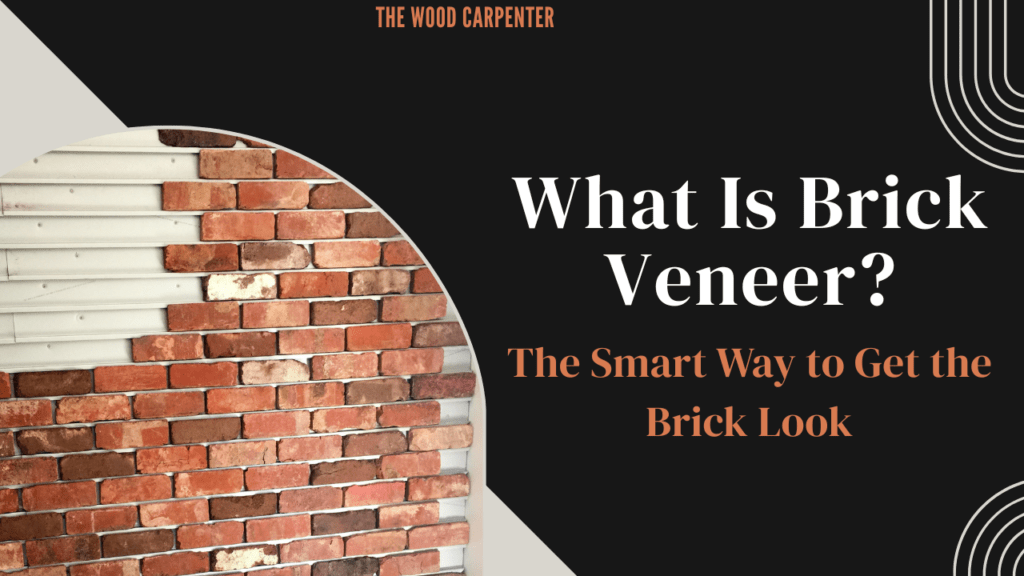
Brick homes can really catch people’s attention. They feel substantial, old-fashioned and made to last. But here’s a little secret that many homeowners don’t discover until issues arise later: most modern brick homes aren’t built with solid brick at all.
Instead, they employ what is called a brick veneer — a smarter, lighter and less expensive way to achieve the timeless aesthetic without the heavy expense or load-bearing weight.
Whether you’re buying a home, renovating, or just curious, this guide breaks down what brick veneer really is, how it works, its pros and cons, costs, and how it compares to solid brick.
What Is Brick Veneer, Really ?
Brick veneer is a single layer of brick attached to a house built with wood or steel framing. The brick is not structural—it doesn’t hold the house up. Instead, it acts as a protective and decorative outer skin.
Behind that brick face is the real structure of the home: studs, sheathing, insulation, and a moisture barrier.
Key Components of Brick Veneer Construction
A proper brick veneer wall includes:
- One layer of brick (full-size or thin)
- Metal wall ties (usually every 2–3 sq ft) anchoring brick to studs
- A 1-inch air gap between brick and framing
- Weather-resistant barrier (house wrap or building paper)
- Weep holes at the bottom to drain water
- Brick ledge on the foundation to support the brick’s weight
That air gap is critical. Brick is porous—it absorbs rain. The cavity lets moisture drain and dry out instead of rotting your walls.
Types of Brick Veneer You’ll See
Not all brick veneer is the same. Here are the most common types:
1. Full-Depth Brick Veneer (Traditional)
- About 3.5–4 inches thick
- Installed with mortar and metal ties
- Most common for exterior walls
- Looks identical to solid brick
2. Thin (Slim) Brick Veneer
- ½ to 1 inch thick
- Adhered with mortar or adhesive
- Popular for interior walls, fireplaces, and remodels
- Much lighter and easier to install
3. Adhered Brick Veneer
- Directly glued to a surface
- Mostly indoor or decorative use
- No air cavity (not ideal outdoors unless engineered)
4. Panelized Brick Veneer
- Factory-made brick panels
- Faster installation
- Good for DIY or large projects
5. Faux / Manufactured Brick
- Made from molded concrete
- Cheaper upfront
- Can fade or chip over time compared to real clay brick
Hip Roof Explained: Why This Roof Style Still Works Today
Hemp Insulation Secrets Every Homeowner Should Know
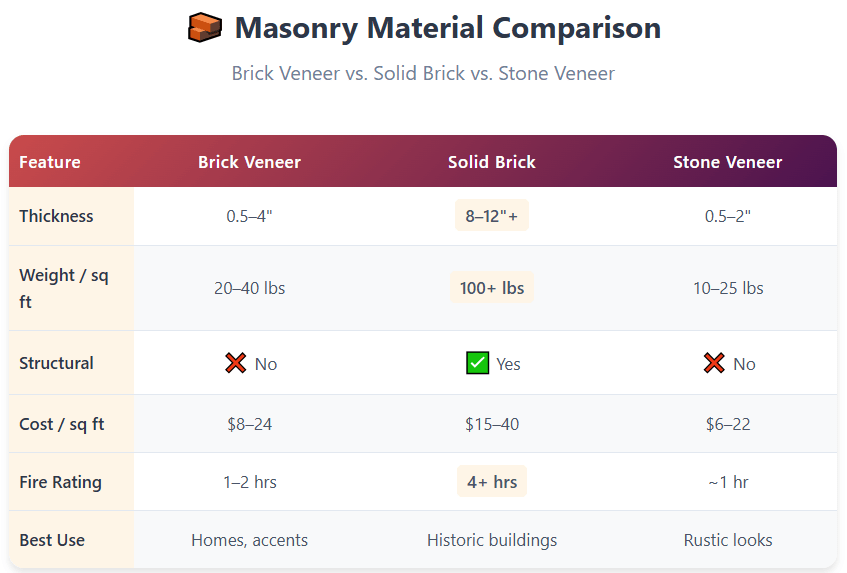
Brick Veneer vs Solid Brick vs Stone Veneer
Here’s how brick veneer stacks up against other masonry options:
Bottom line:
Brick veneer gives you the look of solid brick without the massive weight, cost, or foundation requirements.
Why Brick Veneer Is So Popular
Brick veneer didn’t take over by accident. It offers real advantages:
✅ Lower Cost, Same Look
Using one layer instead of two or three cuts material and labor costs by 25–40%.
✅ Lighter on Foundations
Perfect for modern homes and retrofits—no need for deep masonry foundations.
✅ Better Moisture Control
The air cavity drains water and reduces mold risk when installed correctly.
✅ Energy Efficiency
Easier to insulate than solid brick walls. The cavity adds a small R-value boost too.
✅ Fire & Pest Resistant
Clay brick offers about 1-hour fire resistance and doesn’t attract insects.
✅ Boosts Resale Value
Brick exteriors consistently increase curb appeal and buyer confidence.
✅ Long Lifespan
With basic maintenance, brick veneer can last 50–100+ years.
Common Problems to Watch Out For
Brick veneer is reliable—but only if installed correctly.
⚠️ Cracking
Small cracks often come from natural house movement. Expansion joints every 20–30 feet help prevent this.
⚠️ Water Issues
Clogged weep holes or missing flashing can trap water behind the brick—leading to rot and mold.
⚠️ Rusted Wall Ties
In humid or coastal areas, ties can corrode and cause brick to bow outward.
⚠️ Efflorescence
White powdery stains from salt deposits. Usually cosmetic and removable with vinegar or masonry cleaner.
How Brick Veneer Is Installed (Simplified)
Exterior Brick Veneer
- Frame wall with studs and sheathing
- Install weather barrier
- Create brick ledge and weep screed
- Attach metal ties to studs
- Lay brick with mortar, keeping air gap
- Tool mortar joints and clean surface
Interior Thin Brick (Adhered)
- Attach directly to drywall or cement board
- Use adhesive or thinset mortar
- Grout joints if desired
- Often completed in a single day
Pro tip: Thin brick is DIY-friendly. Full exterior veneer is best left to pros.
Brick Veneer Cost in 2026 (Realistic Numbers)
- $8–24 per sq ft installed
- Thin brick: $5–15 per sq ft
- 1,000 sq ft exterior: $8,000–$24,000
Trusted Brands
- Glen-Gery – premium real clay brick
- Wienerberger – durable, consistent quality
- Coronado – great veneer blends
- Pioneer Brick – popular thin brick options
More expensive than vinyl—but far more durable and timeless.
Maintenance: Keeping Brick Veneer Looking Sharp
- Rinse yearly with low-pressure water
- Keep weep holes clear
- Repoint mortar every 25–50 years
- Seal interior brick if desired
- Clean efflorescence with vinegar
- Treat rust stains with CLR
Brick is one of the lowest-maintenance siding options available.
Best Places to Use Brick Veneer
Exteriors
- Home fronts
- Garages
- Entryway accents
- Multi-family buildings
Interiors
- Feature walls
- Fireplaces
- Kitchens & lofts
- Rental upgrades (big impact, low bulk)
Brick pairs beautifully with stone or wood—but avoid humid indoor areas without drainage.
Brick Veneer FAQs
Is brick veneer real brick?
Yes. Most use real fired clay brick. Faux versions exist but aren’t as durable.
Is it as fireproof as solid brick?
Not quite, but it still offers 1–2 hours of fire resistance, which protects framing well.
Do cracks mean serious damage?
Not always. Small cracks are common. Wide or horizontal cracks need inspection.
Can I hang heavy items on brick veneer?
Only if anchors reach the studs behind the brick. The brick alone can’t support heavy loads.
Brick veneer vs stone veneer—what’s better?
Brick = clean, uniform, classic.
Stone = textured, rustic, varied.
Both are lightweight and popular.
Final Takeaway
Brick veneer is smart modern construction—not a shortcut. It has the appeal, durability and prestige of brick without costing so much and additional engineering like solid masonry.
Properly installed and maintained, brick-veneer siding can last the life of the house, and often outperform old-style solid-brick on many counts.
If you’re after a modern take on the classic brick facade, it’s hard to go past a brick veneer. 🧱✨