
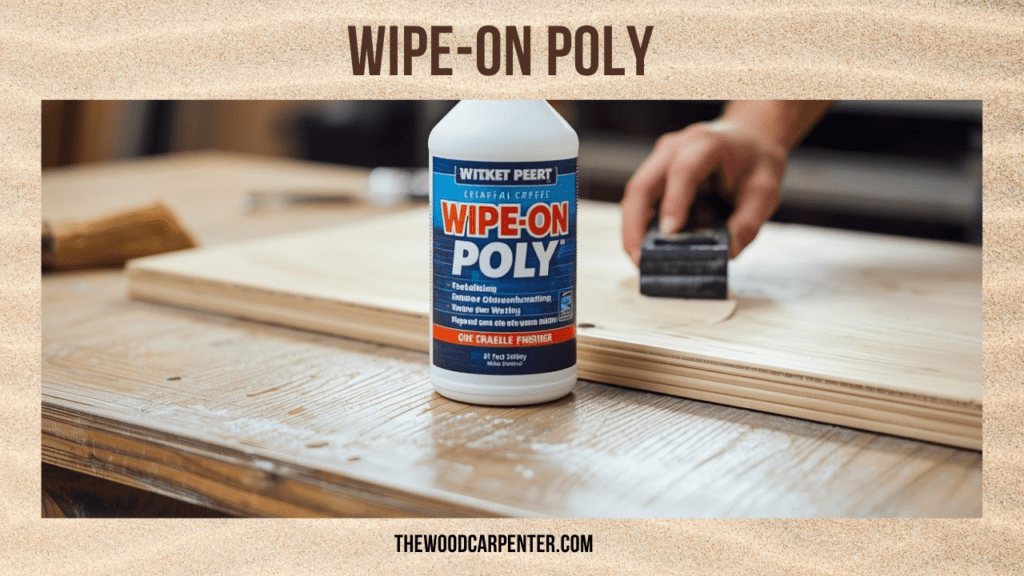
Wipe-on polyurethane—often called “wipe-on poly”—is the go-to finish when you want the toughness of polyurethane with the easy, streak-free application of an oil finish. It’s thinned so you can apply it with a cloth, which makes it ideal for carved pieces, tight corners, and projects where brush marks would ruin the look.
In this guide I’ll cover what it is, when you should use it, how to apply and remove it in detail, but first have a look at the safety precautions and some of the things that can go wrong.
What is wipe-on polyurethane?
Wipe-on polyurethane is simply polyurethane diluted with solvent (usually mineral spirits) so it can be wiped on with a cloth instead of brushed. Most consumer brands sell it as an oil-based wipe-on or a water-based wipe-on; the oil-based variety gives a warm, slightly amber tone and is famously forgiving and durable.
Because each coat is thin, wipe-on poly builds up slowly and evenly, producing a smooth, hand-rubbed appearance that many people prefer to a brushed finish.
Popular products are oil-based, available in Warm Gloss and Warm Satin, cover roughly 62 sq ft per pint, dry to recoat in about 2–3 hours, and reach light-use hardness faster when fully cured (24 hours for light use after the final coat is typical).
Why choose wipe-on polyurethane?
- No brush marks: Because you wipe it on with a rag, you won’t get the streaks or bubbles brushes can leave behind.
- Great for detailed work: Wiping reaches into carved details, joins, and small areas more easily than brushes.
- Controlled build: Thin coats let you control the sheen and thickness without worrying about runs.
- Hand-rubbed look: The finish looks like a traditional oil-rubbed surface—smooth and subtle.
Drawbacks: it takes more coats to build the same film thickness as a brush-on polyurethane, and the finish is thinner per coat (so you’ll likely apply 2–4 coats instead of 1–2 heavy ones). Also, oil-based versions slightly amber the wood tone—great for warm woods, less ideal if you want a perfectly clear finish.
Also read:
Wood Finish Basics: A Beginner’s Guide
Tools & materials you’ll need
- Wipe-on polyurethane (oil-based is recommended for warmth and durability)
- Several clean, lint-free cloths (old T-shirts, cheesecloth, or microfiber—lint-free)
- Sandpaper: 120 → 150 → 180 → 220 grit (and optional 320 for ultra-smooth final sanding)
- Sanding block or random orbital sander (for flat surfaces)
- Tack cloth or vacuum to remove dust
- Small disposable container for pouring finish (to avoid contaminating the can)
- Mineral spirits (for thinning cleanup and tool cleaning)
- Gloves, eye protection, and good ventilation mask if you’re sensitive to solvents
- Fire-safe container and water bucket for used rags (see safety section)
Mineral Spirits vs Paint Thinner: What’s the Difference?
Step-by-step: Applying wipe-on polyurethane
1. Prepare the surface properly
Good finishes start with good prep. Sand your piece in stages: start with a coarser grit (120) if needed, and work up to 220 for a smooth finish. Always sand with the grain.
Remove all sanding dust—vacuum first, then wipe with a tack cloth or clean rag. Any tiny dust speck will show after finish.
2. Shake and pour
Shake the can well to ensure the solids are dispersed. Pour a small amount into a clean container—never dip a used rag straight into the can, it can contaminate the remaining finish.
3. Wipe it on
Fold your lint-free cloth into a pad, dip a corner into the finish, and apply with the grain. Work in manageable sections and keep a wet edge to avoid lap marks. The idea is thin, even coats; don’t try to lay down a heavy coat. If excess pools, wipe it off immediately—thin coats dry more evenly and sand smoother.
4. Drying time
Typical oil-based wipe-on poly dries enough to recoat in about 2–3 hours, but this varies with temperature and humidity. Cooler or more humid conditions slow drying; warm, dry air speeds it up. Wait at least the manufacturer’s recommended time before sanding.
5. Lightly sand between coats
After each coat dries, lightly sand with 220 grit or use 0000 steel wool to knock down any nibs or dust and give the next coat a tooth. Remove dust with a tack cloth. Repeat the wipe-on step. Two to three coats is common for cabinets and furniture; apply a third coat if you want more protection or a deeper sheen.
6. Final cure
After the final coat, allow at least 24 hours before light use (sometimes longer for full cure). Hard, long-term durability continues to develop over days to weeks.
Practical tips & pro tricks
- Always pour into a separate container. Dipping a used rag into the can contaminates the entire can.
- Use lint-free cloths. Terry cloth, loose weaves and cheap paper towels leave fibers behind—old cotton T-shirts, cheesecloth, or quality microfiber are best.
- Don’t overload the rag. Wring it out slightly; you want to glide, not drench.
- Warm the can slightly in cold weather. Warm finish flows better—don’t overheat.
- If you need a glossier look, add more thin coats. More coats = more depth and sheen.
- For ultra-smooth results, wet-sand the final coat with 400–600 grit and buff gently. Use 0000 steel wool and paste wax or fine automotive polish for a satin, rubbed finish.
- If you want a clear (non-amber) look, choose a water-based wipe-on poly. Oil-based warms the wood tone.
Safety — don’t skip this
Rags soaked with oil-based polyurethane or mineral spirits can spontaneously combust if left balled up and drying in a pile. After use, either lay rags flat to dry outdoors, hang them to dry individually, or soak them in water and store in a sealed metal container before disposal.
Always work in a well-ventilated area, keep the can away from open flames, and read the product label for flammability warnings. For cleanup, use mineral spirits and dispose of solvent waste per local regulations.
Wipe-On Poly vs Brush-On Polyurethane — quick comparison
- Application: Wipe-on = cloth; Brush-on = brush.
- Film thickness: Brush-on builds thicker coats faster; wipe-on builds thin coats slowly.
- Appearance: Wipe-on = hand-rubbed, low-nib look; Brush-on = can be glossy and thicker but may show brush marks.
- Ease: Wipe-on is easier for beginners and delicate work; brush-on may be better for floors or surfaces needing a thicker protective film.
Common problems & fixes
- Dust nibs in the finish: Sand with 220 grit, remove dust, recoat.
- Tacky finish that won’t dry: Too much product applied, high humidity, or low temperature. Lightly sand and apply thinner coats; improve ventilation.
- Cloudy or milky finish: Contaminated surface or moisture during drying—remove with fine sandpaper and reapply.
- Uneven sheen: Sand smooth and apply another thin coat, keeping a consistent wet edge.
FAQ
Q: How many coats of wipe-on polyurethane do I need?
A: For most furniture, 2–3 coats create a durable finish. Add a fourth for heavy-use pieces or if you want extra sheen.
Q: How long should I wait between coats?
A: Typically 2–3 hours for oil-based wipe-on poly to be ready for sanding and recoating. Always check the product label and account for humidity and temperature.
Q: Can I use wipe-on poly over stain?
A: Yes—after the stain has fully dried. Lightly sand the stain to remove any tackiness and ensure a clean surface before applying wipe-on poly.
Q: Is wipe-on polyurethane safe for tabletops where food is prepared?
A: Once fully cured, most finishes are safe for incidental food contact, but check the manufacturer’s safety data. For direct food contact surfaces, follow their guidance—some people use a cutting board oil or food-grade finish instead.
Q: How do I dispose of rags used with wipe-on poly?
A: Soak rags in water, spread them out to dry in a single layer outdoors, or store wet rags in a sealed metal container until they can be disposed of safely. Never leave solvent-soaked rags in a pile.
Final thoughts
If you want an easy, trouble-free and good-looking finish without a lot of sanding and using a brush, choose wipe-on polyurethane. It’s great for detail work and when you master the rhythm — prep, wipe, dry, sand, rinse and repeat — you will always achieve a good result.
Just take the safety advice to heart, dial back the coats and let that finish cure out on its own and your wood will thank you with a response that lasts a long time and develops old gracefully.