
Last Updated on July 7, 2026 by Sam Wood Worker
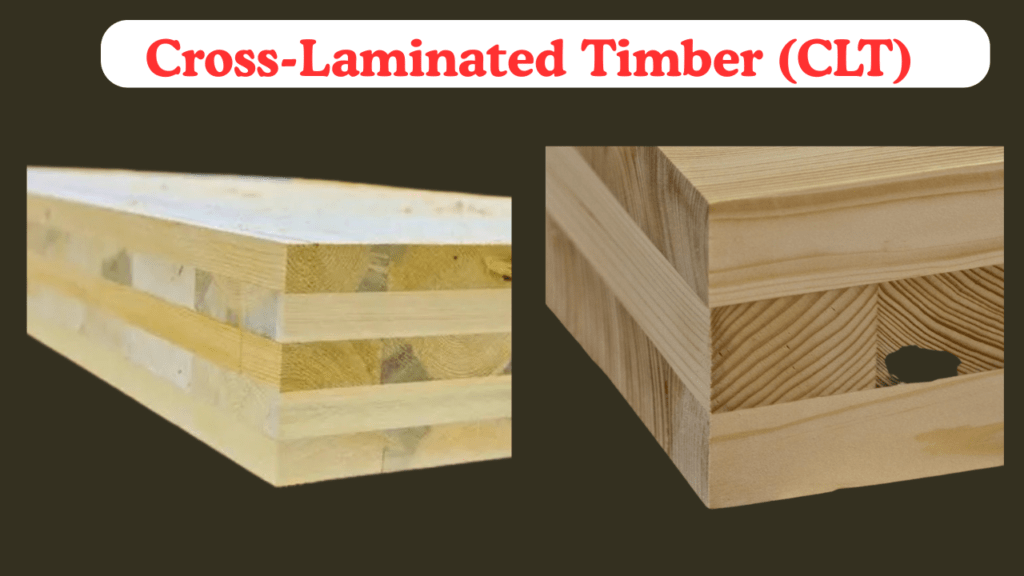
Cross-Laminated Timber, often abbreviated as CLT, is rapidly transforming the world of construction. As architects, builders, and developers push toward more sustainable and efficient methods, CLT stands out as a remarkable alternative to conventional materials like concrete and steel. .
In this post, we’ll take a closer look at what exactly CLT is, how it’s manufactured, the pros and cons over other materials, practical applications in real-world projects and why it’s taking an increasingly significant role within green building in America.
What Exactly Is CLT?
At its core, Cross-Laminated Timber is an engineered wood panel made by gluing together several layers (usually at least three) of solid-sawn lumber, with each layer oriented at right angles (90°) to the adjacent ones. This cross-wise arrangement gives the material exceptional dimensional stability and strength.
Unlike thin plywood veneers, CLT uses much thicker “lamellae” — resulting in panels that can serve as structural walls, floors, and roofs.
How Is CLT Made? (Step by Step)
Knowing how it’s made is key to understanding why CLT is so strong and holds up so well, in ecological and structural terms:
1. Lumber Selection & Drying
Producers begin by selecting high-quality solid-sawn lumber, often softwoods such as spruce, pine, or fir. The wood is kiln-dried to reach a target moisture content (around 12%) to reduce internal stresses and ensure stable bonding.
2. Planing & Cutting
The boards are planed for smoothness. Sometimes, finger joints are used to join shorter boards into longer lengths for uniformity.
3. Adhesive Application
Structural adhesives (commonly polyurethane-based) are applied between layers to bond them securely.
4. Lay-Up & Pressing
The boards are stacked in alternating directions, then pressed using hydraulic or vacuum presses. This ensures a strong, uniform bond.
5. Quality Control & Finishing
Once bonded, the panels are cut to size (often by CNC machines), and openings like windows or door spaces can be pre-cut off-site.
6. Shipping
Finished panels are transported to the construction site, often after being marked for installation.
Why Builders Love CLT: Key Advantages
CLT isn’t just another engineered wood — it offers a suite of benefits that make it compelling for modern construction.
1. Environmental & Carbon Benefits
- Carbon Sequestration: Trees absorb CO₂ as they grow, and when their wood is used in CLT panels, much of that carbon remains locked in for as long as the building stands.
- Lower Embodied Energy: Manufacturing CLT tends to use less energy than producing concrete or steel.
- Sustainable Forestry: When sourced from well-managed forests, the timber cycle can be quite sustainable, creating a circular carbon economy.
- Minimal Waste: Prefabricated panels reduce on-site waste. Offcuts or sawdust are often reused for other products, like biofuel or particleboard.
2. Speed & Efficiency of Construction
- Prefabrication Advantage: CLT panels are manufactured off-site and delivered ready to install, which significantly reduces construction time and labor.
- Lightweight: Despite being strong, CLT is much lighter than concrete or steel, leading to smaller foundation needs and easier transport.
- Precision: Since panels can be CNC-cut, designs can incorporate pre-cut window or door openings, minimizing on-site cutting and waste.
- Labor Efficiency: Because the panels arrive as complete elements, the need for highly specialized on-site labor is reduced.
3. Structural Strength & Stability
- High Strength-to-Weight Ratio: CLT delivers exceptional strength relative to its weight.
- Dimensional Stability: The alternating grain orientation makes CLT resistant to warping, shrinking, or swelling with moisture fluctuations.
- Seismic Performance: Because it is strong yet lightweight, CLT buildings perform impressively during earthquakes.
- Rigidity: The panel structure helps create strong diaphragms (floor, wall, roof) with good in-plane and out-of-plane stiffness.
4. Fire Performance
One of the most surprising (yet vital) benefits of CLT is its fire resistance:
- When exposed to fire, the outer layer chars and forms a protective barrier. This char layer insulates and slows down heat reaching the inner core.
- In lab tests, CLT panels have withstood more than 90 minutes of burning without catastrophic structural failure.
- This predictable burn behavior allows for safer evacuation, and in many cases, additional fire protection (like drywall) can be added to meet local codes.
5. Thermal & Acoustic Performance
- Thermal Insulation: Wood is naturally a good insulator, and the layered structure of CLT further improves its thermal mass and airtightness, helping reduce energy demands.
- Acoustic Benefits: CLT’s density and mass help dampen both airborne noise (voices, music) and impact noise (footsteps), making it ideal for apartments, schools, offices, and other shared spaces.
- Natural Interior Aesthetic: Exposed CLT gives interiors a warm, natural look — blending structural necessity with beauty.
Also read:
The Ultimate Guide to Woodworking: Types of Wood
Applications: Where CLT Shines
Because of its versatility, CLT is being used in a wide variety of building projects:
- Residential: Single-family homes, modular housing, and multi-family buildings benefit from CLT’s prefabrication, strength, and sustainability.
- Commercial & Office Spaces: Large floor plates of CLT offer open, flexible layouts. Think coworking spaces, startups, and even timber high-rise offices.
- Public & Institutional Buildings: Schools, libraries, and community centers take advantage of CLT’s acoustic and environmental performance.
- Hybrid Structures: CLT can be combined with steel or concrete in hybrid systems, leveraging the strengths of both materials.
- Mid- and High-Rise Buildings: Thanks to building code advances, CLT is now used in timber towers. The 2021 International Building Code (IBC) allows CLT in up to 18-story buildings under certain classifications.
A great example: Albina Yard in Portland, Oregon, was one of the first U.S. buildings to use a domestically manufactured CLT structural system.
Challenges & Considerations
Despite its many benefits, CLT isn’t a silver bullet. There are real considerations to keep in mind:
- Cost
- Upfront material costs can be higher compared to traditional framing, though this can be offset by savings in labor, time, and foundation.
- Transportation of large panels (especially long ones) can be expensive, due to size and weight.
- Code & Insurance
- While building codes (like the IBC) now support CLT, not all local jurisdictions or insurance companies have full experience with it.
- Insurance premiums can be higher, especially for taller timber buildings, because of perceived risk.
- Moisture & Weather
- During transport and on-site, CLT panels must be protected from moisture to avoid swelling or damage.
- Long-term moisture management is critical. If water seeps in, it can degrade the wood or adhesives.
- Long-Term Durability
- Some certification or testing bodies estimate a minimum service life of around 60 years for CLT.
- However, with good design and maintenance (especially protecting from moisture), buildings can last significantly longer.
- Fire Perception
- Though CLT performs very well in fire, there are public perceptions (and regulatory hurdles) to overcome. Designers often pair it with fire-resistant finishes to reassure stakeholders.
- Pest Exposure
- In some climates, insects like termites could be a concern. Proper treatment and design are required to mitigate this risk.
Cross-Laminated Timber (CLT): Costs
How Much Do CLT Panels Actually Cost?
CLT costs more than regular wood framing upfront — but the full picture is more complicated than just comparing material prices.
In the US, CLT panels run $2,000 to $4,500 per cubic meter depending on species, thickness, and supplier. Standard spruce-pine-fir panels sit at the lower end. Special sizes or certified custom panels push toward the top.
A rough idea of scale: a 5-story residential building might use 800–1,500 cubic meters of CLT. That’s $1.6 million to $6.75 million in materials alone before anything else.
European CLT from Austria, Germany, or Sweden used to be cheaper than US-made panels even with shipping costs, because their factories are bigger and more automated. That gap is closing as US production grows — but it’s still worth getting quotes from both before assuming domestic is cheaper.
What Makes CLT More Expensive
Complex cuts and custom sizes — non-standard shapes, curved walls, or unusual floor plans mean more CNC machine time, which adds cost fast.
Thicker panels — a 7-ply panel costs much more than a 3-ply. Fire requirements for exposed CLT often force you to use thicker panels than the structure actually needs.
Connection hardware — the screws, brackets, and hold-downs are specialty items. For a mid-rise building, this hardware package alone can cost $80,000 to $200,000. Many teams forget to price this in.
Crane and delivery costs — CLT panels are big and heavy. Every panel needs a crane pick. On tight urban sites, crane time adds up quickly.
Where CLT Saves You Money
Faster construction — panels arrive pre-cut with openings already done. CLT crews install floors much faster than concrete pours. Most projects finish the structural frame 20–40% faster than concrete. Faster build = less loan interest + earlier occupancy.
Lighter building, smaller foundation — CLT structures weigh 20–25% less than concrete. That means smaller footings, less steel reinforcing, and lower foundation costs.
Less site labor — most of the work happens in the factory, not on site. Smaller crews needed, which matters a lot in markets where skilled labor is expensive or hard to find.
CLT becomes the finished ceiling — where exposed timber is the design intent, you skip the suspended ceiling, drywall, and painting. The panel is the finish. That closes a big chunk of the cost gap.
CLT vs. Concrete vs. Steel
Don’t compare just material prices — the systems are too different for that to be useful.
For 4–8 story buildings, CLT total installed cost (materials + labor + schedule savings + foundation) is roughly equal to concrete flat-plate construction in many US markets. Sometimes CLT comes in cheaper. Where local supply is limited, it’s usually 5–15% more expensive overall.
Steel hybrid systems — CLT floors on steel frames — are also popular for mid-rise and offer a cost-competitive middle ground.
Long-Term Costs
CLT’s lower weight and natural properties reduce long-term maintenance costs compared to concrete cracking or steel corrosion. It also has very low embodied carbon, which is increasingly valuable as carbon regulations tighten and more buyers pay a premium for green-certified buildings.
Simple Budget Numbers to Start With
| Item | Rough Cost |
|---|---|
| CLT panels (supply only) | $2,000–$4,500 per m³ |
| CLT installed (panels + hardware + crane + labor) | $350–$600 per m² of floor |
| Schedule savings vs. concrete | 15–30% faster frame |
| Foundation savings vs. concrete | 10–20% less cost |
| Total project premium vs. conventional | 0–12% depending on location and design |
These are starting estimates only. Get quotes from a CLT fabricator and an experienced mass timber contractor early — that’s the only way to get real numbers for your specific project.
Why CLT Matters for the U.S. & Global Climate Goals
- Carbon Reduction: As the construction industry searches for greener materials, CLT’s ability to store carbon makes it a powerful tool to cut embodied carbon in buildings.
- Sustainable Development: Prefabrication and efficient use of materials support a more circular, less wasteful construction industry.
- Resilience: Lightweight but strong, CLT could contribute to more resilient buildings in earthquake-prone regions.
- Aesthetic & Well-Being: Natural wood interiors are not just beautiful — studies suggest they improve occupant comfort, reduce stress, and bring a biophilic connection to nature.
Real-World Examples & Milestones
- Albina Yard (Portland, OR): A four-story office building that helped demonstrate CLT’s viability in U.S. construction.
- IBC Updates: The 2021 International Building Code now formally allows CLT in Type IV-A, IV-B, and IV-C buildings up to 18 stories, reflecting growing trust in mass timber.
- Case Studies Worldwide: Across Europe and North America, CLT is being integrated into mid-rise buildings, modular construction, and hybrid timber towers.
Common Questions (FAQ)
Q1: Is CLT safe in a fire?
A: Yes — thanks to its char layer. When exposed to fire, the outer surface of a CLT panel chars, insulating the inner core.
In many tests, well-designed CLT structures have maintained structural integrity for 90+ minutes. Additional protection (like drywall) can further improve fire resistance.
Q2: How does CLT perform in earthquakes?
A: Very well. Because CLT is light but strong, it reduces the seismic forces that act on a building. Its cross-laminated structure also helps with stiffness and energy dissipation.
Q3: Can CLT sequester carbon?
A: Absolutely. Trees naturally absorb CO₂, and when used in CLT panels, much of that carbon remains stored in the wood for decades, making CLT a key player in low-carbon construction.
Q4: Is CLT more expensive than traditional materials?
A: The raw cost can be higher, but savings come from prefabrication, reduced labor time, lighter foundations, and faster construction. Plus, environmental and lifecycle savings can be significant.
Q5: What about durability? How long does CLT last?
A: Certification testing commonly assumes a service life of 60 years, but with proper moisture management, design, and maintenance, many experts believe it can last much longer.
Q6: Is CLT approved in U.S. building codes?
A: Yes. CLT manufactured to the ANSI/APA PRG 320 standard is recognized in the 2015 National Design Specification (NDS) and in the 2021 IBC for certain building types.
Best Practices for Designing With CLT
If you’re an architect, developer or builder considering other types of CLT, here are some practical things to keep in mind:
- Work with experienced mass-timber consultants: The design is not the same as traditional concrete/steel construction.
- Plan for moisture control: Appropriate sealing, design details and transport protection when they are designed and built.
- Think modular: Prefabricate panels with window/door openings, service channels and finishes to minimize on-site work.
- Pair with fire protection: Use fire-rated cladding or gypsum board where required to comply with code and stay safe.
- Optimize logistics: As CLT panels can be massive in size, consider for transportation, site access and crane picks.
- Choose sustainable sources: Utilize timber from well-managed forests to avoid environmental degradation.
CLT Structural Design Considerations
CLT Span Tables: What the Numbers Actually Mean
Span capacity depends on panel thickness, layup, species, and load direction. Manufacturer tables are a starting point — not a final answer.
Most tables assume simple, uniform loads. Real projects have point loads, cantilevers, and continuous spans that need proper engineering analysis.
One failure mode to always check: rolling shear. It happens in the cross-grain laminations and can govern design before bending stress ever becomes an issue — especially on spans over 5–6 meters or under concentrated live loads.
For floors, deflection and vibration usually control design more than strength. A 20:1 span-to-depth ratio works for residential, but office and commercial buildings often need deeper panels just to manage foot traffic vibration — even when the structure is strong enough.
Fire Performance: Exposed CLT vs. Protected Assemblies
CLT chars at about 0.65 mm per minute. That char layer acts as a protective shell, insulating the structural core beneath — which is the whole basis of mass timber fire design.
Going exposed? You use the char depth method. Calculate how deep the char gets over your required fire period, subtract that from your panel dimensions, and check that what’s left still carries the load. A 2-hour exposed rating often means jumping from 5-ply to 7-ply panels — not because the structure needs it, but because fire compliance does.
Using gypsum protection? Type X or Type C board can get you to 2–3 hours without oversizing panels. The weak points are edges, joints, beam pockets, and connection hardware — fire gets around gypsum at those spots if details aren’t tight.
Also worth knowing: after long fire exposure, outer laminations can detach once the adhesive in the char zone breaks down. Fresh wood then gets exposed and chars faster. Adhesive selection matters more than most people think.
Connection Details: Where CLT Projects Run Into Trouble
CLT is strong in bending but weak in tension perpendicular to grain. Point connections can cause splitting failures that standard tables don’t always catch — so give connections more engineering attention than you would in conventional framing.
Panel-to-panel joints: Self-tapping screws at 45 degrees are the standard for shear transfer in floors and roofs. Use manufacturer ETA documentation to spec them — generic wood screw tables don’t apply here.
Wall-to-floor connections: Steel angle brackets and hold-downs (Rotho Blaas, Simpson Strong-Tie CLT sets) handle lateral loads well and come with tested values for combined shear and uplift.
Concealed beam connections: Knife plate connections look clean but require precise CNC routing. If the routed slot and the steel plate don’t line up, there’s almost no fixing it on site. Tolerances need to be spelled out clearly to both fabricators.
Edge bolting: Avoid through-bolts at panel edges where perpendicular-to-grain tension can develop. If through-bolts are necessary, run self-tapping screws parallel to grain on both sides to stitch potential splits shut.
Column bases and shear walls: Always check that bearing area is large enough — CLT’s compression-perpendicular-to-grain capacity is significantly lower than its bending capacity.
Moisture Management: The Biggest Long-Term Risk
CLT panels leave the factory at around 12% moisture content. Rain, humidity, or vapor drive on site can push that much higher — causing swelling, checking, connection loosening, and in bad cases, mold or decay.
During construction: Keep panels off the ground, wrapped, and ventilated. Apply a temporary water-repellent as soon as panels go in. End grain is the most vulnerable — even short rain exposure can drive moisture deep and cause swelling that throws off your connections and tolerances.
Wall assemblies: A vapor retarder on the warm side is standard in cold climates, but CLT actually buffers moisture naturally. An overly tight barrier can trap moisture instead of managing it. Get a building science analysis done for your specific assembly and climate before locking in wall details.
In service: In normal heated interiors, CLT settles at 8–12% EMC — no structural concern. For high-humidity environments like pools, commercial kitchens, or industrial spaces, standard interior-grade CLT isn’t suitable without additional treatment, protective coatings, and careful species and adhesive selection.
Surface checking: Hairline cracks along CLT faces are normal. They come from the outer laminations drying faster than the core and are mostly cosmetic. Deep checking near connection zones is the exception — stress concentrations there make splitting a real concern and worth investigating.
The Bottom Line
Cross-Laminated Timber is more than just a trendy building material — it’s a structural and environmental game-changer. With superior strength-to-weight ratio, fire-resistant char performance, carbon-storing advantages and prefabricated efficiency, it would appear that CLT is primed to become a popular sustainable construction option.
For builders and developers in the United States, CLT is a way to construct greener, faster buildings that are also more resistant. As building codes change and production gets more affordable, mass timber may very well redefine what we conceive of as “modern construction.”