
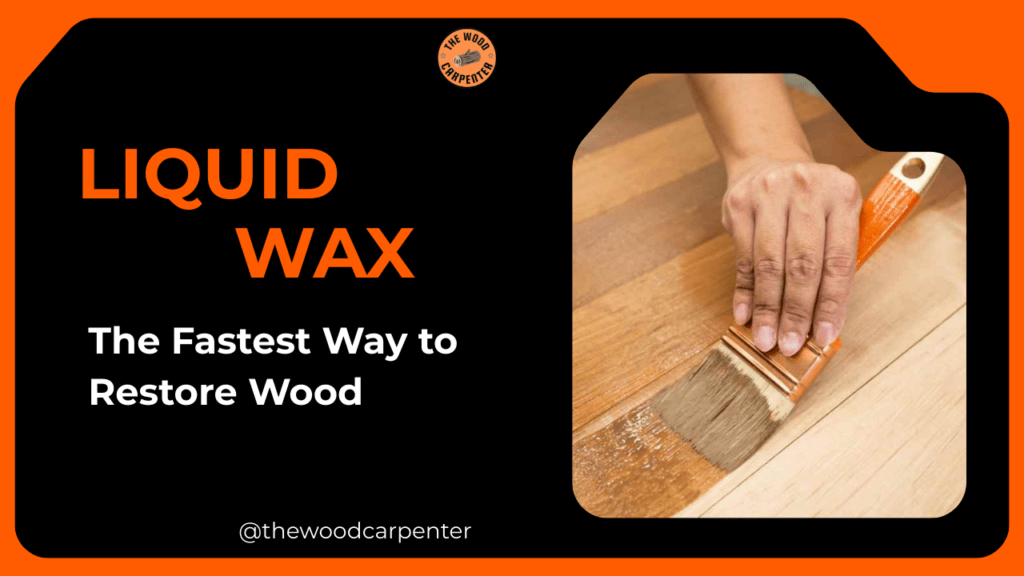
Liquid wax is a thin, easy-to-apply paste consisting of natural waxes such as beeswax or carnauba combined with water or mild solvents.
The mix becomes a smooth liquid that you can wipe on furniture, floors, and cars. Several liquid waxes are low odor and safe for use on all new or old furniture, finishes, including old floors sealed with wood sealer.
Unlike oils that soak deep into the wood, liquid wax mostly stays on the surface. It gives a soft shine and light protection from dust and small moisture changes.
You’ll find different kinds:
- Liquid wax for furniture
- Liquid floor wax / floor polish
- Liquid car wax
- Outdoor liquid wax for decks and exterior wood
Liquid Wax for Wood Furniture
Liquid wax for wood is mostly used as a maintenance product, not as the main finish. People use it over old wax, oil, varnish, or sealer to refresh dull, dry, or tired furniture. Because liquid wax is thin, it easily reaches small carvings and corners where paste wax might leave white marks.
Typical benefits:
- Cleans and polishes at the same time.
- Makes the wood grain and color look richer.
- Gives some protection from small spills and everyday humidity.
Most liquid furniture waxes are wiped on with a soft cloth, left to dry, then buffed. It’s much quicker than spreading heavy paste wax over a large table.
Liquid Wax for Wood Floors
Liquid floor wax (or floor polish with wax) is a simple way to make hardwood and parquet floors look fresh without sanding. You pour it out, spread it with a mop or pad, let it dry, then buff if needed.
Pros for floors:
- Very easy to apply over big areas.
- Dries fast and gives a satin or glossy shine.
- Adds a thin layer that helps with small scratches and light spills.
Cons to remember:
- Needs more frequent reapplication than strong finishes like polyurethane.
- Can become slippery if too much is used.
- Wax build-up can trap dirt and may need stripping later.
If you like warm, classic-looking floors and don’t mind a little upkeep, liquid wax can keep floors looking polished for years.
Liquid Wax for Cars
Liquid car wax is extremely popular because it’s fast and simple. It usually mixes carnauba or synthetic wax with liquid ingredients so it spreads easily.
Advantages over paste wax:
- Much faster to apply on large cars.
- Spreads smoothly, reducing streaks.
- Dries quickly so you can buff sooner.
Trade-offs:
- Usually doesn’t last as long as good paste wax.
- Shine is glossy but not always as “deep” as paste wax.
For cars you wax often, liquid wax is usually the most practical and time-saving option.
Liquid Wax vs Paste Wax
Both work well, but they suit different needs.
Liquid Wax
Best for: Fast maintenance, big surfaces, beginners.
Pros: Easy to use, dries fast, great for cars and floors.
Cons: Doesn’t last as long, protection is lighter.
Paste Wax
Best for: Deep shine, collectibles, and long-lasting protection.
Pros: Richer shine, longer protection.
Cons: Harder work to apply, especially on big surfaces.
Most agree:
- Liquid wax = speed and convenience
- Paste wax = deeper shine and stronger protection
How to Apply Liquid Wax (Step-by-Step)
For wood furniture
- Clean the surface well.
- Shake or stir the bottle so everything mixes properly.
- Apply a thin coat with a soft cloth, following the wood grain.
- Let it dry until it becomes hazy.
- Buff gently with a clean cloth for a smooth shine.
For wood floors
- Sweep or vacuum the floor completely.
- Spread a thin layer using a mop or pad.
- Let it dry fully (30 minutes to a few hours).
- Buff lightly if the product suggests it.
For cars
- Wash and dry the car.
- Shake the bottle.
- Apply a small amount to a foam or microfiber pad.
- Work in small sections.
- Let it haze, then buff with a clean towel.
Pros and Cons of Liquid Wax at a Glance
| Use Case | Main Benefits | Main Drawbacks |
| Wood furniture | Cleans + polishes, reaches carvings, refreshes old finishes | Not strong enough for bare wood, needs regular upkeep |
| Wood floors | Easy mop-on shine, moderate protection | Can be slippery, needs frequent re-coating, may need stripping later |
| Cars | Very convenient, good gloss, fast to use | Doesn’t last as long, shine not as deep as paste |
Safety and Care Tips
Most new liquid waxes are low-odor and safer than older versions, especially water-based types. Still, keep these in mind:
- Work in a place with good airflow.
- Keep away from flames and store in a cool area.
- Always test on a hidden spot first.
- Don’t use on vinyl or “no-wax” floors unless the label says it’s safe.
FAQs About Liquid Wax
1. Is liquid wax good for bare wood?
Not really. It’s best for finished or previously treated wood, not raw wood.
2. How often should I use it on furniture?
Every few months for light-use pieces; monthly for busy areas.
3. Is liquid floor wax good for busy homes?
It looks great, but needs regular upkeep and can be slippery.
4. Does liquid car wax last as long as paste wax?
No. Paste wax usually lasts longer and gives a deeper shine.
5. Can I use liquid wax over old wax?
Yes, but heavy build-up may need cleaning first.
6. Is liquid wax safe around kids and pets?
Most natural or water-based versions are safe once dry, but always check the label.
 Sam Wood Worker