
Last Updated on January 21, 2026 by Sam Wood Worker
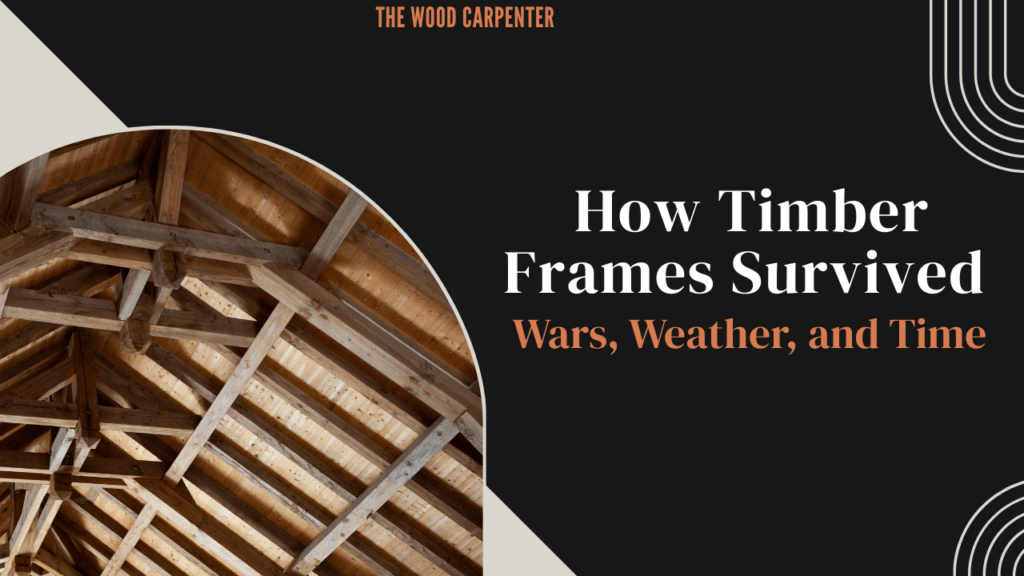
One feeling that never gets old after years spent working with wood. Step into a 200-year-old timber-frame barn, and as you stare up at the massive hand-cut beams, history surrounds you. The wood bears the marks of old tools. The joints still fit tight. The frame might be tilted slightly, but it’s still holding.
These buildings have survived wars, storms and generations of transformation. The life of a building built to modern standards can fall short, lasting perhaps only 40 or 50 years, making it reasonable to wonder: why are timber frames still here when so much else has failed?
The answer is not simply the wood. It’s the knowledge behind it.
It Was Never Just About Using Big Beams
When you see an old timber frame, you’re not just looking at big pieces of wood joined together. You are seeing skills passed from one craftsman downhill to the next for centuries.
Early builders understood wood deeply. They didn’t reach for the nearest tree and begin cutting. They selected old-growth timber, wood from trees that grow slowly in thick forests. Long, slow growth resulted in tight grain patterns that gave the wood strength as well as stability.
Old oak, chestnut, and similar woods are very different from most modern lumber. At a basic level, the wood is denser. It contains natural oils that resist insects and rot. Even today, when you cut into a beam from an 1800s barn, you can feel the difference immediately. The wood is harder. Your tools work more slowly. The timber seems unwilling to break down.
That strength is a big reason these frames have lasted so long.
Joints That Improve With Age
One of the most surprising things about traditional timber frames is this: the joints often get stronger over time.
Classic mortise and tenon joints weren’t designed to stay frozen in place. The builders knew wood moves. It expands and shrinks with moisture and temperature changes. Instead of fighting that movement, they designed joints that worked with it.
Wooden pegs, often called treenails or trunnels, were used instead of metal fasteners. These pegs moved along with the beams, keeping joints tight year after year. As the wood slowly dried and settled, the joints locked together even more firmly.
I’ve helped take apart old frames where removing a single wooden peg took serious effort, even after 150 years. No nails. No screws. Just wood fitted to wood with incredible precision.
The weight of the building also played a role. As beams pressed down on each other, the joints tightened. Wind forces were spread across the entire structure instead of stressing one weak point. It was smart, simple engineering.
How Timber Frames Survived Wars
In many regions, historic timber frames lived through major conflicts. Some still show marks from bullets or damage from military use. Others served as storage buildings, shelters, or gathering places during wartime.
Timber frames survived partly because wood is naturally flexible. When hit by force, a timber frame can absorb and spread energy instead of cracking apart like more rigid materials. Even when individual beams were damaged, the structure often redistributed the load and stayed standing.
They also survived because people respected them. Even in difficult times, these buildings mattered. They were familiar landmarks and essential spaces for communities. That value helped protect them when other structures were lost.
Standing Up to Centuries of Weather
Water is the biggest enemy of wood, yet timber frames have endured hundreds of years of rain, snow, and humidity. This wasn’t luck. It was good design.
Traditional timber buildings were made to breathe. Air could move freely through the structure, helping moisture dry out before it caused damage. Roofs were steep, so water ran off quickly. Wide eaves protected walls and lower beams from rain.
When rot is found today, it’s often because later changes trapped moisture inside. Sealing a building too tightly or using modern materials without ventilation caused more harm than good.
The wood species also mattered. Builders chose trees known for natural rot resistance. White oak, chestnut, and black locust contain compounds that slow decay and repel insects. These choices were based on experience, not guesswork.
Traditional Finishes That Let Wood Breathe
Many people think old timber frames were left bare, but that’s not true. Builders used simple finishes that protected the wood without sealing it.
Linseed oil soaked into the surface and helped repel water. Lime wash was common and allowed the wood to breathe while offering mild protection against mold and insects. Some barns used milk paint, which protected the surface without trapping moisture.
Unlike modern sealers, these finishes didn’t fight natural movement. They worked with the wood, allowing it to age safely.
Care Passed Down Through Generations
Another major reason timber frames survived is simple: people took care of them.
These buildings were never ignored. Each generation repaired damage, replaced worn boards, and fixed problems early. You can often see layers of history in one structure, with beams from different time periods standing side by side.
This long-term thinking is rare today. Modern buildings are often designed with a limited lifespan in mind. Timber frames were built with the expectation that children and grandchildren would still be using them.
Why This Knowledge Was Almost Lost
As industrial building techniques caught on in the late 19th and early 20th century, traditional timber framing fell from favour. Standardized lumber, metal fasteners and speedier construction took over. Building codes changed. Fewer and fewer people learned those old skills.
In the middle of the 20th century, timber framing had pretty much evaporated. Many barns and historic structures were demolished or left to collapse.
But attitudes are changing.
The Modern Return of Timber Frame Preservation
Today, more people recognize the value of these structures. They aren’t just old buildings. They are examples of strong, sustainable construction done right.
Walking through a restored timber frame feels different. The beams give a sense of strength and permanence. Tool marks are visible. The craftsmanship is honest and real.
Preserving these buildings also makes environmental sense. The energy stored in an old timber frame is massive. Hundreds of years of tree growth and thousands of hours of labor are already invested. Saving that is far more sustainable than tearing it down and starting over.
Preserving Craft and History for the Future
This is where skilled specialists matter. Companies like Bay & Bent play an important role in preserving the architectural heritage of beautifully constructed timber frames.
Their work focuses on respecting original craftsmanship while making historic structures usable again. They restore heritage barns, preserve hand-hewn beams, and protect traditional joinery rather than replacing it. The goal isn’t to erase history, but to carry it forward.
By combining traditional knowledge with modern preservation techniques, they help ensure these buildings survive for generations to come.
Final Thoughts from the Workshop
Old timber frames prove an important point: building to last is possible.
The craftsmen who built these structures didn’t rely on modern tools or technology. They relied on knowledge, patience, and respect for their materials. They built carefully, thinking far beyond their own lifetime.
A barn built in the 1700s that still stands today is more than a building. It’s proof that quality work endures.
More than a building The barn built in the 1700sa that stills stands today is more than a structure.It’s a testament to the fact that good work lasts.
Preserving these timber frames means preserving that lesson. And it’s one worth keeping.