
Last Updated on August 14, 2026 by Sam Wood Worker
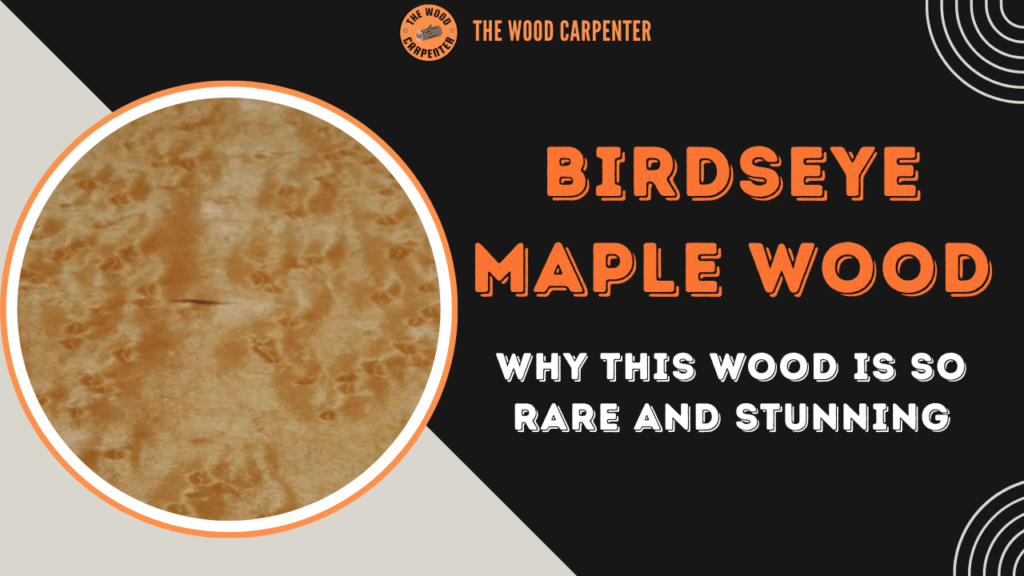
Birdseye maple is one of the world’s most distinctive woods. The first time you see it, it catches your eye. Its a tiny eye shaped dots over a pale creamy background. As light shifts, the wood appears to shimmer.
Birdseye maple has been cherished by woodworkers, musicians and furniture makers for more than two centuries. It is still not completely understood by experts how this figure comes about. Its simple elegance and rarity is what makes it all the more unique and precious.
What Birdseye Maple Really Is
Birdseye maple is not a separate tree type. It is a rare figure found mainly in hard maple, especially sugar maple (Acer saccharum).
The “eyes” are small circular marks caused by cone-shaped growth patterns inside the wood. These patterns go deep through the board, not just on the surface. This means the figure stays visible even after cutting or carving.
Each eye is usually between 1/8 and 1/4 inch wide. Some boards have only a few eyes. High-grade boards can have hundreds in a small area.
Birdseye shows best on flatsawn boards. The straight grain helps the eyes stand out clearly.
The color ranges from bright white to soft cream or light tan. The eyes are often slightly darker, creating natural contrast without stain.
What makes birdseye maple special is how it reflects light. Each eye bends the grain, causing a soft sparkle that photos rarely show well.
Why Birdseye Maple Is Still a Mystery
No one knows the exact cause of birdseye figure. Old theories about birds, insects, or fungus have been proven wrong.
The most accepted explanation involves failed buds. Under stress, maple trees try to grow small shoots from the trunk. When these buds fail, they leave tiny knot-like marks. As the tree grows, these marks become the birdseye figure.
Genetics also matter. Birdseye often appears in groups within the same forest. Harsh growing conditions like rocky soil, cold weather, and crowded forests may increase the chance.
The biggest mystery is that birdseye cannot be seen from the outside. The bark looks normal. The figure is only revealed after cutting the tree.
How Rare Is Birdseye Maple ?
Birdseye maple is extremely rare. Fewer than 1% of hard maple trees show any birdseye figure. Only a small number of those have dense, high-quality eyes.
Most birdseye maple comes from the northeastern United States and southern Canada. Areas near the Great Lakes are known for the best material.
Because it cannot be predicted or grown on purpose, supply is always limited. This natural scarcity keeps prices high.
Strength and Physical Properties
Birdseye maple has the same strength as regular hard maple. The figure changes appearance, not durability.
| Property | Typical Value | What It Means |
| Weight | ~44 lbs/ft³ | Dense and strong |
| Janka Hardness | 1,450 lbf | Resists dents |
| Texture | Fine and even | Smooth finish |
The main challenge is machining. The twisted grain around the eyes can cause tear-out if tools are dull or cuts are rushed.
Birdseye Maple vs Other Figured Maples
Birdseye maple has round, eye-like patterns instead of flowing lines.
| Figure Type | Look | Common Uses |
| Birdseye | Small circular dots | Veneer, accents |
| Curly | Wavy lines | Instruments |
| Quilted | Puffy patterns | Decorative panels |
| Tiger | Bold stripes | Gunstocks |
Boards with mixed figures are rare and highly valuable.
Common Uses of Birdseye Maple
Because it is costly, birdseye maple is often used as veneer. This shows the figure without wasting material.
Furniture makers use it for drawer fronts, cabinets, tabletops, and accent panels. Even small pieces stand out.
Instrument makers use it for guitar tops, necks, and headstocks. The sound is the same as regular maple. The choice is visual.
It is also used in luxury items like jewelry boxes, pens, bowls, gunstocks, and car interiors.
How to Buy Birdseye Maple Wisely
Always buy kiln-dried wood with 6–8% moisture content. Trusted hardwood dealers are the safest choice.
Typical price ranges:
- Light figure: $10–20 per board foot
- Select grade: $20–50 per board foot
- Premium grade: $60 or more
Inspect boards in person when possible. Wetting the surface shows how the figure will look finished.
Avoid wood with uneven moisture, weak figure, unclear sourcing, or unusually low prices. Veneer is a smart option for tight budgets.
Tips for Working With Birdseye Maple
Sharp tools are essential. Take light cuts and move slowly.
Many woodworkers prefer scraping and sanding over planing. Sand carefully because scratches show easily after finishing.
Turning birdseye maple can be difficult. Go slow and fill small voids if needed for a smooth result.
Best Finishes for Birdseye Maple
Maple can blotch, so sealing first is important.
A thin coat of dewaxed shellac helps even absorption. After that, choose a finish that adds depth.
| Finish | Visual Effect | Durability |
| Oil | Deep and warm | Moderate |
| Lacquer | Very high depth | High |
| Polyurethane | Clear and tough | High |
Use thin coats. Heavy finishes can hide the figure.
Care and Aging
Birdseye maple ages well. Over time, it turns a warm amber color that often enhances the eyes.
Keep it out of direct sunlight. Maintain stable indoor humidity. Clean gently and touch up scratches early.
Well-cared-for pieces often become heirlooms.
Sustainability and Responsible Use
Hard maple forests are well managed in North America. Birdseye maple is sustainable when sourced responsibly.
Look for FSC-certified suppliers. Many craftsmen save even small scraps due to the wood’s rarity.
Frequently Asked Questions
Does birdseye maple weaken the wood?
No. It is as strong as regular hard maple.
Can birdseye figure be created artificially?
No. The depth and light effect cannot be copied.
Why do some eyes look darker?
Depth, cut angle, and finish affect light reflection.
Is birdseye maple good for cutting boards?
Yes, but most consider it too valuable for that use.
Does birdseye maple darken with age?
Yes. It develops a warm amber tone.
Why Birdseye Maple Is Always Special
Birdseye maple shows that nature still creates beauty we cannot fully control or copy. Each board represents decades of slow growth.
It is about respect, using birdseye maple. Respect for the material, for the craft and for the time nature took to make something rare.
It is one of the reasons that birdseye maple has been so enthusiastically embraced by makers and collectors everywhere.