
Last Updated on August 1, 2026 by Sam Wood Worker
Key Takeaways:
- Knotty pine isn’t a tree species — it’s pine lumber with visible knots, and those knots are the whole point
- Fresh boards look pale and creamy — left alone they warm up to that golden honey tone people love
- It’s a softwood, so it dents and scratches — great for walls and ceilings, needs care on floors
- Always seal the knots before painting or the resin bleeds through and ruins the finish
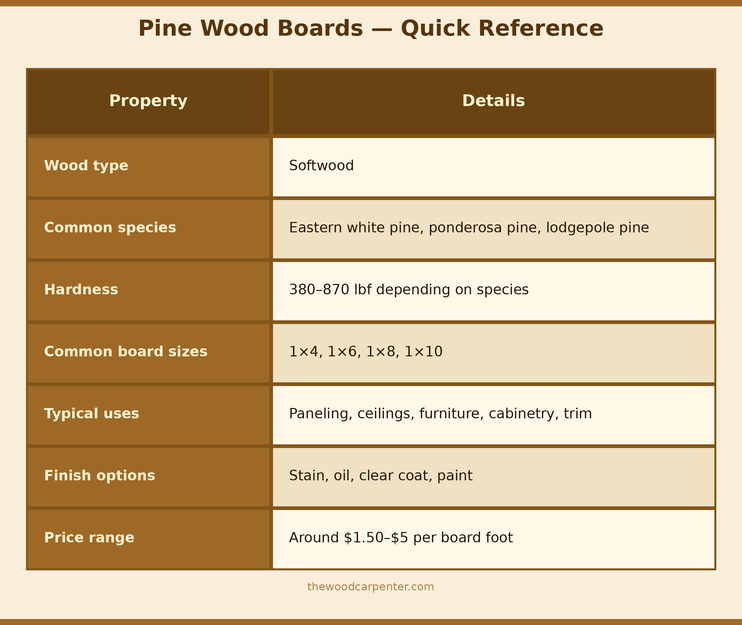
- Costs $1.50 to $5 per board foot — often 30 to 60 percent cheaper than comparable hardwoods
- It went out of style in the 70s and 80s — it’s genuinely back now and looks surprisingly modern when used right
Knotty pine is softwood pine lumber with visible knots that give it natural character and warmth — it’s affordable, easy to work with, and works beautifully on walls, ceilings, cabinets, and furniture when finished and used correctly.
Quick Facts
Walk Into an Old Cabin and You’ll Know Exactly What This Is
That warm golden wood covering the walls. Dark circles scattered across every board. The whole room feels cozy before you’ve even sat down.
That’s knotty pine.
For decades it was in everything — cabins, cottages, basement rec rooms, mountain lodges. Then somewhere around the 1970s it got labelled as dated and people started covering it up or ripping it out.
Now it’s back. And genuinely, it never should have left.
If you’re thinking about using knotty pine in your home — or you’ve inherited some and you’re not sure what to do with it — here’s everything you actually need to know.
What Is Knotty Pine?
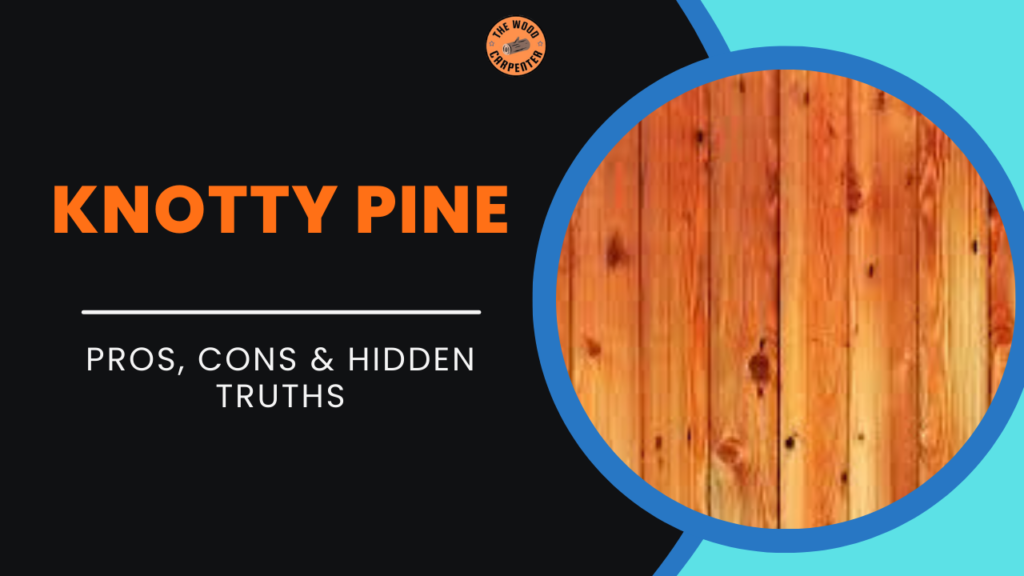
Here’s something most people don’t know — knotty pine isn’t actually a type of tree. It’s just regular pine wood that happens to be full of visible knots. That’s it.
So where do the knots come from? Simple. Every knot is a spot where a branch used to grow off the trunk. As the tree got bigger over the years, the trunk slowly grew around the base of each branch.
When the tree gets cut into boards later on, those old branch points show up as those distinctive circular marks we all recognize.
The pine species you’ll most often see used for this are eastern white pine, ponderosa pine, and lodgepole pine.
These are fast-growing trees and easy to source, which is a big part of why knotty pine tends to be a lot cheaper than most hardwoods.
When you first get your hands on fresh boards, they look pretty plain — pale, creamy white or a light yellowish tone. Nothing too exciting. But give them a few years sitting out and something interesting happens.
They slowly warm up into that rich golden honey color that knotty pine is known for. That gradual change is honestly a big part of the appeal. It’s one of those rare materials that actually gets better looking as it ages, not worse.
One thing worth keeping in mind — pine is a softwood. That’s not a flaw, it’s just a characteristic. It won’t hold up as well as oak or maple if you’re putting it somewhere that takes a beating.
You’ll notice dents and scratches faster. But for walls, ceilings, cabinets, and furniture? It does the job beautifully and then some.
What Does It Look Like?
Three things define the look: color, grain, and knots.
The color starts pale and warms up. Seal it early if you want to keep it light. Let it breathe and age if you want that golden tone. Both work — just depends on the room.
The grain between the knots is straight and quiet. Nothing dramatic like walnut. That subtlety actually makes it easier to work with across different design styles.
And then there are the knots — the whole personality of the wood. Small and subtle or big and bold depending on the grade you buy. No two boards ever look exactly the same.
People have strong opinions about knotty pine. You either love the character or you find it too busy. There’s not much middle ground.
Understanding the Grades
When you shop for knotty pine, the grade tells you what to expect in terms of knot size and frequency.
C Select — smaller knots, fewer of them. Cleaner look. Good for furniture and cabinetry where you want character without it dominating.
D Select — medium knots, moderate amount. The sweet spot for most paneling and trim projects. What most people end up buying.
#2 Common — lots of knots, some large. Classic full rustic look. The most affordable option and what you want for that proper cabin-wall feel.
#3 Common — heavy knots throughout. Best for utility work or a very raw aesthetic.
One important distinction — tight knots vs loose knots. Tight knots are part of the wood and stay put. Loose knots are surrounded by a thin ring of bark and can eventually fall out, leaving a hole.
For walls and ceilings, loose knots aren’t necessarily a problem. For furniture or flooring, stick with tighter knots.
Where People Actually Use It
Walls
Tongue-and-groove panels lock together cleanly. Warmer and more textured than plain drywall. Works great in basements, bedrooms, cabins, and living rooms.
Ceilings
This is where knotty pine really shines. A wood ceiling pulls your eye up and warms the whole room. Pair it with white walls — fits cabins and farmhouses alike.
Floors
Looks great. But pine is soft — it will dent and scratch. Some people love that worn-in look. Others hate it. Know yourself before you commit.
Cabinets and Shelving
Perfect for rustic or farmhouse kitchens. The knots add character to even simple designs. Easy to cut and shape — a favorite for DIY built-ins.
Furniture
Tables, benches, bed frames, bookshelves. Lightweight, easy to work with, takes stain and paint well. One of the best woods for DIY projects.
The Honest Pros and Cons
Why people love it:
It’s warm. A room with knotty pine walls or ceiling just feels different — cozier, more human. Hard to explain exactly but you feel it immediately.
It’s cheap. Genuinely affordable compared to hardwoods. You can cover a significant amount of wall or ceiling for a fraction of what oak or walnut would cost.
It’s beginner friendly. No specialist tools needed. Cuts cleanly, sands easily, takes finishes without much fuss.
It’s relatively sustainable. Pine grows fast. From well-managed forests, it’s a better environmental choice than slower-growing hardwoods.
Where it falls short:
It dents and scratches. In high-traffic floor areas or furniture that gets hard use, the softness will show. That’s just the reality.
Knot resin causes problems if you skip sealing. Paint over unsealed knots and within months you’ll have yellow or brown rings bleeding through. Annoying and avoidable.
Too much of it gets heavy. Floor-to-ceiling pine on every surface can make a room feel dark and dated. Most designers now use it selectively — one wall, or just the ceiling.
How to Finish It Properly
Staining
Always use wood conditioner first. Pine soaks up stain unevenly and you’ll get blotchy dark patches without it. Apply conditioner, let it soak in, then stain. Simple step — big difference.
Clear or Natural Finish
Polyurethane is the most practical option. Oil-based adds warmth over time. Water-based stays clearer. Prefer a matte look? Try tung or linseed oil — beautiful finish, but you’ll need to reapply every few years.
Painting
Seal every knot with shellac-based primer before anything else. Pine resin bleeds through paint if you skip this. It ruins your finish within months. One extra step upfront saves a lot of frustration later.
Modern Design Ideas That Actually Work
Covering every surface in knotty pine looks dated now. The approach that works in 2026 is selective.
One accent wall — panel one wall in knotty pine, paint the other three white or light grey. Warm texture and character without the room feeling like a 1965 ski lodge.
Just the ceiling — a knotty pine ceiling with white walls below is genuinely one of the best things you can do to a room. Adds warmth and visual interest without dominating the space.
Whitewash or limewash finish — tones down the yellow without hiding the grain and knots. Keeps the texture but shifts the color somewhere cooler and more neutral.
Mixed with modern materials — black metal fixtures, concrete floors, steel window frames. Knotty pine alongside industrial materials looks surprisingly contemporary. The contrast between natural and raw is where a lot of the best interiors sit right now.
What Does It Actually Cost?
| Product | Typical Price |
| #2 Common pine boards | $1.50–$2.50 per board foot |
| D Select knotty pine | $2.50–$4 per board foot |
| T&G paneling | $1.80–$3.50 per sq ft |
| Knotty pine flooring | $3–$6 per sq ft (pre-finished) |
| Cabinet doors | $40–$120 per door |
Even after adding finishing materials and installation costs, knotty pine typically comes in 30 to 60 percent cheaper than comparable hardwood options. For large projects — a full wall, a ceiling, a set of cabinets — that gap adds up fast.
People Ask These Questions a Lot
Is knotty pine old fashioned? No. It went away for some years but now it is very popular again. Cabin style, farmhouse style, natural wood style — all coming back. If you use it carefully, it looks very good today.
Why does knotty pine turn yellow? This is normal. Wood gets darker and warmer with age and sunlight. Oil finish makes it happen faster. Use water-based finish if you want to keep the lighter color.
Does knotty pine last long? Yes, very long. Inside the house with good finish — 50 years or more, easily. Many old houses from the 1940s still have their original pine walls in good condition.
Can I use it in bathroom or kitchen? Yes, but seal it very well. Pine does not like moisture. Keep water away from it and it will be fine.
Can I install it myself? Yes. Tongue-and-groove paneling is actually one of the easiest DIY projects. If you have basic tools and some patience, you can do it.
How do I stop knots bleeding through paint? Use shellac-based primer on every knot first. Zinsser BIN is the one most people use. This stops the resin coming through.
Does knotty pine need sealing? Always. Seal the knots before painting. For natural finish, use wood conditioner first then clear topcoat.
Is Knotty Pine Good For Your Home?
Want a room that feels warm and natural? Yes, try it.
Want something smooth and modern? Maybe not for you.
The knots are what make it special. Every board looks different. It feels real, not factory made. The tree grew somewhere, had branches, had a life — and now it is your wall.
That kind of natural character is very hard to copy. And right now, many people want exactly that.