
Last Updated on April 21, 2026 by Sam Wood Worker
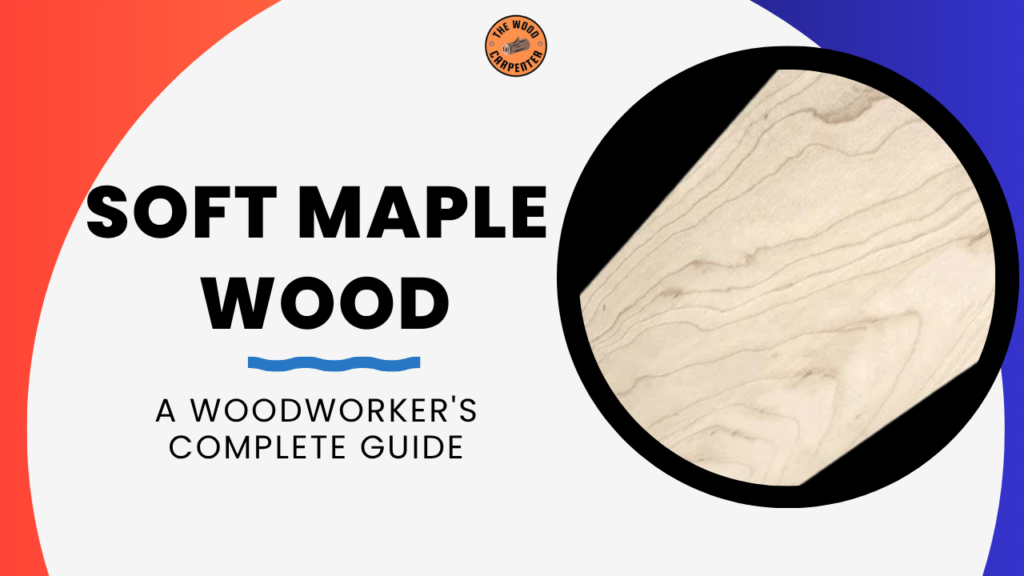
Species: Acer rubrum, Acer saccharinum, Acer macrophyllum | Common Names: Red Maple, Silver Maple, Bigleaf Maple | Native Range: Eastern North America and Pacific Northwest
Key Takeaways:
- Soft maple is not a single species — it’s a lumber trade term covering red maple (Acer rubrum), silver maple (Acer saccharinum), bigleaf maple (Acer macrophyllum), and occasionally boxelder; red maple is the most common at the lumber yard
- Janka hardness ranges from 700 lbf (silver maple) to 950 lbf (red maple) — softer than hard maple (1,450 lbf) but harder than cherry (950 lbf) and comparable to black walnut (1,010 lbf)
- Creamy white to pale tan with occasional reddish-brown heartwood streaks — looks nearly identical to hard maple on the shelf; weight is the most reliable way to tell them apart
- Rated non-durable outdoors — strictly an interior wood with poor natural rot resistance; unsuitable for outdoor furniture or sustained moisture exposure
- Best suited for painted cabinetry, furniture, drawer boxes, turned work, and decorative pieces — bigleaf maple in particular produces spectacular quilted and curly figure
- Widely available throughout North America; typically priced 20–30% less per board foot than hard maple — expect $4–$9 for clear kiln-dried stock
- Still prone to blotching with pigmented stains — use a shellac washcoat followed by water-soluble dye, or stick to painted and clear finishes for best results
What Is Soft Maple ?
Soft maple isn’t one tree — it’s a catch-all term the lumber trade uses for several maple species that are softer and less dense than sugar maple. The most common versions you’ll encounter at the lumber yard are red maple, silver maple, and bigleaf maple from the Pacific Northwest.
When a supplier says “soft maple” without specifying further, they almost certainly mean red maple or silver maple. Bigleaf maple is typically sold separately, usually at a premium, because of its exceptional figure potential.
The name does the wood no favors. Calling red maple “soft” is a relative statement — relative to one of the hardest domestic hardwoods on the continent. In absolute terms, red maple at 950 lbf is a capable, durable hardwood that outperforms species woodworkers use without hesitation every day.
Think of it less as soft maple and more as the more workable maple — a species that gives you most of what hard maple offers, with considerably less resistance at every tool.
Soft Maple vs Hard Maple
This comparison shapes every decision you make when considering soft maple for a project, so it’s worth being direct about it.
Hard maple sits at 1,450 lbf on the Janka scale — dense, heavy, and exceptionally wear-resistant. Red maple comes in around 950 lbf. Silver maple is roughly 700 lbf — less than half the hardness of sugar maple.
That difference matters for high-wear applications like cutting boards, gym floors, and commercial butcher blocks. It matters less for painted cabinetry, furniture carcasses, drawer boxes, and decorative work — where soft maple performs excellently and costs noticeably less.
The practical question isn’t which is better. It’s which one the project actually needs.
Wood Properties
Color and Appearance
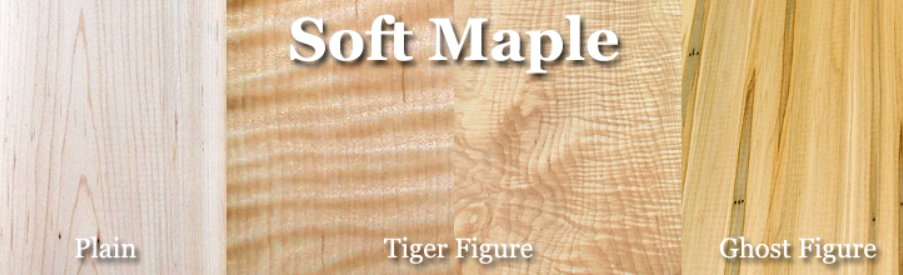
Soft maple runs pale creamy white to light tan in the sapwood — nearly identical in appearance to hard maple. The heartwood of red maple often carries a distinctive reddish-brown or grayish-brown cast that hard maple doesn’t typically show. Silver maple tends to be paler throughout.
Grain is generally straight and fairly tight, though not quite as dense and uniform as sugar maple. Bigleaf maple from the Pacific Northwest is in a different category entirely — it produces quilted and curly figure that rivals anything available in the domestic hardwood market, and figured bigleaf maple is genuinely spectacular material.
One practical note: soft maple and hard maple look so similar that mix-ups happen regularly at lumber yards. Weight is your best field test — pick up boards of the same dimensions from each pile and you’ll feel the difference immediately. Hard maple is noticeably heavier.
Hardness and Density
Red maple runs roughly 38 pounds per cubic foot when dry — noticeably lighter than hard maple’s 44 pounds per cubic foot. For large furniture pieces, cabinet carcasses, and anything you’re moving around a shop all day, that weight difference is real and welcome. Silver maple is lighter still.
The reduced density also means soft maple is easier on tools and easier on the body during a long build day.
Durability
Strong enough for virtually all interior furniture and cabinetry applications. Where it falls short of hard maple is in high-wear scenarios — tabletops and floors will show dents and scratches more readily, especially with silver maple. For drawer boxes, cabinet frames, painted furniture, and secondary structural components, the strength is more than adequate.
Like hard maple, soft maple has poor natural rot resistance. It does not belong outdoors.
Working with Soft Maple
Machining is noticeably easier than hard maple. A sharp carbide blade moves through soft maple with less resistance, less heat, and less motor load. It’s more forgiving at every stage of milling.
Router table work is where soft maple really separates itself from its harder cousin for everyday shop use. The burning risk that makes hard maple demanding at the router table is significantly reduced. You still want sharp bits and confident passes, but soft maple forgives a slight hesitation in a way hard maple simply doesn’t. That matters for beginners especially.
Planing and jointing straight-grained soft maple is clean and easy. Figured bigleaf maple behaves more like figured hard maple — watch grain direction carefully and take lighter passes to avoid tear-out.
Sanding goes faster and clogs paper less aggressively than hard maple. The surface comes up smooth with less effort.
Gluing is excellent. Clean surfaces, standard PVA adhesive, good clamping pressure — no issues. Test joints break in the wood, not along the glue line.
Fastening — pre-drilling is still a good habit near edges and ends, but soft maple is far less likely to snap a screw or split than dense hard maple if you occasionally skip the pilot hole away from edges.
Finishing: What Works
Soft maple shares one significant finishing challenge with hard maple: blotching with pigment-based stains. The semi-dense, closed grain absorbs stain unevenly and the result looks patchy regardless of application technique.
For stained finishes: Apply a washcoat of de-waxed shellac at a one-pound cut, let it dry fully, then apply a water-soluble dye rather than a pigment stain. Dyes penetrate far more evenly. Gel stain is the other option — it sits more on the surface and is more forgiving on dense-grained woods.
For painted finishes: This is soft maple’s strongest finishing scenario. Apply a shellac-based primer, sand lightly with 220-grit after it dries, then apply your topcoat. Two coats of quality water-based enamel over shellac primer on soft maple produces a finish that looks like it came from a spray booth. No open grain telegraphing through the paint film, no blotching, no difficult tannins.
For clear and natural finishes: Soft maple takes oil-varnish blends, wiping varnish, lacquer, and polyurethane all cleanly. The pale color stays light under water-based finishes and picks up a warm amber tone under oil-based products — both are attractive. Test on scrap first.
For figured bigleaf maple: Use a water-based finish if you want the figure to pop and the wood to stay pale. Oil-based finishes add warmth that can partially mask the chatoyance of quilted or curly grain. For a quilted maple tabletop, water-based polyurethane or conversion varnish keeps the figure front and center.
Best Uses for Soft Maple Wood
Painted furniture and cabinetry is soft maple’s strongest application by a clear margin. The pale, tight-grained surface takes primer and paint better than almost any other domestic hardwood. For painted kitchen cabinets, bedroom furniture, and bathroom vanities, soft maple is among the best choices available — and typically 20 to 30 percent cheaper than hard maple for the same result.
Drawer boxes and secondary wood — in fine furniture, secondary wood refers to internal components that aren’t seen. Drawer bottoms, web frames, cabinet backs, interior shelving. Soft maple handles all of these roles well, is lighter than hard maple, and easier to cut. A practical choice, not a compromise.
Turned work — soft maple turns well on the lathe. Dense enough to hold crisp detail, soft enough not to punish your tools. Bowls, boxes, handles, and decorative turnings in soft maple can be genuinely beautiful, especially with figured stock.
Figured showpieces — bigleaf maple in particular produces some of the most dramatic figured lumber in North America. A quilted maple coffee table with a well-applied clear finish stops people mid-stride. Don’t pass up highly figured soft maple because of the species name.
Musical instruments — red maple and bigleaf maple have a long history in instrument making. Violin-family backs and sides, guitar necks, drum shells, ukulele bodies. The tonal properties and workability make it genuinely suitable for demanding acoustic applications.
What to avoid: Cutting boards, gymnasium flooring, butcher blocks, or any high-wear surface where hard maple’s density is the point. And nothing outdoors.
Soft Maple vs Other Species
| Comparison | Key Point | Best Use | Verdict |
|---|---|---|---|
| Soft Maple vs Hard Maple | Soft maple is easier and cheaper. Hard maple is harder and stronger. | Soft: furniture, cabinets. Hard: flooring, cutting boards. | Soft for ease. Hard for durability. |
| Soft Maple vs Poplar | Poplar is cheaper. Soft maple is smoother and tougher. | Poplar: budget paint work. Soft: better painted finish. | Soft maple is worth it. |
| Soft Maple vs Cherry | Cherry is warm and ages well. Soft maple is pale and cheaper. | Soft: modern or painted. Cherry: classic furniture. | Cherry for looks. Soft for value. |
| Soft Maple vs White Ash | Ash is harder with open grain. Soft maple is smoother. | Soft: paint jobs. Ash: stained wood. | Soft is practical. Ash for grain. |
Price and Availability
Soft maple is one of the more common species at hardwood dealers throughout eastern North America and is well-stocked at most quality suppliers. Budget roughly $4–$9 per board foot for clear, kiln-dried stock — consistently 20 to 30 percent less than comparable hard maple. Figured bigleaf maple from the Pacific Northwest runs considerably higher and is worth it.
Buy from a reputable dealer and confirm moisture content before building. Target 6 to 8 percent for furniture and cabinetry work.
Frequently Asked Questions
Is soft maple good for furniture?
Yes — excellent for painted pieces, Shaker-style cabinets, and contemporary designs calling for a clean pale wood. For high-wear tabletops under heavy daily use without protection, hard maple or white oak is more durable. For most furniture applications, soft maple performs very well.
Can soft maple be used for cutting boards?
It’s not ideal. The lower density means it shows knife marks more readily and wears faster than hard maple in heavy use. For cutting boards, hard maple is the right choice. A soft maple board used for light kitchen tasks and oiled regularly will serve adequately — it just won’t last as long.
Does soft maple stain well?
Better than hard maple but still requires preparation to avoid blotching. Shellac washcoat followed by water-soluble dye, or gel stain, gives the best results with pigmented color. For painted finishes it’s excellent with no special prep beyond shellac primer.
Is soft maple cheaper than hard maple?
Consistently, yes — typically 20 to 30 percent less per board foot at the lumber yard. The exact difference varies by region and supplier.
What is bigleaf maple?
Bigleaf maple (Acer macrophyllum) is a soft maple species native to the Pacific Coast. It shares soft maple’s general hardness and workability characteristics but stands apart for its extraordinary figure potential — quilted, curly, and bird’s eye patterns are common and make it highly sought after for tabletops, instrument making, and decorative work.
How do I tell soft maple from hard maple at the lumber yard?
Weight is the most reliable test. Pick up boards of the same dimensions from each pile — hard maple feels noticeably heavier. Color is a secondary clue: red maple often shows a reddish or grayish cast in the heartwood that hard maple doesn’t typically show.
The Bottom Line
Soft maple doesn’t get the recognition it deserves. Woodworkers have been conditioned to see it as second-best — a budget substitute for the real thing. That framing misses what soft maple actually is: a capable, versatile, genuinely beautiful hardwood that outperforms its reputation in nearly every application except the most demanding high-wear uses.
For painted cabinetry it’s a first call over poplar and often over hard maple. For drawer boxes, secondary components, and turned work it’s practical and reliable. For figured pieces — especially quilted bigleaf maple — it can be downright spectacular.
Next time you’re at the lumber yard and you see a stack of clear red maple priced noticeably below the hard maple beside it, don’t automatically walk past it. Pick up a board, feel the weight, look at the grain, and think honestly about what the project actually needs.
In most shop situations, soft maple earns its place. It’ll earn one in yours too.