
Last Updated on April 21, 2026 by Sam Wood Worker
If you’ve ever walked past a catalpa tree, you probably noticed it for all the wrong reasons. The giant heart-shaped leaves. The long dangling bean pods that litter the ground all winter. The sticky flowers that cover your driveway every spring. Maybe those fat green caterpillars if you grew up in the South.
What most people never think about is the wood underneath all that mess.
Catalpa wood is one of the most underrated domestic hardwoods in North America. It’s rot-resistant, stable, surprisingly beautiful, easy to carve, and you can often find it for free when someone takes a tree down. Woodworkers who discover it tend to wonder why they didn’t start using it sooner.
This guide covers everything — what catalpa wood looks like, how it performs, what it’s good for, where to find it, and the few things you need to watch out for.
What Is Catalpa Wood ?
Catalpa is a native North American hardwood that comes in two closely related species:
- Northern catalpa (Catalpa speciosa) — the bigger of the two, growing up to 100 feet tall with trunks 2 to 4 feet in diameter. More lumber-friendly because of its straighter trunk.
- Southern catalpa (Catalpa bignonioides) — smaller and more widely planted as an ornamental tree. Shorter, more contorted trunk, which produces less usable lumber.
Both species grow across the eastern and central United States, and both have been planted ornamentally all over the country since the 1800s. The working characteristics of the two are nearly identical, so for woodworking purposes you can treat them the same.
The tree gets its name from the Muscogee word kutuhlpa, meaning “winged head” — a reference to the flowers. The name has nothing to do with the Catawba people or the Catawba River, even though you’ll often see those spellings used interchangeably in casual conversation, especially in the South.
What Does Catalpa Wood Look Like ?
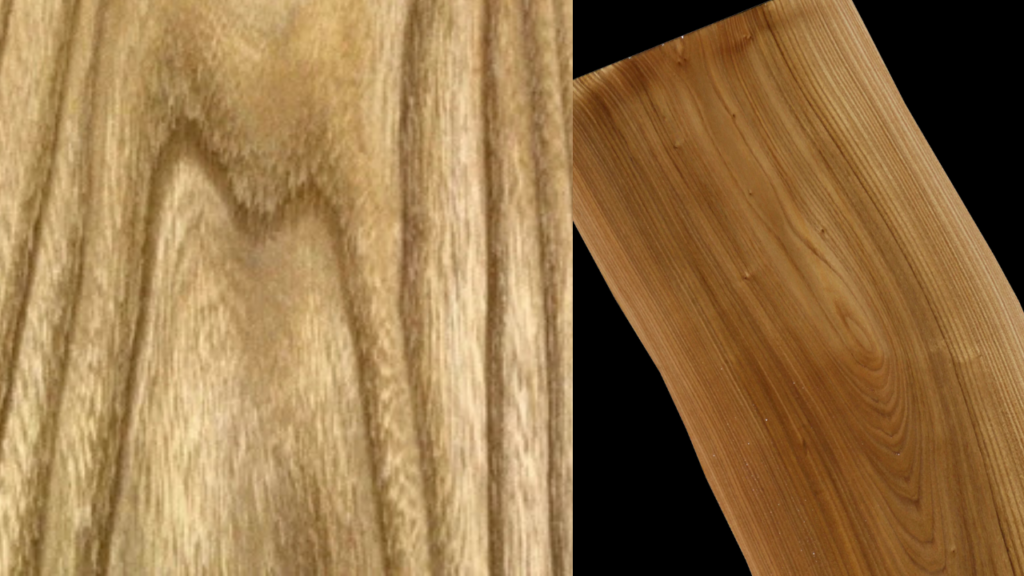
This is where catalpa surprises people. Pick up a rough-sawn catalpa board and your first instinct is to think it’s ash or oak. The look is similar — bold, open grain, prominent ring patterns, warm brown tones.
Then you pick it up and notice it’s much lighter than either of those woods. That’s when you know you’re dealing with something different.
Color: The heartwood ranges from a neutral grayish-tan to a golden brown, often with subtle hints of lavender or olive running through it. It’s a warm, calm color — not dramatic, but genuinely attractive. The sapwood is a pale gray and very narrow. Almost the entire trunk of a mature catalpa is heartwood, which means you get a lot of usable material from each log.
Grain: The grain is usually straight, occasionally with some waviness. The growth rings are wide and very prominent because of the strong contrast between the large-pored early wood (which grows in spring) and the tighter late wood (which grows in summer). When those early wood pores fill with finish, they can take on an almost iridescent shimmer — one of catalpa’s most distinctive and appealing visual features.
Knots: Catalpa tends to have tight knots, especially where branches form. The wood around knots can be brittle and chip out when machined, so be aware of that when planning cuts. If a knot is too deep to sand smooth, you may need to fill it.
Catalpa Wood Properties
Hardness and Density
Catalpa is a soft hardwood. The Janka hardness rating is around 550 lbf, which puts it between pine and cedar on the softness scale. For comparison:
- Eastern white pine: 380 lbf
- Catalpa: 550 lbf
- Black cherry: 950 lbf
- Hard maple: 1,450 lbf
It’s soft enough that you can dent it with your fingernail if you press hard. That softness is both its limitation and part of what makes it so pleasant to carve and work by hand.
The density is about 29 lbs per cubic foot — noticeably light for a hardwood. If you’re used to working with oak or walnut, catalpa will feel almost hollow when you pick it up.
Rot Resistance — This Is the Big One
Here’s what sets catalpa apart from other soft, easy-to-work woods: it’s genuinely rot-resistant.
Most soft carving woods — basswood, butternut, white pine — won’t hold up in wet conditions or ground contact. Catalpa will. It’s rated alongside cedar and cypress for outdoor durability, which is a remarkable quality for a wood this easy to work.
Old-time farmers knew this. In the 1870s and 1880s, entire tracts of northern catalpa were planted across the Midwest specifically because the wood resists rot and you can drive nails and spikes into it easily — perfect for fence posts. Catalpa fence posts from that era have been found still standing and solid well over a century later. That’s real-world rot resistance.
This quality is what makes catalpa so interesting for outdoor carvings, garden furniture, fence posts, boat building components, and any project that will see moisture or weather exposure. Very few soft, workable woods can make that claim.
Stability
Catalpa has excellent dimensional stability — one of the best among domestic hardwoods. Once properly dried, it holds its shape and doesn’t move much with seasonal humidity changes. Turners love this because a catalpa bowl stays round. Furniture makers appreciate it because joints don’t shift and open up over time the way they can in less stable woods.
The catch is initial drying. Freshly milled catalpa needs careful handling because the end grain checks easily if it dries too fast. Seal the end grain on freshly cut logs or boards with paint, wax, or a commercial end-grain sealer. Sticker the boards well, weight the top of the stack, and let it dry slowly. Once it reaches equilibrium, it behaves very well.
Strength
This is the honest limitation of catalpa. The wood is soft and relatively weak. It bends and dents under load more than harder species. In the 1870s, railroad companies hoped catalpa would make practical crossties because it grows fast and resists rot. It failed — the wood was too soft and weak to handle the weight and vibration of rail traffic.
So catalpa is not a structural wood. It’s not for table legs that will take serious abuse, heavy bench tops, or anything that needs to resist hard knocks and regular impact. Use it for the applications it’s actually suited for — carving, turning, decorative work, outdoor furniture in lower-traffic settings, and lighter cabinetry.
Is Catalpa Wood Good for Woodworking?
Yes — for the right projects, it’s a delight.
Carving: This is arguably catalpa’s best use. It’s easy to cut, holds a clean edge, doesn’t split along the grain unexpectedly, and the fine late wood gives crisp details. Unlike basswood or butternut — the other go-to carving woods — catalpa can be used for outdoor carvings without worrying about rot. Waterfowl decoys, signs, garden sculptures, relief panels — all excellent applications.
Turning: Turners love catalpa. The light density means you’re not fighting the lathe, tools move through the wood smoothly, and the bold grain pattern rewards a good finish. The dimensional stability is a particular bonus — turned bowls and vessels stay true after they come off the lathe.
Hand tool work: Shavings come off cleanly with a sharp hand plane. Chisels cut without much effort. For someone who likes working by hand, catalpa is a pleasure that harder, denser woods simply can’t match.
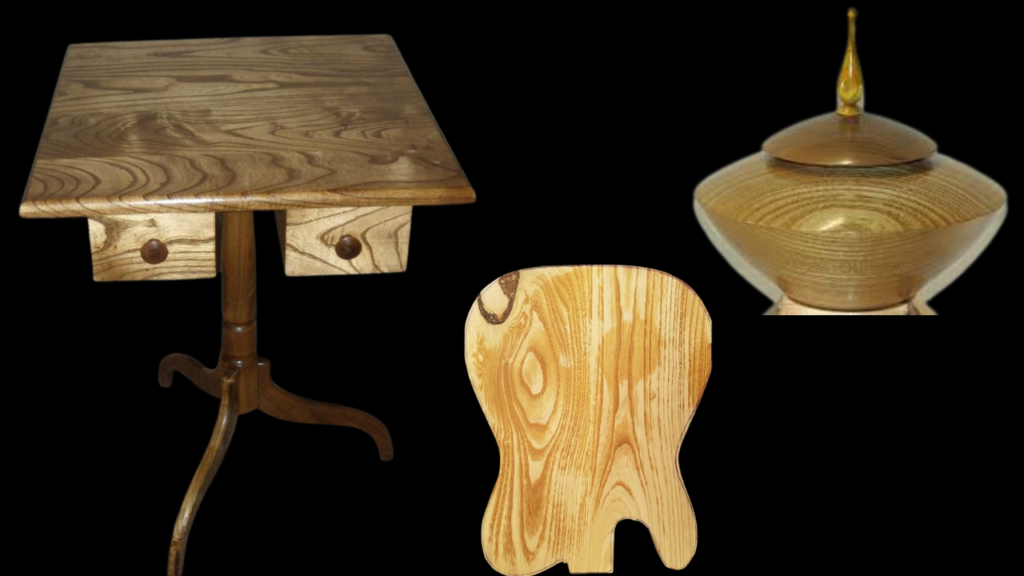
Cabinetry and furniture: Works well for lighter applications. Interior cabinetry, cabinet doors, drawer sides, picture frames, interior trim. The appearance is warm and the workability is excellent. Just keep it away from applications that need structural strength or high dent resistance.
Outdoor projects: Because of the rot resistance, catalpa is well-suited for outdoor furniture, garden benches, planters, decorative outdoor posts, and boat building components. This is where it has a genuine advantage over most domestic hardwoods at a similar price point.
Catalpa Wood Uses
Here’s where catalpa shows up most often:
- Fence posts — its original and most traditional use. Rot-resistant in ground contact, easy to drive staples and wire into.
- Carved pieces — decoys, sculptures, relief carving, decorative panels.
- Turned objects — bowls, vases, spindles, handles, decorative turning.
- Cabinetry and furniture — interior pieces, drawer sides, cabinet doors, lighter furniture.
- Outdoor furniture — benches, chairs, garden pieces that need weather resistance.
- Boat building components — planking and trim where rot resistance matters.
- Interior trim and millwork — door casings, window trim, moldings.
- Picture frames — easy to work, holds a finish well, looks good.
Working With Catalpa Wood: Tips That Actually Help
Sanding
Do not hand-sand flat surfaces. The early wood (the softer, wider-pored part of each growth ring) sands faster than the late wood (the harder, tighter-pored part). When you hand-sand without a block, you sand the soft parts faster and end up with a washboard surface — alternating ridges and valleys that follow the grain pattern.
Always use a sanding block or a random-orbit sander. Let the tool do the work evenly across both the early and late wood zones.
Finishing
Catalpa can blotch when you apply stain or finish directly to bare wood. The uneven absorption between early and late wood means some areas soak up finish and others don’t, leaving an uneven blotchy look.
Fix this with a pre-conditioner before any stain, or apply several light coats of shellac first to even out absorption. Oil finishes work beautifully on catalpa and don’t require any special prep — just apply and let it soak in. The grain practically glows under a good oil finish.
If you want a smooth glassy surface, the large early wood pores need to be filled first. Use a paste grain filler, work it into the grain, and let it dry before topcoats.
Avoid heavy stains. Catalpa can look muddy when stained dark. If you want to add color, use a dye rather than a pigment stain — dyes tend to work much better on this wood.
Knots
Tight knots add visual interest but the wood around them can be brittle. Support the wood well when routing near knots, and don’t be surprised if you get some minor chip-out at the edges of knot zones. Fill deep divots with clear or tinted epoxy and sand flush once cured.
Drying Your Own Lumber
If you’re milling catalpa logs yourself:
- Seal all end grain immediately after cutting — the wood checks at the ends quickly if left exposed.
- Sticker boards every 12 inches to give even support.
- Weight the top of the stack to resist warping.
- Keep the stack protected from direct sun and rain but with good airflow.
- Bring it inside for final drying once it reaches close to equilibrium outdoors.
Catalpa dries better than most soft woods because the low density means less drying stress. But that open end grain really does check fast if you skip the sealer.
Where to Find Catalpa Lumber
This is the awkward part. Catalpa doesn’t grow in managed commercial stands. The trees branch low and early, which means most of the trunk is below the first fork — usable, but in short lengths. There’s no organized lumber industry around it.
Your best options:
Local arborists and tree services — catalpa trees come down regularly in neighborhoods and parks. Ask arborists in your area to call you when one does. You’ll often get the logs for free just for hauling them away.
Local sawmills — smaller regional sawmills sometimes process catalpa when logs come in. Call ahead and ask them to contact you when they have some.
Online specialty dealers — you can find catalpa turning blanks, carving blocks, and occasional wider planks from specialty hardwood sellers online. Prices range from about $2.50 to $12 per board foot depending on size and quality — reasonable for what you’re getting.
Wood clubs and guilds — local woodturning and woodworking clubs often have members who know where to find unusual domestic species. Worth asking around.
What you won’t find is catalpa at your regular lumber yard or big box store. It’s simply not part of the commercial supply chain in the US.
Catalpa Wood vs. Other Woods
vs. Butternut — Similar softness and workability, both good carving woods. But butternut has poor rot resistance and should stay indoors. Catalpa wins decisively for anything that will see weather or moisture.
vs. Basswood — Basswood is the classic carving wood, even softer than catalpa, very uniform. But again, no rot resistance. Catalpa is harder and more interesting visually.
vs. Cedar — Both are rot-resistant and relatively soft. Cedar is more widely available and has natural aromatic properties. Catalpa has bolder, more interesting grain and finishes better for decorative work.
vs. White Oak — Oak is far harder and stronger, better for high-wear applications and anything structural. Catalpa is easier to carve and work by hand, better for decorative and outdoor ornamental pieces where strength isn’t the priority.
| Wood Species | Hardness/Workability | Rot Resistance | Best Use Case | Key Advantage over Catalpa |
| Catalpa | Soft / Excellent | High | Outdoor decor, carving, siding | Balanced durability and grain detail. |
| Butternut | Soft / Excellent | Low | Interior carving, furniture | Slightly more uniform texture. |
| Basswood | Very Soft / Best | Low | Beginner carving, models | Extremely fine, tight grain. |
| Cedar | Soft / Good | High | Decking, fencing, chests | Aromatic scent and availability. |
| White Oak | Very Hard / Difficult | High | Boat building, flooring | Massive structural strength. |
The Catalpa Worm Bonus
No article about catalpa trees is complete without this.
The catalpa sphinx moth lays its eggs on catalpa leaves, and the larvae — known as catalpa worms, catalpa caterpillars, or “catawba worms” in the South — are widely considered one of the best freshwater fishing baits in existence. Bass, bream, and catfish go crazy for them.
Across the rural South, people have planted catalpa trees specifically to farm the worms for fishing. Trees get completely stripped of leaves by the caterpillars, grow new leaves, and produce another crop of worms — sometimes multiple times in a summer. The trees recover fine.
So if you’re getting catalpa lumber from someone’s property, there’s a fair chance that tree was partly valued as a worm farm. Just a bit of local color worth knowing.
Is Catalpa Wood Sustainable?
Yes, very. Catalpa is not listed on CITES or the IUCN Red List. It’s not endangered or restricted anywhere. The trees are common, self-propagating across the United States, and plentiful.
In fact, using catalpa wood is one of the more environmentally practical choices you can make. You’re often using wood that would otherwise be chipped into mulch when a tree comes down. No old-growth forest is being touched. No tropical species is being harvested. The trees grow fast and regenerate readily.
If you source it locally — from an arborist, a neighbor, a local sawmill — the carbon footprint is essentially nothing.
Quick Answers
Is catalpa wood hard or soft?
Soft. Janka hardness of around 550 lbf, putting it between pine and cedar. It’s technically classified as a hardwood because it’s a deciduous broadleaf tree, but in practical terms it’s soft and easy to work.
Is catalpa wood rot-resistant?
Yes, and this is its standout quality. The heartwood resists rot and decay in outdoor and even ground-contact applications, similar to cedar and cypress. This is unusual for a wood this soft and easy to work.
Can you use catalpa for outdoor furniture?
Yes. Its rot resistance makes it well-suited for outdoor furniture, garden benches, decorative outdoor carvings, and fence posts. Apply a good UV-protective finish for best longevity.
Is catalpa wood good for carving?
It’s one of the best domestic options for carving, especially outdoor work. Easy to cut, holds clean detail, and unlike most other soft carving woods, it handles moisture and weather.
Where can I buy catalpa wood?
Not at most lumber yards. Check online specialty hardwood dealers for turning blanks and planks, contact local sawmills, or ask arborists in your area to save logs when catalpa trees come down. Local woodworking clubs are also a good source of leads.
What is catalpa wood used for?
Fence posts, carving, woodturning, cabinetry, outdoor furniture, interior trim, boat building components, picture frames, and decorative work.
How much does catalpa wood cost?
Roughly $2.50 to $12 per board foot depending on the source, size, and quality of the boards. Often free if you can source it directly from someone taking a tree down.
Catalpa is the kind of wood that makes you wonder why it isn’t more popular. It carves like butter, stays stable once dried, resists rot like a wood twice its density, and has a grain that shimmers under a good oil finish.
It’s not perfect. Don’t build load-bearing furniture from it. Don’t expect it to stand up to daily abuse the way oak or maple would. And yes, sourcing it takes a bit of effort.
But for carving, turning, outdoor decorative work, and lighter furniture where you want something warm, workable, and genuinely unusual — catalpa is hard to beat. The fact that you can often get it for free when a neighbor takes one down just makes it better.
Go find yourself a catalpa log. You’ll thank yourself later.