
Last Updated on August 1, 2026 by Sam Wood Worker
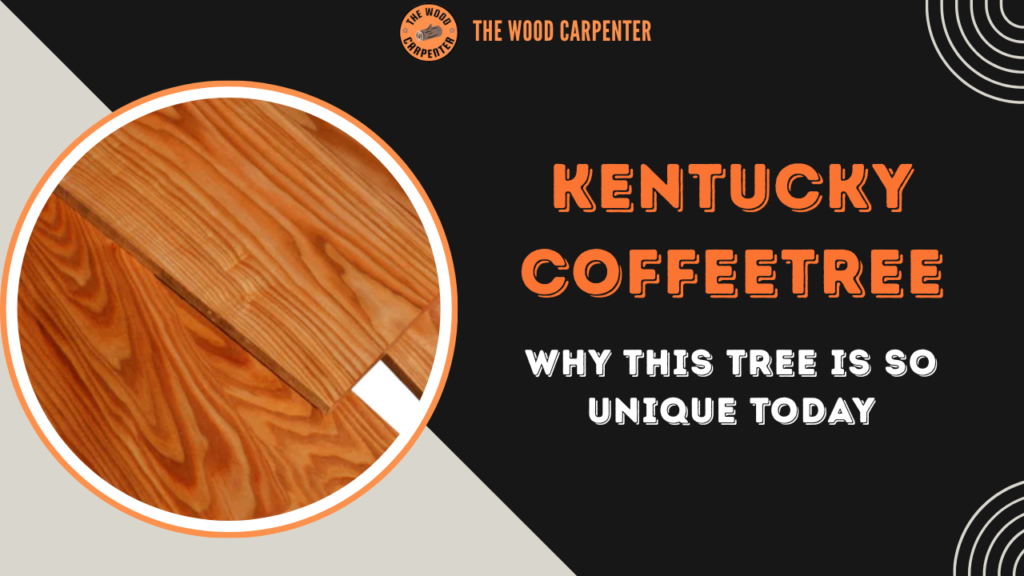
I saw my first Kentucky coffeetree in January. Dead of winter, parking lot in Cincinnati, and this tree was doing something no other bare tree around it was doing — looking genuinely interesting. Thick plated bark with edges curling outward like rough leather. Big twisted black pods rattling in the wind. The whole silhouette angular and confident.
I looked it up that afternoon.
Forty years around trees taught me one thing: when experienced foresters quietly love something the public ignores, pay attention. Kentucky coffeetree is exactly that species.
What It Actually Is
Kentucky coffeetree — Gymnocladus dioicus — is a native North American hardwood, found wild from New York through Tennessee and west to Nebraska. It favours bottomlands and floodplains, growing alongside bur oak and hackberry in soils that flood, dry out, and generally misbehave.
Native American communities used the seeds for games and trade. European settlers roasted them as a coffee substitute — hence the name. Quick note: raw seeds and pods contain cytisine, a toxic alkaloid. Roasted seeds were a historical beverage. Raw consumption is not safe.
Kentucky made it the state tree in 1976, dropped it in 1994 for tulip poplar, and honestly made a mistake doing so. Wild populations declined through the twentieth century as bottomlands were cleared for agriculture. Nursery stock keeps it available today across zones 3 to 8.
Four Seasons, Four Completely Different Trees
This is genuinely rare — most trees have one good season. Coffeetree has four.
Spring arrives late. Later than everything around it, which worries first-time growers every single year. Then pinkish-bronze leaves unfurl into enormous bipinnate fronds up to three feet long. It looks almost tropical for a few weeks.
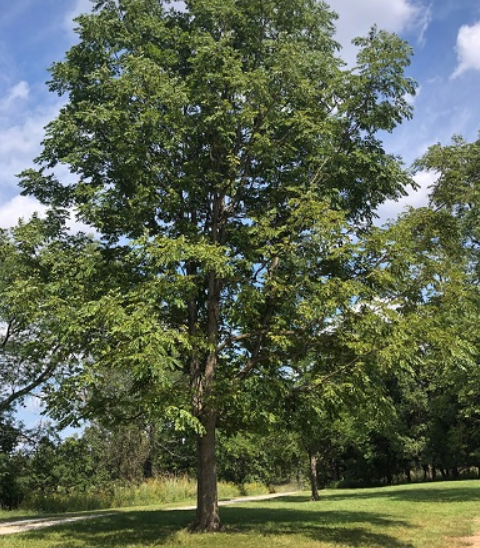
Summer settles into a lacy blue-green canopy. Filtered light, not deep shade — grass grows beneath it where it would fail under denser species. June brings fragrant greenish-white flower spikes that bees work hard.
Autumn turns leaves a clean buttery yellow. Not the most dramatic fall colour in the native palette, but warm and reliable.
Winter is where this tree separates itself from everything else. Thick gray-brown bark plates with curling furrowed edges. On female trees, twisted black seed pods six to ten inches long rattle through the coldest months. The word people reach for is sculptural, and it’s accurate.
Yes, it’s bare six months of the year. The winter structure is good enough that it doesn’t matter.
One warning: young trees are genuinely ugly. Gangly, sparse, unpromising. Stick with it past year ten and a graceful open crown emerges that looks like it’s been there forever. Lifespan is 100 to 150 years. This is a tree you plant for people who haven’t been born yet.
The Wood — Underrated and Hard to Find
Heartwood runs light brown to warm reddish tones. Not as showy as walnut but genuinely attractive. Janka hardness around 1,200 lbf — softer than oak, but with shock resistance that makes it more useful than that number alone suggests.
| Property | Kentucky Coffeetree | Honey Locust |
| Mature Height | 60–75 ft | 80+ ft |
| Janka Hardness | ~1,200 lbf | Similar |
| Rot Resistance | Moderate to good | Better |
| Grain | Coarse, interlocked | Straighter |
| Urban Tolerance | Excellent | Excellent |
The rot resistance is what made early settlers reach for it — fence posts, railroad ties, barn framing, ground-contact construction. That characteristic is still relevant for anyone building outdoor structures today.
In the shop: sharp blades are non-negotiable, not optional. The interlocked grain punishes dull tooling fast. Feed direction matters when planing. It glues cleanly, stains evenly, and air-dries without serious checking.
This is not a fine furniture wood. Nobody builds heirloom chairs from coffeetree. For structural work, outdoor posts, millwork, and utilitarian cabinetry, it performs better than most people expect.
Finding it commercially is the real challenge. Almost everything worked comes from land-clearing or urban removal programs. If a felled specimen comes your way, mill it. The timber is better than its obscurity suggests.
Where to Plant It and Where Not To
Built for conditions that defeat other species. That’s not a marketing claim — it’s why urban foresters have been specifying it quietly for twenty years.
Road salt. Compacted soil. Air pollution. Drought. Periodic flooding. Coffeetree handles all of it without visible stress. Maples and lindens give up where this tree keeps growing.
Best uses: Street tree programs in northern cities. Large residential properties where the filtered canopy lets grass grow underneath. Native and prairie plantings where it fixes nitrogen and improves surrounding soil. Anywhere the winter silhouette will be visible from a window or walking path.
One honest limitation: The mature spread is 40 to 50 feet. This is not a small-yard tree. Plant it without room and you’re creating a future problem, not solving one.
Male vs female: For most sites, plant males. Female trees produce the ornamentally interesting winter pods but create real spring litter as they break down. Unless the pod texture is a deliberate design goal, male trees are the practical choice.
How to Grow It Without Overthinking It
Sun: Full. This tree wants full sun and earns its best form there.
Soil: Prefers moist fertile loam, tolerates clay, compaction, and poor drainage without complaint.
Establishment: Water weekly through the first summer. Mulch the root zone. Don’t mistake slow early growth for failure.
Pruning: Winter only, when fully dormant. Remove crossing branches and develop a clear leader if a formal form is needed.
Fertilising: Minimal. As a nitrogen-fixer it manages its own fertility. High-nitrogen feeding promotes fast weak growth. Leave it alone after establishment.
Pests: Remarkably clean. Bagworms occasionally. Heart rot in old or stressed specimens. Otherwise one of the lowest-maintenance natives available.
Propagation: Seeds need scarification and cold stratification. Achievable but labour-intensive. Most people find buying bareroot saplings or grafted male specimens from nurseries far more practical.
How It Compares to the Obvious Alternatives
Versus red maple: Maple establishes faster and has more predictable form. Coffeetree wins on urban stress tolerance, timber value, and longevity. Maples fail where coffeetrees perform.
Versus honey locust: Both handle urban conditions well. Honey locust is more commonly available and faster-establishing. Coffeetree is less overplanted, offers better timber, and delivers more distinctive winter structure.
Versus bur oak: Both are excellent long-lived natives. Bur oak offers more consistent wildlife value through acorn production. Coffeetree handles salt and compaction slightly better. Either is a strong choice — the decision comes down to site conditions.
Sourcing It Right
Buy from nurseries stocking regionally sourced material where possible. Trees grown from seed native to your region establish better and contribute more to local ecology than stock grown far from its provenance.
Grafted male cultivars are the most practical landscape choice and widely available from specialist tree nurseries. If propagating from seed yourself, source locally and avoid importing from distant populations — provenance matters for long-term performance more than most buyers realise.
Frequently Asked Questions
Is Kentucky coffeetree edible? Roasted seeds were historically used as a coffee substitute. Raw seeds and pods contain cytisine and are toxic — they require processing before any consumption. Historical curiosity, not a practical food use.
Male or female? Male for most landscapes — no pods, no spring litter. Female if the winter pod texture is a deliberate design goal.
How fast does it grow? One to two feet per year when young, slowing at maturity. Expect 13 to 20 feet in the first ten years.
Can it handle city conditions? Better than almost any comparable native. Road salt, compacted soil, drought, pollution — it handles all of them.
What is the wood used for? Historically: fence posts, railroad ties, barn framing, cabinetry. The rot resistance makes it valuable for ground-contact and structural applications. Not common in fine furniture.
Any serious pest problems? Rarely. One of the cleaner natives for pest and disease pressure, which is a significant practical advantage for low-maintenance sites.
The overlooked species are usually overlooked for the wrong reasons. Kentucky coffeetree was never commercially fashionable. It grows slowly, looks awkward young, and has a name that raises more questions than it answers.
Give it room and time, and it becomes the tree people stop to ask about in January — which is, if you think about it, the hardest season to impress anyone.
Plant it where you’ll see it in winter. That’s when it earns everything.