
Last Updated on April 21, 2026 by Sam Wood Worker
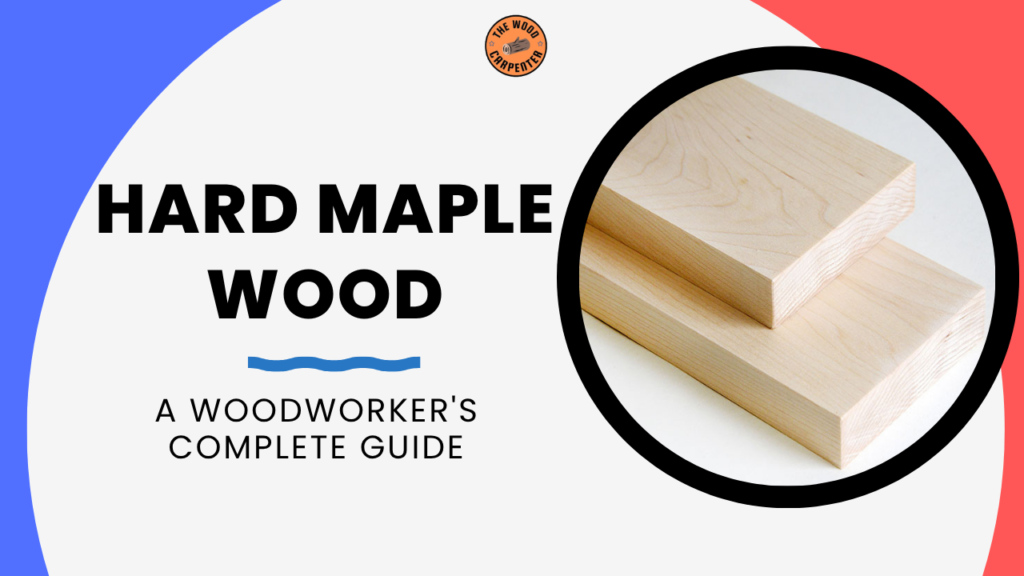
Species: Acer saccharum | Common Name: Sugar Maple | Native Range: Northeastern US and Eastern Canada | USDA Zones: 3–8
Key Takeaways:
- Hard maple (Acer saccharum) comes from the sugar maple tree — the same tree that produces maple syrup — and is one of the hardest, most durable commercially available domestic hardwoods in North America
- Janka hardness of 1,450 lbf — harder than white oak (1,360 lbf), walnut (1,010 lbf), and cherry (950 lbf); softer only than hickory and a handful of exotic species
- Creamy white to pale yellowish-tan with tight, straight grain — can produce spectacular curly, bird’s eye, and quilted figure that commands premium prices
- Rated non-durable outdoors — strictly an interior wood; do not use for outdoor furniture, decking, or any sustained moisture exposure
- Best suited for cutting boards, butcher blocks, gymnasium flooring, furniture, painted cabinetry, and any high-wear interior application
- Widely available across the northeastern US and eastern Canada; expect $6–$12 per board foot for clear kiln-dried stock, significantly more for figured material
- Does not accept pigmented stain evenly — use a washcoat of shellac followed by water-soluble dye, or stick to clear and painted finishes
What Is Hard Maple?
Hard maple comes from the sugar maple tree (Acer saccharum), growing primarily across the northeastern United States and eastern Canada — Vermont, Michigan, Pennsylvania, Ontario and throughout that region.
When woodworkers say “maple,” they mean this species specifically. It’s one of the hardest and densest commercially available domestic hardwoods on the continent, and it’s earned that reputation on factory floors, bowling alleys, butcher blocks, and fine furniture over generations.
One important distinction: don’t confuse it with soft maple, which comes from silver maple (Acer saccharinum) or red maple (Acer rubrum) and behaves very differently. Silver maple scores around 700 lbf on the Janka scale — less than half the hardness of sugar maple.
They look almost identical on the shelf, which trips up newer woodworkers regularly. When in doubt, ask your supplier to confirm the species. Using soft maple where you need hard maple in a high-wear application is a mistake you’ll only make once.
Wood Properties
Color and Figure
Fresh hard maple is creamy white to pale yellowish-tan, sometimes with a faint pinkish undertone. The sapwood — the outer portion of the log — is the lightest and most prized. Heartwood, when present, runs to medium tan or light brown.
Grain is typically straight and tight, which is part of why the wood finishes so cleanly. But hard maple also produces some genuinely spectacular figured varieties:
Curly maple (tiger maple) — wavy, chatoyant grain that shifts and shimmers as you move around it. Outstanding on tabletops and instrument bodies.
Bird’s eye maple — small, round figure patterns scattered across the surface. Nobody fully agrees on why it forms, but it’s genuinely striking.
Quilted maple — a three-dimensional, pillowed appearance in the grain that catches light in a way that stops people mid-stride.
Figured stock commands premium prices and is worth seeking out for any piece that will get real attention.
Hardness and Density
At 1,450 lbf on the Janka hardness scale, hard maple outperforms most of the domestic species woodworkers regularly reach for. It’s heavier than it looks — roughly 44 pounds per cubic foot when dry. You feel that weight when you’re moving large panels around the shop.
That density is exactly why hard maple is the standard material for gymnasium floors, bowling lanes, and commercial butcher blocks. It absorbs impact and abrasion day after day without giving ground.
Durability
Excellent wear resistance indoors. Resists denting, holds up under repeated impact, and doesn’t fail quietly — when hard maple has been in service for a decade, it still looks like it has decades left.
The honest caveat: hard maple has no meaningful natural rot resistance. It is strictly an interior wood. Outdoor exposure will destroy it. Use white oak, teak, or black locust for anything going outside.
Working with Hard Maple
Machining rewards sharp tooling above everything else. A dull blade on hard maple produces burning, tear-out, and frustration in that order. A sharp carbide blade produces clean, predictable cuts. The wood itself isn’t the problem — tool condition almost always is.
Burning at the router table is the consistent challenge with this species. Maple burns faster than almost any other domestic hardwood. Make your passes in a single confident movement without hesitation. Always run a test pass on scrap first. A scorch mark on hard maple is genuinely difficult to sand out.
Planing figured stock — particularly curly maple — needs care. Tear-out happens fast if you’re feeding against the grain. Take lighter passes, reduce your cutting angle if the machine allows it, and finish with a card scraper rather than sandpaper on figured sections. The surface quality difference is significant.
Sanding goes well but clogs paper quickly due to the density. Change sandpaper more often than you think you need to. A reliable progression runs from 80-grit on rough stock through to 180 or 220 for finish surfaces.
Gluing is excellent. The tight grain produces strong, clean glue joints. Test joints break in the wood itself, not along the glue line.
Fastening — pre-drill for screws, always. Driving a fastener into hard maple without a pilot hole snaps screws and splits wood near edges. It’s not optional.
Finishing: What Actually Works
This is where most people run into trouble with hard maple, and where a little preparation saves a lot of frustration.
Avoid standard pigmented stains on raw maple. The dense, closed grain absorbs unevenly and the result looks blotchy and patchy regardless of application technique. If you need to change the color, apply a washcoat of diluted shellac first — one pound cut — let it dry completely, then apply a water-soluble dye. Dyes penetrate far more evenly than pigmented stains and deliver a consistent result.
For clear and natural finishes — the better choice on most hard maple work — the wood is easy to bring to a beautiful surface. Danish oil, wiping varnish, and polyurethane all work well. The pale color and tight grain do the work without needing much help from the finish.
For painted cabinetry, shellac primer followed by a quality water-based topcoat is the reliable system. The shellac seals evenly and prevents bleed-through. The tight grain means paint lies flat without telegraphing texture — one of the reasons hard maple is the preferred species for painted kitchen cabinetry.
For cutting boards, skip film finishes entirely. Washing destroys any surface film over time. Food-safe mineral oil worked in generously, followed by a beeswax and mineral oil paste, is the correct approach. Reapply every few months with regular use.
Final tip: sand to at least 180-grit before finishing, and do a light hand-sand with 220-grit after the first coat to knock down raised grain. Hard maple is smooth and tight enough that surface irregularities show clearly under a clear coat.
Best Uses for Hard Maple Wood
Cutting boards and butcher blocks — the standout application for most woodworkers. The nearly non-porous closed grain resists bacteria absorption, the hardness resists deep knife scarring, and it’s food-safe finished with mineral oil. For end-grain cutting boards specifically, hard maple is the gold standard. Nothing else comes close for daily kitchen use.
Flooring — the established standard for gymnasiums, dance studios, and sports facilities worldwide for good reason. Handles foot traffic, rolling loads, and repeated impact without failure. Residential maple floors finished well last generations.
Furniture — a classic pairing, particularly for Shaker-style pieces where the pale, tight-grained wood complements clean joinery without competing with it. Dining tables, chairs, dressers, bed frames — all excellent applications.
Painted cabinetry — one of the best domestic species for painted kitchen and bathroom work. Virtually no open grain to telegraph through the paint film, producing a smoother painted surface than oak, ash, or even poplar.
Turned work and small accessories — bowls, tool handles, mallets, and decorative pieces all benefit from the hardness and surface quality hard maple delivers.
What to avoid: Outdoor applications of any kind. Sustained moisture exposure will cause rapid deterioration.
Hard Maple vs Other Species
Hard maple vs white oak: White oak has a pronounced open grain that accepts stain more predictably and offers genuine outdoor rot resistance. Maple gives a smoother, more contemporary appearance and a harder surface. For painted work and cutting boards, maple wins. For stained furniture and outdoor applications, oak wins.
Hard maple vs walnut: Walnut is softer, easier to work, stains beautifully, and costs considerably more per board foot. Its rich dark color makes it the choice for showpiece furniture. Maple is the better call where surface hardness and wear resistance matter most.
Hard maple vs cherry: Cherry is softer than maple, easier to stain, and develops a warm reddish-brown patina over time that’s genuinely beautiful in traditional furniture. For fine furniture with character, cherry is hard to beat. For cutting boards, kitchen use, and flooring, maple’s hardness is the practical choice.
Price and Availability
Hard maple is widely available throughout the northeastern US and eastern Canada and through hardwood dealers nationally. Budget roughly $6–$12 per board foot for clear, kiln-dried stock depending on region and supplier. Figured maple — curly, bird’s eye, or quilted — runs two to four times that price or more, and is worth it for the right project.
Buy from a reputable hardwood dealer rather than a home center if you can. Big-box lumber is rarely properly kiln-dried or graded, and moisture problems in maple will ruin a project before it starts. Ask for a moisture reading — target 6 to 8 percent for indoor furniture applications.
Frequently Asked Questions
Is hard maple good for furniture?
Yes — strong, durable, machines to a smooth surface, and works beautifully for painted and Shaker-style pieces. The main consideration is finishing: clear or painted finishes work best, while staining requires extra preparation to avoid blotching.
Does hard maple scratch easily?
No. At 1,450 lbf Janka, it’s one of the most scratch-resistant domestic hardwoods available. That’s why it’s the preferred material for gymnasium floors and commercial butcher blocks built for decades of daily use.
Why is hard maple the standard for cutting boards?
Three reasons working together: the closed grain resists bacteria absorption, the hardness resists deep knife scarring, and it’s food-safe finished with mineral oil. No other domestic species combines all three as consistently.
What’s the difference between hard and soft maple for woodworking?
Hard maple is nearly twice the Janka hardness of silver maple. Soft maple is easier to work, cheaper, and more forgiving with stains. For cutting boards, flooring, and high-wear furniture, you want hard maple. For painted cabinetry, drawer boxes, and secondary wood in furniture builds, soft maple is a practical and more economical choice.
Can hard maple be used outdoors?
No. Hard maple has poor natural resistance to rot, decay, and insects. Sustained moisture exposure causes rapid deterioration. Use teak, white oak, or black locust for outdoor projects.
The Bottom Line
Hard maple demands respect in the shop — keep your tools sharp, don’t slow down at the router table, and think twice before reaching for a pigmented stain. Give it those basic considerations and it rewards you with surfaces that are smooth, strong, and genuinely beautiful.
It’s not the most forgiving wood for beginners, but it’s not unreasonably difficult either. The staining challenges and router burning risk are learnable. The rest of working with maple is straightforward if your tools are in order.
For cutting boards, flooring, painted cabinetry, and furniture built to last decades of real use — hard maple belongs in your shop. The commercial kitchen cutting board made in year one of a career, still in daily service eleven years later, is not an accident. That’s just what this wood does when you treat it right.