
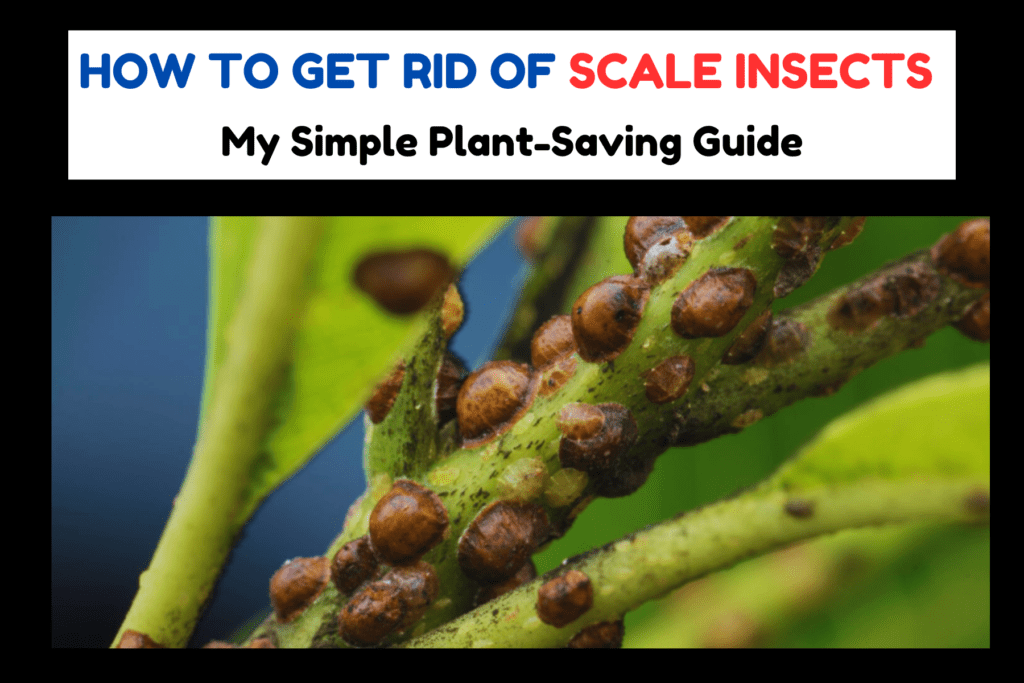
If you love plants like I do, you probably know that heart-dropping moment when you see something strange on your leaves. One sunny weekend, I noticed tiny, weird, bumpy spots on my favorite fiddle leaf fig. When I touched them, they didn’t move. That’s when I knew the ugly truth—scale insects had attacked my plant.
These tiny pests suck the sap from your plants, make them weak, and leave behind sticky honeydew that turns into black sooty mold. It is messy, frustrating, and once you see it, you never forget it.
I’ve had scale infestations on houseplants, shrubs in my yard, and even a young fruit tree. After many trials, I finally learned what actually works. No confusing advice—just simple steps from someone who has been through it.
Today, I’ll walk you through how to identify scale, how to treat it naturally first, how to remove it completely, and how to prevent it from ever coming back. I’ll even share my personal success story at the end. By the time you finish reading, your plants will be on their way to recovery.
What Are Scale Insects? (The Sneaky Pest That Pretends to Be Part of Your Plant)
Scale insects are not like normal bugs. They don’t crawl around much. Instead, they stick themselves onto your plant and hide under a little shell. There are more than 8,000 species worldwide and over 25 common types in the United States.
What they look like
- Hard or soft bumps on leaves, stems, or branches
- Size ranges from tiny pinheads (under 1 mm) to half-inch lumps on some plants
- Soft scale looks dome-shaped
- Hard scale looks like shells or scabs
How they spread
Females lay eggs under the shell. These eggs hatch into “crawlers,” tiny moving nymphs that travel to new parts of your plant before settling down and forming a shell. Males look like tiny winged gnats, but you rarely see them.
Damage you will notice
- Yellowing leaves
- Leaves dropping early
- Slow or stunted growth
- Cracked bark on woody plants
- Sticky honeydew on leaves or surfaces
- Black sooty mold growing on the honeydew
- Ants crawling around the plant
Scale insects are related to aphids and mealybugs, so they show up on many common plants—ficus, citrus trees, pothos, maples, hollies, and more. In warm states like California and Florida, they breed all year.
The honeydew they produce feels sticky like tree sap. The sooty mold that grows on it smells slightly musty.
How to Spot Scale Early (My Weekly Inspection Routine)
Catching scale early can save your plant and your sanity. Here’s what I do every week:
1. Shake the plant over white paper
Small orange dots (crawlers) show up clearly.
2. Scratch any suspicious bumps
If a bump scrapes off, it’s scale. If it doesn’t, it’s just natural plant texture.
3. Check the hidden places
Look at:
- Leaf undersides
- Leaf joints
- Branches
- Stems
Soft scale usually causes sooty mold, so black residue is a big clue.
4. Use sticky tape traps
Wrap a little piece of sticky tape around branches to catch crawlers.
5. Quarantine new houseplants
Keep new plants separate for 2–3 weeks. Scale often hitchhikes from nurseries.
A simple magnifying glass helped me once catch an armored scale infestation I first thought was “scabs” on my lemon tree.
How to Get Rid of Scale Insects: A Step-by-Step Treatment Plan That Works
Scale insects are tough because their shells protect them from sprays. That’s why the best plan targets their weak stage—the crawler stage—while also removing the adults.
This is my 5-step method that has worked on every infestation I faced.
Step 1: Isolate and Inspect (Day 1)
Move the plant away from others immediately.
Look under every leaf and along every stem.
Cut off heavy infestations and put clippings in sealed trash bags—never compost them.
If there is sooty mold, wipe leaves with mild soapy water. This helps the plant breathe again and improves light absorption.
Step 2: Manual Removal for Small Infestations
This method is simple and works amazingly well indoors.
You need:
- A cotton swab
- A soft toothbrush
- 70% isopropyl alcohol or soapy water
Dip the swab into the alcohol or soap and gently rub the scale off. Always test on one small area first. After that, rinse the plant in the shower with lukewarm water.
Do this every few days until the plant looks clean.
Outdoors, use a garden hose to blast off the scale.
Step 3: Use Oils and Soaps to Smother the Pests
Natural oils are the most effective treatment for scale because they smother the pests and their eggs.
Best options:
- Neem oil
- Horticultural oil
- Insecticidal soap
Mix according to the label instructions (usually 1–2 tablespoons per gallon). Spray the entire plant—top, bottom, stems, and even the soil. Crawlers fall into the soil, so don’t skip that.
Apply in the evening and avoid spraying in temperatures over 90°F.
Repeat every 7–10 days for 3–4 rounds.
A hydrogen peroxide wipe after the oil spray helps kill any remaining pests and also cleans mold.
Note: Chemical systemics like imidacloprid work but should only be a last option, especially for large trees, since they are not eco-friendly.
Step 4: Bring in Natural Predators
For outdoor plants, natural predators do a fantastic job keeping scale in check.
Helpful predators include:
If you plant dill or fennel nearby, these insects visit more often. You can also buy live ladybugs or lacewings online.
For indoor plants, beneficial nematodes (like Steinernema feltiae) work well against soft scale.
When I stopped using strong chemicals, ladybugs naturally returned to my garden—and the scale disappeared.
Step 5: Stay Consistent and Keep Monitoring
Check your plant every few days at first, then weekly for about a month. Do the paper-shake test again and watch for new bumps.
Healthy plants recover faster, so give yours:
- Enough water
- Light feeding
- Proper light
- Clean leaves
My fiddle leaf fig took six weeks to fully bounce back.
If scale continues even after all treatments, sometimes it’s best to remove the plant to protect the rest of your garden.
Also read:
Garden Pests: Spot, Prevent & Control Naturally
Scale Prevention: How to Stop Scale From Coming Back
Healthy plants are harder for pests to attack. Here’s what works long-term:
- Water plants regularly
- Avoid letting soil dry out too much
- Mulch outdoor plants
- Inspect new plants before bringing them home
- Clean plant debris
- Mist houseplants with neem spray once a month
- Flip leaves during watering to check for early signs
Since following these steps, I haven’t had a scale problem in two years. Beneficial bugs in my yard keep everything balanced.
My Scale Nightmare (And How I Saved My Plant)
A few years ago, I brought home what looked like a “perfect” schefflera from a store. Within weeks, scale insects took over. Ants were crawling all over it, sticky honeydew covered the leaves, and there was black mold everywhere.
I panicked. I tried alcohol swabs, neem oil, and even gave the plant a bath in my tub. Leaves dropped, and for a moment, I almost gave up.
But with consistent treatment, new green leaves started appearing. It became one of my strongest plants.
You can do this too—just be patient and consistent.
FAQ: Common Questions About Scale Insects
How long does it take to get rid of scale insects?
Usually 2–6 weeks, depending on the life cycle of the crawlers.
Can vinegar kill scale insects?
Diluted vinegar (1:1 with water) can help, but natural oils like neem are more effective.
Can scale insects harm humans or pets?
No. They do not bite or infect humans or pets. Just wash your hands after handling infested plants.
What works best indoors vs outdoors?
- Indoors: Alcohol swabs + neem oil
- Outdoors: Strong water spray + natural predators
Can scale kill a plant?
Yes, a heavy infestation can kill a plant. Light infestations can be treated if caught early.