
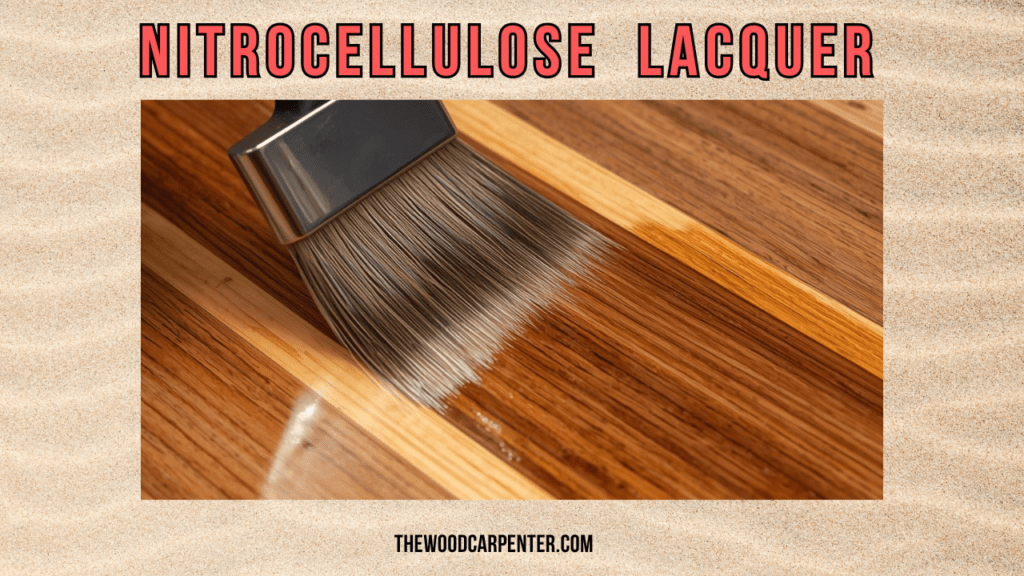
Woodworkers are drawn to finishes that will make wood look richer, glossier and more alive. That happens to be what Nitrocellulose lacquer has been doing for almost a century.
It dries fast, goes on in smooth, thin layers, and buffs to a deep shine that makes furniture, cabinets, and guitars look incredible. That’s why it’s still employed today on vintage-style instruments and high-end guitars.
What Is Nitrocellulose Lacquer ?
Nitrocellulose lacquer is made by treating cotton with nitric acid and then dissolving it in fast-evaporating solvents like acetone. When you add plasticizers, it becomes flexible enough to move with the wood without cracking. The finish goes on thin, dries quickly, and slowly builds up into a strong, glossy layer.
Compared to polyurethane, nitro lacquer dries much faster and creates lighter, finer coats. Builders often apply 10 to 20 thin coats to turn plain wood—like mahogany or maple—into something that looks rich and expensive.
It’s popular to use for repairing vintage items, particularly guitars. For instance, a lot of guitar players love nitro for classic Fender and Gibson guitars because it is easy to spray, easy to sand smooth and easy to repair.
Why Woodworkers Still Choose Nitrocellulose Lacquer ?
Nitro lacquer stands out from modern finishes for several reasons:
- Dries in minutes: You can sand and recoat while your coffee is still warm.
- Smooth, even finish: It levels itself well, so you don’t see brush marks or streaks.
- Brings out wood grain: It adds depth and shine, particularly on figured woods such as flame maple or koa.
- Easy to repair: Scratches or dull spots are easy to fix with some light sanding and another coat of lacquer, no need to strip the entire piece.
- Heat-resistant: It can handle warm cups without turning cloudy.
- Mirror gloss: Buffed well, it can reach a high-gloss, piano-like shine.
Of course, there are negative aspects as well. Nitro lacquer is pretty fumey; it wants some good ventilation. It’s not the best option for pieces that get heavy daily wear, such as floors. But for showpieces, musical instruments or fine furniture, it’s hard to beat.
Types of Nitrocellulose Lacquer
Different forms of nitro lacquer suit different projects:
1. Clear Spray Lacquer
- Best for guitars, tabletops, decorative pieces
- Dries in 10–15 minutes
- Applied with a spray gun
- Very high gloss potential
2. Brushing Lacquer
- Good for cabinets, frames, or areas where spraying is not practical
- Dries in 20–30 minutes
- Applied with a brush
- Satin or gloss finish
3. Toner Lacquers
- Lightly tinted
- Helps even out color on veneers
- Dries in 5–10 minutes
- Applied with a spray gun
- Adds depth to wood
4. Aerosol Lacquer (Quick-Dry)
- Ideal for small repairs, crafts, small furniture parts
- Dries in about 5 minutes
- Comes in a spray can
- Buffs to a smooth, shiny finish
Water-based nitro versions are also available. These produce fewer fumes and are easier on the environment, making them suitable for small workshops or urban homes.
How to Apply Nitrocellulose Lacquer (Simple Step-by-Step)
You don’t need to be a professional to get a great finish. Just follow these steps:
1. Prepare the wood
- Clean the surface with naphtha or a similar cleaner.
- Sand the wood starting at 220 grit and move up to 400 for a smooth base.
- Use a tack cloth to remove all dust.
- Make sure the humidity is under 50% to avoid a cloudy, milky look (called “blush”).
2. Thin the lacquer
- Thin the lacquer by 20–30% if needed.
- Mix in a retarder if the weather is humid to prevent blushing.
- Strain the lacquer before pouring it into your spray gun.
3. Spray light coats
- Hold the spray gun or can about 6 inches from the wood.
- Start with a thin “tack coat.”
- Apply 2–3 light passes, following the grain.
- Wait about 10 minutes between coats.
4. Sand between coats
- Lightly sand with 320-grit sandpaper after each coat.
- Wipe off dust before spraying the next layer.
- Apply 8–12 coats for most projects; guitars may need 12–15.
5. Level and polish
- Once the finish has dried fully, sand with 400 grit to smooth the surface.
- Use #0000 steel wool or a fine polishing compound to bring out shine.
- Let the piece cure for about 30 days for full hardness.
Pro Tips
- Warming the lacquer slightly helps it flow better.
- Use a small sponge to apply lacquer on curves or smaller details.
- A simple fan can help create airflow like a spray booth.
Nitrocellulose Lacquer vs Polyurethane vs Varnish vs Shellac
Here’s a quick comparison:
| Finish | Dry Time | Durability | Gloss | Repair Ease | Fumes |
| Nitro Lacquer | Minutes | Medium-High | Excellent | Easy | High |
| Polyurethane | Hours–Days | Highest | Good | Difficult | Medium |
| Varnish | Hours | Medium | Fair | Hard | Low |
| Shellac | ~30 min | Low | Warm | Very Easy | Low |
Nitro is perfect for display pieces, guitars, and furniture. Polyurethane is better for high-traffic areas like floors.
Safety Tips
Nitro lacquer contains strong solvents, so safety matters:
- Always make sure you work in a well-ventilated space.
- Gloves and a good mask would be helpful.
- Keep away from flames or sparks.
- Do not let them contact your skin; if necessary, clean them with mild soap or vinegar.
- Keep cans in a cool place, especially if you live in a hot area.
When completely dry, Nitro Lacquer is non-toxic and environmentally safe for regular indoor use.
Common Uses of Nitro Lacquer
- Electric and acoustic guitars
- Vintage furniture restoration
- Decorative cabinets and tabletops
- Wooden crafts and walking sticks
- High-gloss display cases
It’s especially popular in projects where you want a warm, glowing look that gets better with age.
FAQs
Does nitrocellulose lacquer turn yellow?
Over time, it may take on a light amber tone, which some people like. Modern UV-resistant formulas reduce yellowing.
Is it safe right after spraying?
Let it air out for at least 48 hours. Full off-gassing takes a few weeks.
How many coats do guitars need?
Typically, 12–15 thin coats are painted on for a professional-quality finish.
Should beginners use nitro or water-based lacquer?
I would definitely recommend aerosol nitro for a first finish — super easy to control and it shines like crazy.