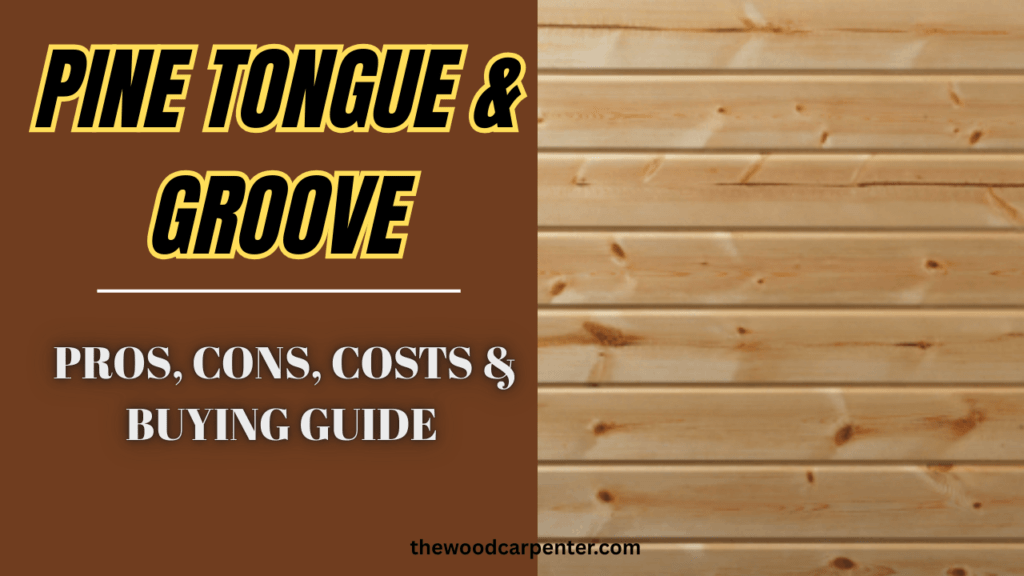
Pine Tongue & Groove: The first time I went into a cabin in the Blue Ridge Mountains my eyes go straight up to the ceiling. There was a warm, golden glow to it that made the space feel warm and inviting. The homeowner said the pine tongue and groove panels were applied over 30 years ago. They still looked beautiful.
That moment made me curious. Why is it still so popular after all these years? Let’s break it down.
What Makes Pine Tongue & Groove Special?
Pine tongue and groove boards are cut in a special way. One edge has a small “tongue,” and the other edge has a matching “groove.” When you push the boards together, they lock into place. This creates a smooth and tight surface.
Pine tongue and groove can be used for flooring, walls and ceiling.
Many options are available in a tongue and groove style, but pine stands out because it is affordable, workability, and naturally warm color! It is lighter than hardwoods such as oak and maple. It is easy to cut, accepts nails well and tends not to split. This makes installation a breeze for for professionals and beginners.
The Honest Truth: Pros and Cons of Pine Tongue and Groove
Before choosing pine, it’s important to understand both the good and the bad.
Advantages of Choosing Pine
Budget-Friendly Without Sacrificing Quality
Pine is less expensive than other materials. You might often have an entire room for half the oak or maple price. It’s not as expensive, but it still looks gorgeous and functions perfectly. Even though it costs less, it still looks beautiful and works well. The money you save can be used for better finishes or professional installation.
Exceptional Workability
Pine is easy to cut and shape. Saw blades stay sharp longer compared to hardwood. Screws and nails go in smoothly without much pre-drilling. This makes it perfect for DIY projects and first-time installers.
Lightweight Construction
Pine boards are lighter than hardwood ones. This is particularly useful for ceiling installations. The lighter the board, the easier it is to lift and hoist into place, and the less strain it puts on ceiling structure.
Natural Warmth and Character
Pine has a soft golden tone that makes rooms feel warm and inviting. The grain patterns and knots add personality. Over time, pine develops even more character.
Takes Finishes Beautifully
Both stain, paint, oil or clear finish on pine works well. It is also highly stain-absorbent, meaning you’ll be able to achieve a variety of different looks. It also takes paint well, especially white pine.
Rapid Growth and Sustainability
Pine is a relatively fast growing wood compared to hardwoods like oak. For this reason, pine is a more sustainable option. When it comes from verified forests, its an eco-friendly choice.
Aromatic Qualities
New pine will have this sweet smell natural from installation. It’s a fresh scent that many people enjoy, especially in cabins and country homes.
Disadvantages to Consider
Softness Leads to Denting
Pine is softer than hardwood. This means it dents more easily. Dropped objects, furniture legs, pet claws, and high heels can leave marks. Some people like this “lived-in” look. Others prefer harder wood that stays smooth.
Scratching and Surface Damage
Pine scratches more easily than hardwood. Dirt and sand can scratch the surface. Regular cleaning is important to protect it.
Expansion and Contraction
Pine reacts to humidity changes. In summer, boards may expand. In winter, they may shrink and create small gaps. Good installation and indoor climate control help reduce this problem.
Resin and Pitch Issues
Some boards contain resin pockets. These can sometimes leak sticky sap even years later. Sealing helps, but it may still happen occasionally.
Knots Present Challenges
Knots add charm, but they can create issues. They are harder than the surrounding wood and may dull tools. Sometimes knots fall out and leave small holes. They also absorb stain differently.
Susceptibility to Moisture Damage
Pine does not resist moisture as well as cedar or redwood. Too much water can cause swelling or rot. Good sealing and quick repair of leaks are very important.
Color Changes Over Time
Pine naturally darkens with age and sunlight. The light honey color may turn more amber or orange over time. Some homeowners love this change, while others prefer the original lighter look.
Limited Durability in Commercial Settings
Pine is wonderful for homes, but not so much for high-traffic commercial areas. Heavy foot traffic can cause faster wear.
Resale Perception Issues
For some buyers, pine is considered a “budget” wood compared with hardwoods. This can influence resale value in pricey markets.
Knowing these facts, you can determine if pine is the right choice for your project.
Understanding Pine Varieties for Tongue and Groove
Not all pine is the same. The kind you choose will have an impact on strength, appearance and longevity.
Yellow Pine (Southern Yellow Pine)
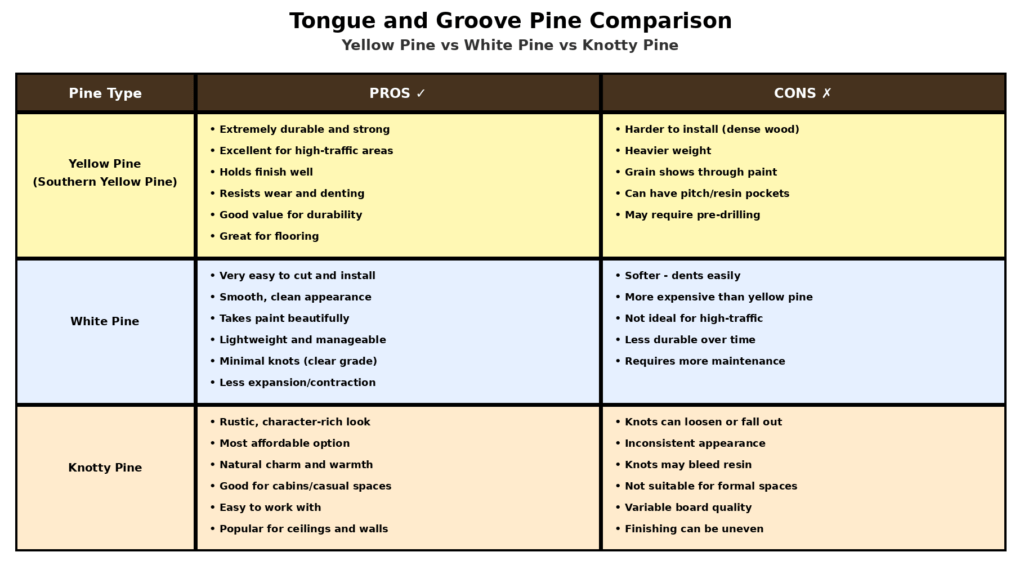
This is stronger and harder than other pine types. It has noticeable grain patterns and color variations from cream to amber. It works well for flooring because it handles foot traffic better.
White Pine
White pine is a little softer and has more uniform appearance. It has fewer knots and a more uniform look. Has good workability, and is great for painted walls or ceiling. However, it dents more easily.
Knotty Pine
Knotty pine refers to boards with visible knots. These knots create a rustic and cozy look. It is often used in cabins and country-style homes. Care must be taken when installing as knots are harder than the rest of the wood.
Quick Comparison: Pine Variety Pros and Cons
Grading Systems Matter More Than You Think
Pine boards are sold in different grades.
Clear Grade
Very few knots and very uniform color. Best for formal or high-end spaces. Most expensive.
Select Grade
Small knots and slight color changes. Great balance between beauty and price. Popular for most homes.
Common Grade
Larger knots and more color variation. Most affordable. Perfect for rustic designs.
Choosing the right grade can save money and help you achieve the look you want.
Installation Techniques That Ensure Success
Installing pine tongue and groove is simple if you follow key steps.
Pine Tongue and Groove Applications: Choosing the Right Fit
Floor Installations
Advantages: Warm and comfortable underfoot, can be refinished, provides insulation.
Disadvantages: Dents and scratches easily, needs regular care, sensitive to spills.
Ceiling Installations
Advantages: Protected from foot traffic, hides ceiling flaws, adds style, low maintenance.
Disadvantages: More difficult to install overhead, shows water leaks quickly, may cause dark rooms to feel smaller.
Wall Installations
Advantages: Adds texture and insulation, easier than ceiling installation, protects walls.
Disadvantages: Can make rooms feel smaller if overused, requires careful cutting around outlets.
Acclimation is non-negotiable.
Let the boards sit in the room for at least 48 hours, preferably a week. This helps them adjust to humidity and prevents future movement.
Start with the straightest board. Make sure it is level. This first board guides the rest.
For walls and ceilings, nail through the tongue at an angle so the next board hides the nail. For floors, use flooring nailers for stronger support.
Leave a small gap, about one quarter inch, around the room edges. This allows expansion during humid seasons.
Finishing Options That Enhance Longevity
Finishing protects pine and improves its look.
Best for floors. Oil-based adds warmth. Water-based stays clear. Use at least three coats for good protection.
Give a natural look. Good for walls and ceilings. Less protective than polyurethane.
Paint
Great for changing the look completely. Use a stain-blocking primer first to prevent yellow stains from tannins.
Leaving pine unfinished on ceilings creates a natural rustic style, but it offers no protection.
Finishing Options: Weighing Your Choices
Polyurethane
Pros: Very durable, easy to clean, strong moisture barrier.
Cons: Can look plastic-like, oil-based versions yellow over time.
Oil Finishes
Pros: Natural look, easy to repair small spots.
Cons: Less protection, needs more frequent reapplication.
Paint
Pros: Many color choices, hides flaws.
Cons: Covers natural wood grain completely.
Natural/Unfinished
Pros: Authentic look, no chemicals.
Cons: No protection from stains or moisture.
Common Challenges and Practical Solutions
Cupping happens when boards bend due to moisture differences. Proper acclimation and sealing all sides help prevent this.
Gaps may appear in winter when air is dry. Keeping indoor humidity between 40–60% reduces movement.
Pitch pockets may leak resin. Scrape it off, clean the area, and seal before refinishing.
Maintenance Strategies for Lasting Beauty
For floors, sweep or vacuum regularly. Use a slightly damp mop, not too much water. Place mats at entrances to reduce dirt.
Walls and ceilings require only an occasional dusting. Repair leaks promptly if you see stains.
Apply new coats every 5–10 years to keep your floors protected.
Cost Considerations and Budget Planning
Common grade pine usually costs less per square foot.
Select grade costs more.
Clear grade costs the most.
Professional installation adds extra cost, especially for ceilings.
Even though pine is affordable, it can last for decades if maintained properly. Many old homes still have original pine floors from the early 1900s.
Environmental Considerations
Pine grows faster than hardwood trees. Most pine in the U.S. comes from managed forests where new trees are planted after harvesting.
Look for FSC or SFI certifications to ensure responsible forestry practices.
Frequently Asked Questions
Can pine tongue and groove be installed over existing floors?
Yes, if the floor underneath is level and strong. However, removing old flooring allows better inspection of the subfloor.
How does pine tongue and groove perform in bathrooms or kitchens?
It works if properly sealed and well ventilated. Areas near sinks need extra care.
What thickness works best for different applications?
Floors usually use 3/4-inch boards. Walls and ceilings are made from thinner board.
Is pine tongue and groove suitable for exterior applications?
Regular pine does not work well outside unless treated. Pressure-treated pine works better outside.
How do you handle electrical outlets and light fixtures?
Plan ahead. Measure and cut accurate holes for outlets and fixtures.
Can you sand and refinish pine tongue and groove multiple times?
Yes. 3/4-inch floor can be sanded down 3–5 times, throughout their lifetime.
Final Thoughts
Pine tongue and groove is warm, affordable, and timeless. It’s simple to install and great for a beginner, as well as able to be used in numerous design styles.
The secret to long-term success is choosing the right type and grade, allowing proper acclimation, finishing it well, and maintaining it regularly.
Pine ages beautifully, developing its own patina over the years that suits any style. For a lot of homeowners, that aging process is what makes pine special.