
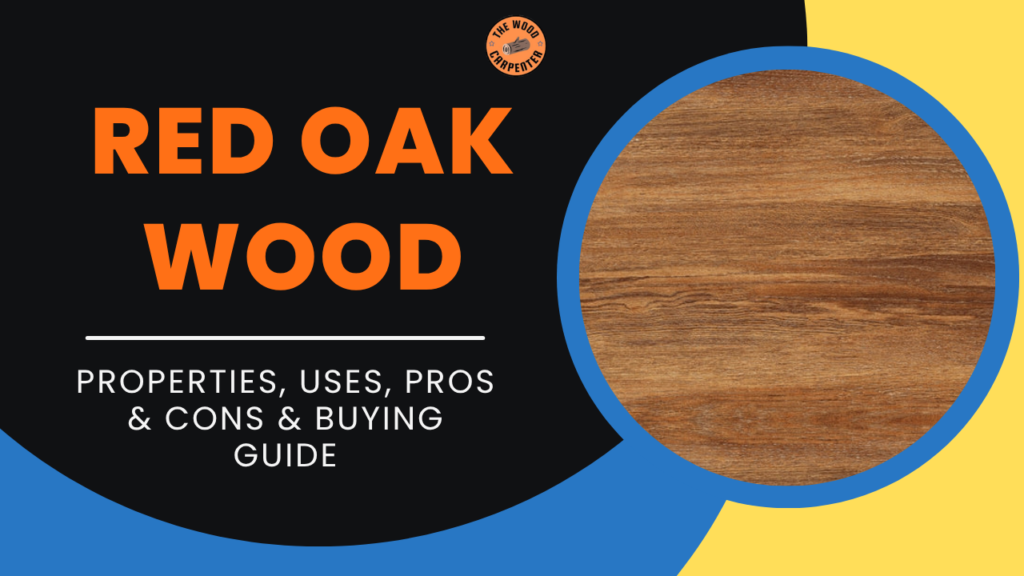
Red oak is a strong, budget-friendly North American hardwood with a Janka hardness of 1,290 lbf. It has an open grain, warm reddish-brown color, and excellent workability. It’s one of the most widely available and affordable hardwoods you’ll find — and honestly, it’s more capable than most people give it credit for.
What Is Red Oak Wood ?
Walk into almost any hardwood lumber yard in America, and red oak will be right there waiting for you. Stacked high, priced fairly, and — if I’m being honest — a little underappreciated for everything it can do.
Red oak (Quercus rubra) grows in abundance across the eastern United States and Canada. When woodworkers and lumber dealers say “red oak lumber,” they’re almost always referring to Northern red oak — the most commercially harvested variety in the group, which also includes black oak and scarlet oak.
This wood has been a cornerstone of American woodworking for centuries, and for genuinely good reasons. It’s strong. It’s easy to work with. It takes stain beautifully. And it won’t break the bank.
If you’ve ever walked across hardwood floors in an older American home, there’s a real chance you were walking on red oak — and never gave it a second thought. That kind of quiet reliability is exactly what makes it special.
Key Properties of Red Oak Wood
Before you buy or build with any wood, you need to understand what you’re actually working with. Here’s what red oak brings to the table.
Hardness: Built to Handle Daily Life
Red oak scores 1,290 lbf on the Janka hardness scale. That puts it solidly in the hard category — tougher than cherry, black walnut, and most pine species.
Yes, hickory and hard maple beat it. But for everyday furniture and flooring? 1,290 lbf is more than enough. You’re not going to dent it by dropping a fork or sliding a chair across it.
Grain and Texture: Bold and Recognizable
The open, coarse grain with prominent ray flecks running across the surface is what most people recognize instantly. The grain is usually straight, though you’ll occasionally find wavy sections that add real personality to a finished piece.
That open texture is worth paying attention to. It absorbs stain and finish deeply — which is both a strength and something to plan for, depending on the final look you’re going for.
Color: Warm, Inviting, and Timeless
Fresh-cut red oak is light tan to pale pinkish-brown with a subtle reddish cast that deepens over time. The heartwood runs slightly darker than the sapwood, but the difference is modest — nothing jarring.
It’s a warm, inviting wood. Well-suited to traditional, rustic, and transitional interiors. It’s not the right call for cold, minimalist spaces — but in the right setting, it’s genuinely beautiful.
Workability: Where Red Oak Really Shines
This is one of red oak’s best qualities, and it doesn’t get enough attention.
It cuts cleanly. It sands well. It holds screws without splitting — though pre-drilling near edges is always a smart habit with any hardwood. Even less experienced woodworkers find it forgiving and consistent to work with.
One thing to plan for: those open pores need filling before you apply topcoats if you want a truly smooth, glassy surface. Skip that step and you’ll still feel the texture even after sanding. That’s not always a bad thing — it depends on the look you’re after — but it’s something you should decide intentionally, not accidentally.
Durability: Strong Indoors, Vulnerable Outdoors
Indoors, red oak holds up exceptionally well. Properly maintained, it will last for decades without issue.
Outdoors is a completely different story. The open grain structure absorbs moisture readily, making it vulnerable to rot and decay in damp or exposed environments. This is the one area where white oak has a clear, undeniable advantage.
The rule is simple: keep red oak inside, and it thrives. Put it outside, and it struggles.
What Red Oak Wood Is Used For
Red oak is one of the most versatile domestic hardwoods available. Here’s where it performs best.
Red Oak Flooring: The American Standard
Red oak flooring has earned its reputation as the gold standard in American homes — and it’s done so over a very long time.
The hardness handles foot traffic well. The bold grain pattern actually helps hide minor scratches better than finer-grained woods. And because it can be sanded and refinished multiple times over decades, a properly installed red oak floor is a long-term decision, not a short-term one.
Plenty of red oak floors from the early 1900s are still going strong after several refinishes. That’s not an accident — that’s a wood doing exactly what it was built to do.
Red Oak Furniture: Classic, Reliable, Affordable
Dining tables, chairs, bookshelves, bedroom dressers — red oak handles all of it without complaint.
It machines cleanly, glues well, and delivers that classic solid-hardwood look without the price tag of walnut or cherry. For traditional and transitional furniture styles especially, it’s a genuinely hard choice to argue against.
Red Oak Cabinets: A Proven Track Record
Kitchen and bathroom cabinets made from red oak were everywhere through the 1980s and 90s. The ones that were built well? They still look great today.
It accepts paint and stain evenly, which gives you real flexibility when a kitchen gets updated — you can refresh the finish without replacing the entire cabinet box.
Interior Millwork and Trim
Crown molding, door frames, window casings, stair treads — red oak handles all of these well. It’s both strong and stable, holding its shape under the stress that trim pieces take as buildings settle and seasons change.
Other Interior Uses
You’ll find red oak showing up in a lot of places you might not expect:
- Wall paneling and wainscoting
- Shelving and storage units
- Wooden toys and tool handles
- Veneer for plywood and MDF
One thing worth repeating: red oak stays indoors. The open pore structure makes moisture penetration too easy for outdoor exposure to end well — even with heavy sealing.
Red Oak Wood: Pros and Cons
✅ What Red Oak Has Going for It
- Exceptional availability — one of the most common hardwoods in North America; you won’t struggle to source it
- Budget-friendly pricing — consistently cheaper than white oak, cherry, or walnut
- Solid hardness — 1,290 lbf handles daily wear without issue
- Stains beautifully — takes color readily across a wide range of finishes and tones
- Easy to work with — cuts, machines, and sands cleanly; forgiving for less experienced woodworkers
- Dimensionally stable — resists warping when properly kiln-dried and used in interior conditions
- Refinishable floors — can be sanded and refinished multiple times over decades of use
⚠️ What to Watch Out For
- Open grain absorbs moisture easily — not suitable for damp environments
- Poor outdoor performance — will deteriorate without heavy, consistent maintenance
- Grain filling required — open pores need a paste wood filler before smooth topcoats
- Reacts with iron fasteners — bare steel screws leave dark, inky stains; always use stainless or coated hardware
- Bold ray pattern is polarizing — stunning in the right interior, too busy in others
- Not food-safe for cutting boards — open pores can harbor bacteria
Red Oak vs White Oak: Which Should You Choose ?
This is the comparison that comes up constantly — and for good reason. These two woods are related, but they perform differently in ways that actually matter.
| Feature | Red Oak | White Oak |
| Janka Hardness | 1,290 lbf | 1,360 lbf |
| Water Resistance | Low | High (tyloses seal pores) |
| Grain Pattern | Open, coarse, bold rays | Tighter, more uniform |
| Color | Warm reddish-brown | Gray-brown, cooler tones |
| Outdoor Use | Not recommended | Yes, with proper finishing |
| Price | More affordable | Moderately higher |
| Staining | Deep absorption, can be uneven | More consistent results |
| Common Uses | Flooring, furniture, cabinets | Flooring, barrels, boat building |
| Availability | Excellent | Very good |
The short version:
White oak wins on moisture resistance and outdoor durability. Red oak wins on price and availability.
For interior work, both are excellent choices — it mostly comes down to your budget, your color preference, and what you’re actually building.
Pro Tip: If you’re building something that stays inside your home, red oak gives you nearly identical structural performance to white oak at a meaningfully lower price. Save the white oak for outdoor projects or marine applications where its closed pore structure actually earns its premium.
Is Red Oak Good for Furniture?
Yes — and it’s genuinely one of the better options in its price range for traditional and transitional styles.
Here’s why it works so well:
- Hard enough to resist everyday dents and wear
- Machines cleanly so joints fit together properly
- Holds hardware — hinges, drawer slides, shelf pins — without issue
- Stains across a wide range from natural light tones to deep walnut finishes
- Costs significantly less than cherry or walnut with similar structural performance
The honest caveat: if you’re going for a very clean, modern aesthetic, the bold grain pattern works against you. Maple or poplar will serve that look better. But for furniture with warmth, character, and a classic feel, red oak is genuinely hard to beat at the price point.
Red Oak Wood Pricing and Where to Buy
Red oak is one of the most affordable domestic hardwoods on the market. Here’s what you can expect to pay:
| Form | Price Range |
| Rough lumber | $3–$6 per board foot |
| S4S (surfaced four sides) | $5–$9 per board foot |
| Unfinished flooring | $3–$7 per square foot |
| Pre-finished flooring | $5–$12 per square foot |
Where to Find Red Oak
- Local hardwood dealers and sawmills
- Big box stores like Home Depot and Menards
- Online lumber suppliers for specialty grades
- Woodworking specialty stores where staff can help with project-specific needs
Buying Tip: Always purchase kiln-dried stock with a moisture content of 6–8% for furniture and flooring. Green or air-dried lumber will shrink and move after installation — sometimes significantly. Don’t skip this step; it’s one of the most common mistakes beginners make.
Expert Tips for Working with Red Oak
Cutting
Use a sharp carbide-tipped blade with at least 40 teeth for crosscuts. Dull blades cause tear-out along the grain — and with red oak’s open texture, that tear-out shows up more visibly than it would on finer-grained woods.
Sanding
Start at 80–100 grit and work your way up to 150–180 grit for furniture surfaces. For floors, 120 grit before finishing is the standard. Always sand with the grain — going against it on red oak leaves scratches that show through even after finishing.
Filling the Grain
If you want a smooth, glassy topcoat, use a paste wood filler before applying finish. Trowel it in, let it cure fully, then sand flush. If you prefer a more natural, tactile feel, you can skip this step — just make sure it’s a deliberate choice, not an oversight.
Staining Red Oak
Red oak takes stain well, but it can go blotchy if your surface prep isn’t consistent. A pre-conditioner before staining makes a real difference, especially with lighter or water-based stains.
Gel stains are particularly reliable for achieving consistent color on open-grained woods like red oak — worth considering if you’ve had blotching issues before.
Finishing
Oil-based polyurethane, hardwax oils, and water-based finishes all work well on red oak.
- For floors: oil-based polyurethane gives the toughest, most durable protection
- For furniture: hardwax oils deliver a natural, matte finish that looks like the wood itself — not like plastic sitting on top of it
Fasteners — Don’t Skip This
This one really matters. Bare steel screws and nails react chemically with the tannins in red oak, leaving dark, inky stains that bleed into the surrounding wood and are nearly impossible to fix.
Always use stainless steel, coated, or galvanized fasteners. Every time, no exceptions.
Maintenance and Care for Red Oak
Red oak is genuinely low-maintenance once it’s properly finished. A few consistent habits will keep it looking great for decades.
- Sweep or vacuum regularly — grit underfoot acts like sandpaper on the finish over time
- Clean spills quickly — red oak absorbs moisture faster than you’d want
- Use pH-neutral wood cleaners — avoid vinegar or harsh chemicals, which break down the finish
- Apply furniture wax or polish once or twice a year — protects the finish between full refinishes
- Plan to refinish floors every 7–10 years as needed — they handle multiple refinishing cycles well
- Maintain indoor humidity between 35–55% to minimize seasonal expansion and contraction
Who Should Use Red Oak?
Red oak makes sense if you’re:
- Building traditional or rustic furniture and want a warm, characterful hardwood
- Installing hardwood flooring on a reasonable budget
- A hobbyist woodworker who wants a forgiving, consistent material to learn and build with
- Working on interior trim, millwork, or renovation projects where reliable, widely available lumber matters
Where it doesn’t belong: outdoor projects, anything near consistent moisture or water exposure, marine applications, or interiors where the bold grain would feel stylistically out of place.
Frequently Asked Questions About Red Oak Wood
Is red oak strong enough for furniture? Yes, comfortably. At 1,290 lbf Janka hardness, it handles dining tables, chairs, beds, and cabinets without issue. When joints are properly constructed, it holds up well against everyday dents and surface wear.
Does red oak resist water? Not naturally. The open pores absorb moisture readily. Proper sealing handles normal indoor humidity, but outdoor or consistently wet environments will cause problems regardless of how well the surface is finished.
Is red oak expensive? No — it’s one of the most affordable domestic hardwoods available. Rough lumber runs $3–$6 per board foot, putting it well below cherry, walnut, or white oak.
Can red oak be used outdoors? It’s not recommended. Without the closed pore structure of white oak or teak, outdoor exposure leads to rot relatively quickly — even with protective finishes applied. This is an indoor wood.
How long does red oak last? Indoors, with proper care, red oak furniture and flooring commonly reaches 50–100 years. Red oak floors from the early 1900s are still being refinished and used today. It’s a genuinely long-term material when used in the right conditions.
Red oak vs white oak — which is better? It depends entirely on what you’re building. White oak is slightly harder, significantly more water-resistant, and handles outdoor use far better. Red oak is more affordable and easier to source. For interior furniture and flooring, both are excellent — the decision comes down to budget and the color tone you prefer.
What’s the best finish for red oak? For furniture, hardwax oils or oil-based polyurethane. For floors, oil-based polyurethane for maximum durability. Fill the open grain first if a smooth, even surface is important to the final look.
Final Verdict on Red Oak Wood
Red oak has earned its place in American woodworking the honest way — through consistent, reliable performance over a very long time.
It’s not the hardest wood in the yard. It’s not the most moisture-resistant. And it’s not going to win any awards for exclusivity. But it’s strong, easy to work with, genuinely good-looking in the right setting, and priced in a way that makes quality woodworking accessible to everyone from first-time hobbyists to busy production shops.
Keep it dry. Keep it indoors. Use the right fasteners. Fill the grain when the finish calls for it.
Do those things, and red oak will give you decades of reliable, attractive performance — whether you’re building a dining table, laying a floor, or tackling your first serious woodworking project. It’s a wood that holds up its end of the deal, every time.