
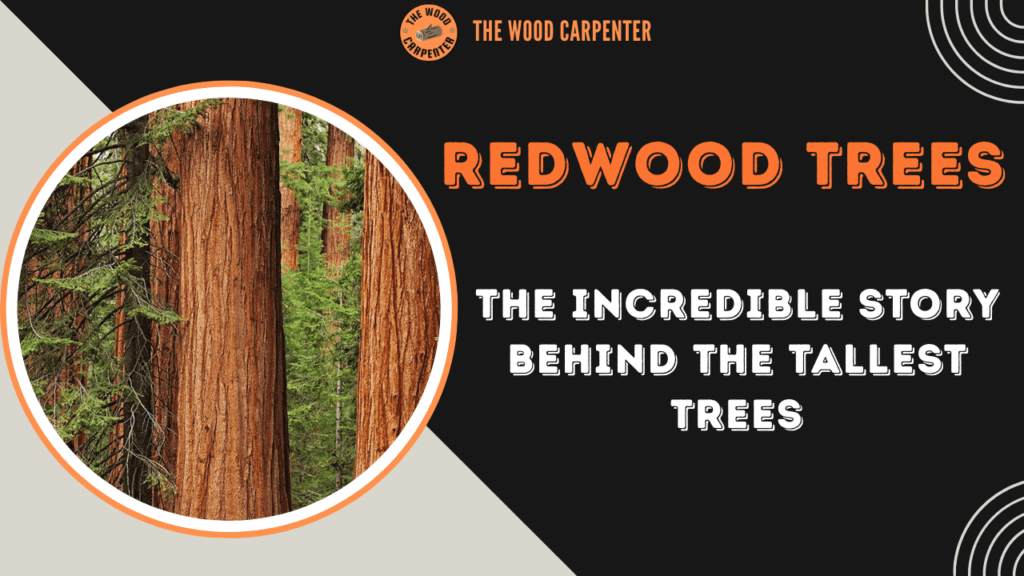
If you ever stand under a redwood tree, you feel something special. You look up, your neck goes back, your mouth opens a little, and suddenly the world becomes quiet. These trees are not just trees. They feel like living monuments. They are very old, and have survived a long time, and protect what is near them.
Redwood trees have attracted scientists, poets, vacationers, nature buffs and millions of regular people who come to visit them every year. But what’s so great about these trees? Why do they grow so tall? And how have they managed to exist for thousands of years while many other plants around them vanished?
This easy-to-read tutorial will tell the whole story of redwood trees. The knowledge is from credible research, universities such as UC Davis Arboretum and conservation groups that study and work to protect redwoods.
Let’s walk into the forest together.
What Is a Redwood Tree ?
“Redwood” is a common name for three types of trees that are related to each other:
- Coast Redwood (Sequoia sempervirens) – It is the tallest species of tree in the world.
- Giant Sequoia (Sequoiadendron giganteum) – These trees are the largest by volume (they are very wide and big).
- Dawn Redwood (Metasequoia glyptostroboides) – A “living fossil” previously believed extinct.
In this article, we mainly talk about the Coast Redwood, the beast that grows near the foggy coast of Northernmost California.
Where Redwoods Grow Today
Coast redwoods naturally grow in a long, narrow strip along the Pacific Coast. This strip is about 450 miles long, from Big Sur to southern Oregon.
They grow best in places that have:
- Cool and mild weather
- Lots of winter rain
- Thick fog during summer
The fog is extremely important. A redwood gets as much as 40 percent of its water from fog. Their leaves gather and hold the minuscule droplets of moisture that pass for rain in a foggy desert, and then the water drips down. Some water even penetrates directly into the leaves.
This is how redwoods can grow in regions where summers are dry but foggy.
Ancient Survivors With a Long History
Redwoods belong to an ancient family of plants that lived at the time of the dinosaurs. Fossils reveal that redwood-like trees were once spread throughout North America, Europe and Asia.
But as the Earth’s climate changed over millions of years, their perfect environment became smaller and smaller. Today, only three species are left.
The redwoods in California and Oregon survived because the coast gave them:
- Lots of fog
- Stable and cool temperatures
- Enough moisture
Some of the redwood trees still living today began taking root over 2,000 years ago — when the Roman Empire still reigned, electricity was a distant dream, and cars and modern English had yet to be invented.
Why Can Redwoods Grow So Tall?
They don’t grow tall by accident. They have many special features that help them reach 300–380 feet.
1. Strong and Wide Root System
Redwood roots are not very deep—they go only around 12 feet deep.
But they spread out more than 50 feet and connect with the roots of other redwoods.
This creates a huge support network, like trees holding each other up. This helps them survive strong storms and floods.
2. Fog as Water
Redwoods have learned how to “catch” fog:
- Leaves grab water droplets
- Water drips down to the ground
- Roots take in the moisture
This helps them survive long, dry summers.
3. Thick Bark That Resists Fire
Redwood bark can be up to 12 inches thick. It protects the tree from:
- Fire
- Rot
- Insects
- Fungus
The bark usually does not burn. It becomes black on the outside but keeps the inside safe.
4. Ability to Regrow
Redwoods can regrow even after getting damaged. They can grow new trunks from:
- The base of the tree
- The roots
- Special parts called burls
Because of this, even after fires or logging, redwoods can come back.
The Ultimate Guide to Woodworking: Types of Wood
Redwoods and the Ecosystem: A Whole World in the Canopy
A fully grown redwood is like a tall apartment building full of life.
High up in the tree, scientists have found:
- Ferns
- Moss
- Small trees
- Salamanders that never touch the ground
- Thick layers of soil
Old redwoods are like vertical forests. They host animals and plants that live nowhere else.
They also store huge amounts of carbon. One redwood tree can store more carbon than a forest of smaller trees. This helps slow climate change.
How Redwoods Reproduce
Redwoods make new trees in two ways:
1. From Seeds
A grown redwood makes thousands of tiny seeds each year. But only a small number grow into big trees. Seeds need:
- Exposed soil with nutrients
- Sunlight
- Enough moisture
- Less competition from other plants
2. Sprouting (Cloning)
This is their superpower.
If a redwood is damaged by wind, fire, or flood, the base of the tree can send up new shoots. These shoots are genetic clones of the parent tree.
So even if one trunk dies, the genetic family keeps going for thousands of years.
Redwoods Growing Outside California
Redwoods also grow in parks, universities, and gardens outside the coast.
For example, the UC Davis Arboretum Redwood Grove is one of the largest redwood groves outside the natural coastal zone.
But because the Central Valley is hot and dry, these redwoods need:
- Extra watering
- More soil moisture
- Shade created through careful landscape planning
They can grow almost anywhere if they get enough water.
Why Saving Redwoods Is Important
At the start of the 1900s, most of the ancient redwood forests were being cut down. Today, only about 5% of the original old-growth forests remain.
Thanks to protected areas like Redwood National and State Parks, many of the remaining trees are now safe.
Redwoods are important because they:
- Hold large amounts of carbon
- Support wildlife
- Help forests grow again after disasters
- Show Earth’s history over thousands of years
- Bring millions of visitors
- Inspire environmental education
When we save redwoods, we save entire ecosystems.
What It Feels Like to Stand Among Redwoods
Going into a redwood forest is a very calm and powerful experience.
The air is cool. The ground feels soft. Light comes down slowly between the leaves. Everything feels old and peaceful.
People often describe it as:
- Peaceful
- Humbling
- Spiritual
- Awe-inspiring
It is not just a walk. It is a reminder that nature is huge and time is long.
FAQs About Redwood Trees
1. How tall can a redwood grow?
More than 350 feet. They are the tallest trees on Earth.
2. Are redwoods and sequoias the same?
No.
Coast redwoods are taller.
Giant sequoias are wider and heavier.
3. How long do redwoods live?
Some live for more than 2,000 years.
4. Why do redwoods need fog?
Fog gives them water during dry summers and keeps them from drying out.
5. Can redwoods survive fires?
Yes. Their thick bark protects them from most fires.
6. Do redwoods grow outside California?
Yes, but only with enough water. They grow in parks and campuses around the world.
7. Why are redwoods good for the environment?
They store a lot of carbon, help protect nature, and reduce climate change effects.
Final Thoughts
Redwood trees do so much more than stand there. They teach us big lessons. They illustrate that strength is found in unity. They prove that strength takes time. They do demonstrate that even the tallest trees depend on a community of roots and friends to achieve their potential.
Whether you’re studying them from home or planning a trip to a redwood forest, one thing is clear:
If you see a redwood, you will never forget it.