
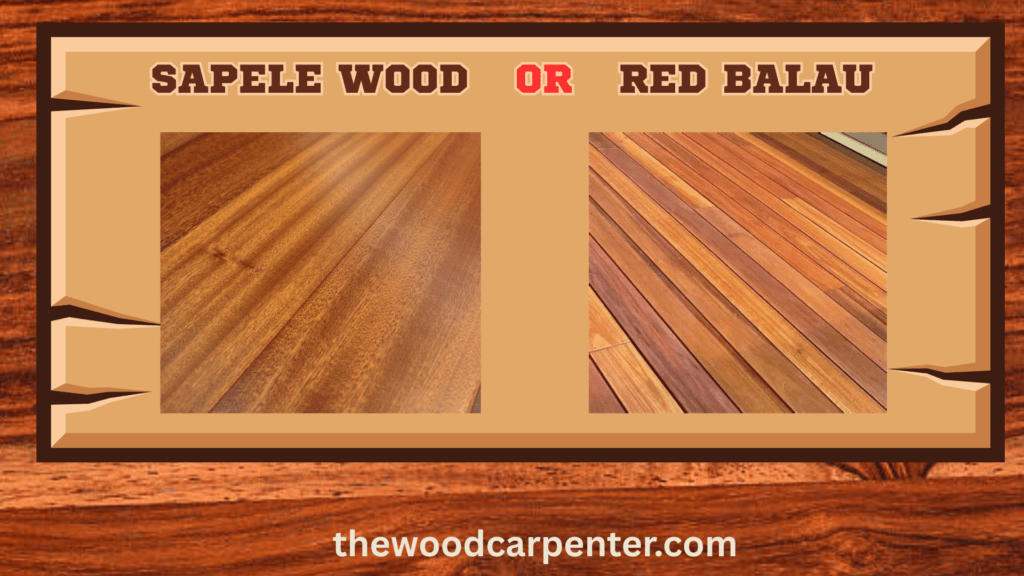
Sapele wood and Red Balau are two highly sought-after tropical hardwoods celebrated for their strength, gorgeous appearance, and lifespan. Both are used for building furniture and other home and outdoor projects. Sapele has a rich, mahogany-like appearance and beautiful finish, while Red Balau is known for being durable and ability to handle harsh outdoor conditions.
The decision between them comes down to where and how you will use wood — indoors, looking for beauty or outdoors seeking durability.
Understanding Sapele Wood: Elegant and Refined
Sapele is harvested from large trees in West and Central Africa. It is from the same family as genuine mahogany which explains its similar appearance and feel. The wood starts from a pinkish or reddish brown to an extravagant brown over time.
One of Sapele’s most attractive features is its interlocking grain. This creates beautiful ribbon-like patterns that make furniture and cabinetry stand out. The texture is fine and smooth, making it pleasant to touch and easy to finish.
Sapele is strong and dense, harder than oak and many types of teak. It resists dents well and stays stable after drying, even when humidity changes. Because of this, it works well for furniture, flooring, and detailed woodworking.
Working With Sapele
Sapele machines well but needs sharp tools. Its grain can tear if rushed, so slow and careful cutting gives the best results. It glues strongly and accepts oils, varnishes, and clear finishes very well, bringing out its natural shine.
This wood is commonly used for cabinets, tables, chairs, doors, musical instruments, and boat interiors. With proper sealing, it can be used outdoors, but it performs best indoors or in covered areas.
Red Balau: Built for the Outdoors
Red Balau comes from Southeast Asia, mainly Malaysia and Indonesia. It is often sold under names like Red Selangan Batu. This wood is darker and more uniform in color, ranging from reddish-brown to deep brown. When left outside, it naturally turns silver-gray.
Red Balau is stronger, heavier and harder than Sapele. Density is its strength, provides wear, scratch and heavy load resistance. This is the reason that arches and decking, docks and bridges are built from it.
It is also more rot, moisture, termite and insect resistant than many other wood species (including wet or coastal environments).
Working With Red Balau
Red Balau is tough on tools. It contains natural silica, which dulls blades quickly, so carbide tools are recommended. Pre-drilling is important to prevent splitting during installation.
The wood accepts oils and exterior finishes well. Many people leave it untreated outdoors, allowing it to weather naturally, while others apply oil to keep its rich color longer.
Sapele vs Red Balau: Side-by-Side Comparison
| Property | Sapele Wood | Red Balau |
| Origin | West & Central Africa | Southeast Asia |
| Janka Hardness | 1,360–1,410 lbf | Around 1,600 lbf |
| Density | 41–42 lbs/ft³ | 42+ lbs/ft³ |
| Color | Reddish-brown with ribbon grain | Uniform reddish to dark brown |
| Grain & Texture | Interlocked, fine | Interlocked, coarse but even |
| Stability | Very stable after drying | Very stable outdoors |
| Best Use | Furniture, cabinetry, interiors | Decking, outdoor construction |
Best Uses for Each Wood
Sapele is best when appearance matters most. It is widely used for indoor furniture, cabinets, doors, flooring, musical instruments, and decorative panels. Boat builders also use it for interior trim because it handles moisture better than many hardwoods.
Red Balau shines in outdoor projects. It is ideal for decks, docks, boardwalks, outdoor furniture, siding, and heavy structural work. Its strength and weather resistance make it a practical choice for areas exposed to rain, sun, and foot traffic.
Durability, Maintenance, and Lifespan
Indoors, Sapele remains stable for decades with little maintenance. Occasional cleaning and refinish is all that’s typically needed. Outside, it must be sealed and maintained to keep moisture at bay.
Red Balau requires very little maintenance outdoors. Cleaning and oiling every few years can maintain color, but even without treatment, it can last 20–30 years or more.
Cost and Value
Sapele is in general more expensive, particularly if there is strong grain. Prices typically range from $8 to $12 per board foot. For all interior work; such as furniture, it gives a long lasting value.
Red Balau is cheaper for large outdoor projects, typically ranging from $6 to $10 per board foot. It provides an especially good value for decks and exterior projects.
Sustainability and Responsible Sourcing
Both the woods are sourced from areas in which forests need to be preserved. It matters when you buy FSC certified or legally sourced wood. Because Sapele grows relatively fast, and Red Balau is more widely available, but certification counts for both.
Choosing responsibly sourced wood helps protect forests while ensuring long-term availability.
Frequently Asked Questions
Is Sapele harder than Red Balau?
No – Red Balau is a harder material that is more suitable for heavy outdoor use.
Can Sapele be used outdoors?
Yes, but it must be sealed and maintained. Red Balau handles outdoor exposure better.
Which wood is better for decking?
For decking the better choice is Red Balau because of its strength, water resistance and cost.
Which wood looks better for furniture?
Sapele is commonly used in furniture making due to its beautiful color and grain pattern.
Final Verdict
Sapele and Red Balau are both great hardwoods, but they fulfill different needs.
Select Sapele for beauty, sleek finishes and interior projects.
Select Red Balau for strength, weather resistance and outdoor projects consider.
Each wood isn’t always “better” than the other. The decision will be yours, based on your project, environment and budget. When properly treated, both woods can provide decades of dependable and attractive performance.