
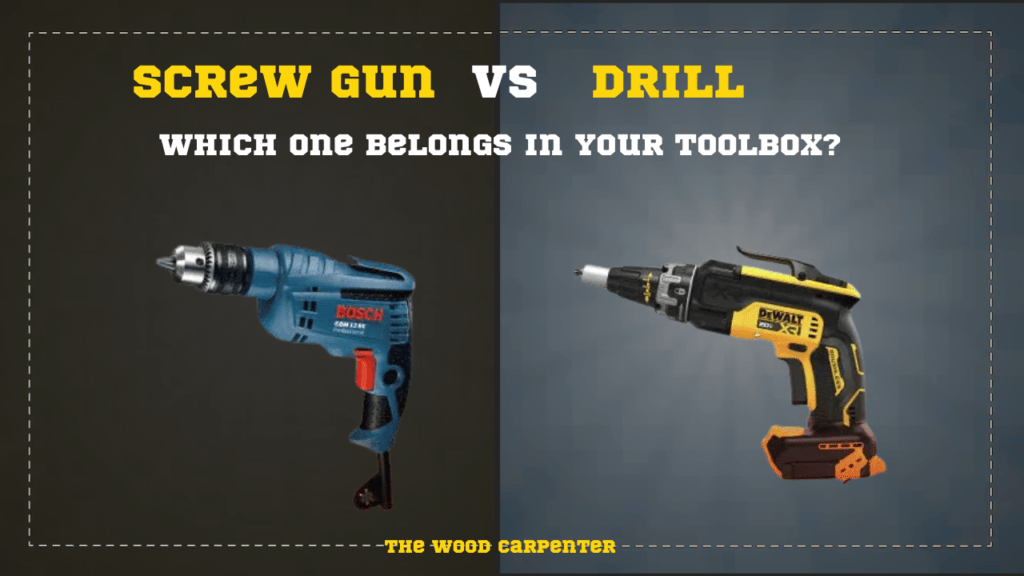
It’s an experience familiar to anyone who has stood in the power tool aisle wondering whether to purchase a screw gun or just a drill. They look almost the same at first glance. Both spin bits. Both drive screws.
Both claim to make your job easier. But the professionals say they are not same tool — and they’re right.
The difference becomes quite apparent as soon as you tackle a project containing more than just a few screws. Hanging drywall, constructing a deck, or installing cabinets can necessitate driving hundreds (or even thousands) of fasteners.
And in those moments, the wrong one can mean wasting hours of time, a sore wrist, uneven results and a lot of frustration.
I only have had a cordless drill for years. Furniture, shelves, repairs—no problem. Then one day while finishing a basement, I was handed this screw gun by a contractor friend and told to use it.
After maybe fifty drywall screws, though, odd things started happening. My wrist didn’t hurt. Every screw sat perfectly. And it was much faster work.” And then it clicked: These are tools built for completely different jobs.
So let’s make sense of it all, and help you pick the right tool with confidence.
How a Drill Actually Works (And Why Everyone Owns One)
The drill is the single best power tool to own. It’s a first power tool for countless people because it can do so many jobs.
A drill is a simple device. In the inside, a motor makes the front part called the chuck rotate. The chuck is used to tighten the drill bit or screwdriver bit. Practically all of today’s drills have a keyless chuck, so you don’t need to use the key to tighten it. You don’t even need a fancy key.
Drills have a variable speed trigger. This means the harder you press the trigger, the faster the drill spins. This helps you work slowly and carefully when needed, especially when starting a screw or drilling a small hole.
Most drills also have a clutch with number settings. The clutch controls how much force the drill uses. When a screw becomes tight, the drill stops turning. This helps prevent damage to the screw or the material.
Today, most drills are cordless. They use rechargeable lithium-ion batteries. Common power levels are 12V to 20V. Higher voltage usually gives more power and longer battery life. Many new drills use brushless motors.
These motors last longer, run quieter, and use less battery power.
The good news about a drill is that it can do lots of things. You can punch holes through wood, metal or plastic. You can drive screws. Make paint-mixing or big-hole-cutting a snap with the proper bit.
For this reason, drills are really for homeowners, renters and anyone who does other kinds of little projects. But drilling is not what you want when it comes to having to drive a lot of screws, over and over.
Your hand can get quite tired holding the drill, pressing the trigger and controlling depth. A screw gun is a better bet for jobs with many screws.
What Makes a Screw Gun a Completely Different Tool
A screw gun is built with one purpose in mind: driving screws quickly, consistently, and with minimal effort.
The most noticeable difference is the depth-sensitive nose. This adjustable nose stops the screw at a precise depth every single time.
In drywall work, screws must sit slightly recessed without tearing the paper. With a screw gun, you set the depth once, and every screw comes out exactly the same.
Instead of a manually adjusted clutch like a drill, screw guns use an automatic clutch system. The moment the screw reaches full depth, the tool stops instantly. This prevents overdriving, reduces mistakes, and protects both the screw and the material.
Another huge advantage is the trigger design. Screw guns use a continuous trigger that stays engaged while you work.
You don’t have to squeeze constantly like with a drill. This may sound minor, but after driving hundreds of screws, it makes a massive difference in hand fatigue.
Screw guns also run at much higher speeds. While most drills top out around 2,000 RPM, screw guns often reach 3,000 to 4,000 RPM.
This speed allows screws to seat quickly and cleanly, especially in drywall, decking, and subflooring.
Weight and balance are also improved. Screw guns usually weigh less and are better balanced for overhead or extended use. The lighter nose reduces wrist strain and makes repetitive work feel smoother and more controlled.
Where Each Tool Shines in Real-World Use
Drills are ideal for mixed tasks. If your project involves drilling pilot holes, driving screws, removing fasteners, and switching materials, a drill handles it all without complaint.
Furniture assembly, light woodworking, home repairs, and general maintenance are all drill territory.
Drills also excel at precision work. When working with hardwoods, cabinetry, or delicate materials, the ability to start slow and carefully control torque matters. Screw guns move too fast for these situations and can feel unforgiving.
Screw guns dominate when repetition enters the picture. Drywall installation is the classic example.
Thousands of screws, often overhead, all needing the same depth. A screw gun turns this from exhausting work into a smooth, steady process.
Decking projects are another area where screw guns shine. Composite decking, in particular, requires consistent screw depth to meet manufacturer warranties. A screw gun ensures every screw sits just right without guesswork.
Subfloors, wall sheathing, cabinet backs, and framing jobs all benefit from the speed and consistency of a screw gun. Once the depth is set, you can focus on placement rather than control.
Also read:
Impact Drill vs Drill: Find Out Which Is Right for You
What Is a Hammer Drill? The Must-Have Tool for Every DIYer!
Side-by-Side Comparison
| Task | Drill Wins | Screw Gun Wins |
| Drilling Holes | Wood, metal, masonry | Not designed for drilling |
| General Screw Driving | Small projects, repairs | Not ideal |
| High-Volume Screws | Slower, more tiring | Drywall, decking, framing |
| Depth Control | Manual clutch | Automatic depth stop |
| Overhead Work | Heavier, more fatigue | Lighter, balanced |
| Precision Work | Excellent control | Built for speed |
Cost, Value, and What Most People Actually Need
Price may not be the determining factor that many assume. A decent cordless drill usually costs $100 to $200. A decent corded screw gun can often be found in the same price range, if not cheaper.
Cordless screw guns, especially professional models, cost more. Once you add batteries and chargers, prices can reach $300 or more. These tools make sense for contractors or serious renovators but are often unnecessary for occasional users.
For many DIYers, the smartest setup is a good cordless drill paired with a corded screw gun for large projects.
This means you don’t have to buy extra batteries and can still deliver professional-level performance when it’s show time.
Renting is another smart option. Even if you need a screw gun for one big drywall project, rental rates for a weekend are much less than buying.
What About Impact Drivers ?
Impact drivers often confuse people because they drive screws very well. They use rotational impacts instead of constant spinning, which makes them powerful and compact. They are excellent for driving long screws, lag bolts, and structural fasteners.
However, impact drivers lack depth control. They are loud, aggressive, and not suited for drywall or finish work. Think of them as brute force tools, not finesse tools.
In simple terms: drills are versatile, screw guns are precise and fast, and impact drivers are powerful.
Technique Matters No Matter What Tool You Use
Even the best tool won’t help if technique is poor. Keeping the tool straight, applying steady pressure, and letting the motor do the work makes a huge difference. Start screws slowly, then increase speed once threads engage.
Good bits matter more than most people realize. Cheap bits slip, strip screws, and ruin materials. Quality bits last longer and save money in the long run.
Take breaks during long sessions. Fatigue leads to mistakes, and mistakes cost time.
Frequently Asked Questions
Can a drill replace a screw gun?
For small jobs, yes. For large, repetitive projects, no. Screw guns are faster, more consistent, and far easier on your body.
Why do drywall professionals use screw guns?
Because they drive thousands of screws every day. The depth control, speed, and reduced fatigue directly affect job quality and productivity.
Is a cordless screw gun worth it?
For professionals or large mobile projects, yes. For home use, corded models usually offer better value.
What voltage drill is enough for home use?
A quality 12V brushless drill handles most household tasks. For heavier work, 18V or 20V offers more power and runtime.
Can you drill holes with a screw gun?
No. Screw guns are not designed for drilling and should not be used that way.
Final Thoughts: Choosing Smarter, Not Bigger
Deciding whether to use a drill or screw gun is not about which tool is superior. It’s about which tool is the best fit for the work you’re doing.
For the majority of users, a quality cordless drill will do almost everything they need. But if you have a project that requires drilling hundreds of screws, a screw gun is no longer an luxury but becomes a lifesaver.
The most smartest tool set is not the heaviest one — it’s the collection that makes your job easier and cleaner, and simply more fun. Knowing what each tool is good for means your toolbox works for you, not against you.