
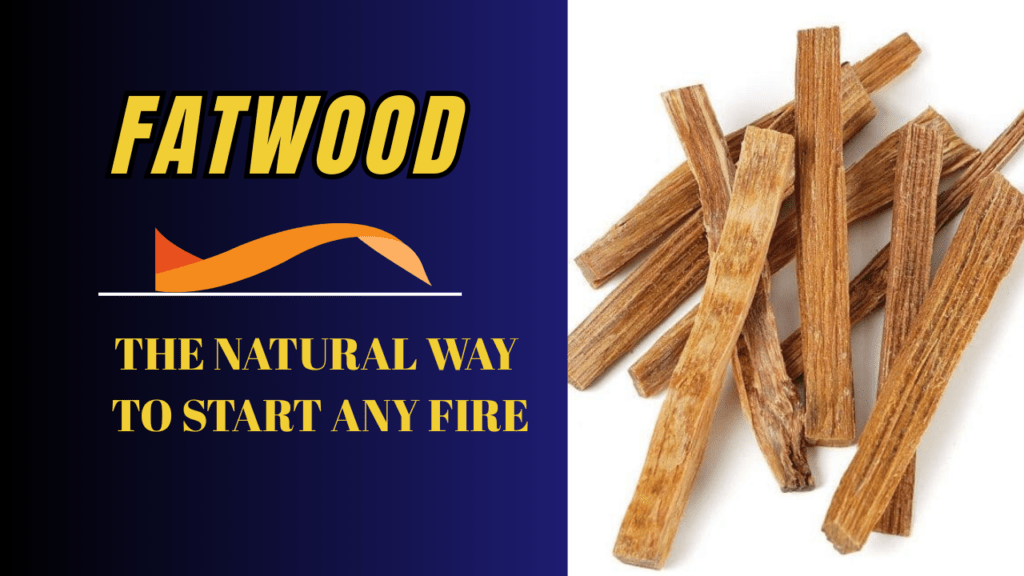
If you’ve ever attempted to light a fire using wet wood, you understand the frustration it can cause. Wet newspaper fails. Cardboard smokes. Chemical starters smell bad. That’s where fatwood changes everything.
But fatwood is frequently known as nature’s perfect kindling. It is found beneath pine tree stumps and roots filled with resin from the tree. That resin is what makes the wood so flammable, water-repellent and completely reliable. Fatwood, whether you’re camping or lighting a fire in your fireplace, is an easy way to start fires.
Let’s break it down.
What Exactly Is Fatwood?
Fatwood is the resin-infused heartwood of pine trees. When a pine is cut down or falls naturally, the stump and root system remains in the ground.
Over time, the tree’s natural sap (resin) concentrates in the remaining wood.
This resin hardens and turns the wood into something special:
- Dense
- Sticky or waxy
- Strong pine smell
- Extremely flammable
The resin contains natural compounds called terpenes. These are highly flammable oils that ignite easily and burn hot.
People also call fatwood by other names:
- Lighter wood
- Pine knot
- Rich lighter
- Pitch wood
They all mean the same thing — resin-packed pine wood that lights fast and burns strong.
How Fatwood Forms in Nature
When a pine tree is damaged or cut, it pushes resin into its heartwood as a natural defense. That resin is what protects the wood against bugs, rot and decay.
Over many years, rain and weather wash away the softer outer wood. What remains is the dense, resin-heavy core. This is fatwood.
This natural process can take 10 to 50 years. The result is wood that:
- Does not rot easily
- Resists moisture
- Burns hotter than normal pine
In the southern United States and other pine-rich areas, old logging stumps are excellent sources of fatwood. Longleaf pine, loblolly pine, and slash pine are especially known for producing high-quality pieces.
How to Identify Real Fatwood
If you are looking for fatwood in the wild or buying it, here’s what to check.
Color
Good fatwood has a deep amber, orange, or reddish-brown color. It looks much darker than regular pine.
Smell
It has an odour resembling that of pine or turpentine. If you shave it with a knife, the perfume is still more powerful.
Weight
It’s heavier than regular wood of the same dimensions because of the resin inside.
Texture
It feels dense and slightly waxy. When scraped, you may see shiny resin.
If the wood is crumbly, soft, or smells musty, it’s probably not true fatwood.
Actually, many experienced campers will tell you that the best pieces are found in trees struck by lightning or very old pine stumps.
Why Fatwood Burns So Well
The secret is the resin.
Resin acts as both fuel and fire starter. When lit, the terpenes vaporize and produce hot, steady flames. It burns much hotter than paper or cardboard.
Even better, resin repels water. That means fatwood can still light even if it has been exposed to rain. The inside stays dry.
Here’s a simple comparison:
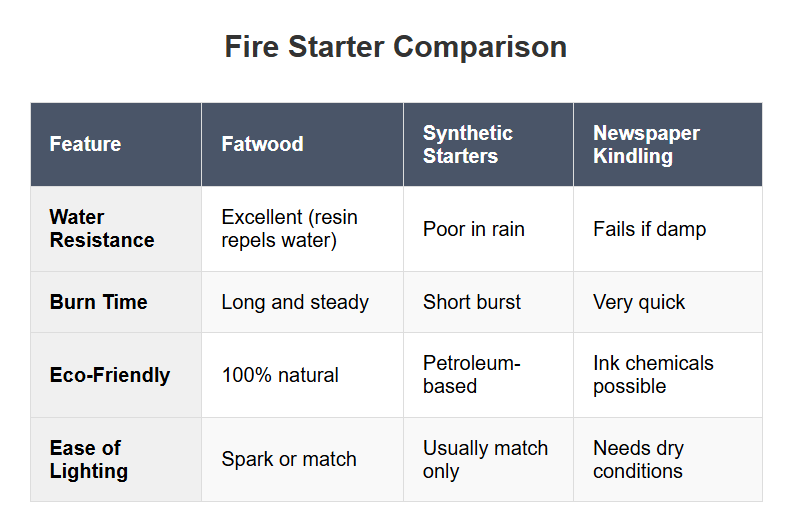
One small stick of fatwood is often enough to start an entire fire.
How to Use Fatwood Properly
Using fatwood is simple.
Cut it into small sticks about 6–8 inches long. For faster ignition, shave thin curls with a knife. These thin shavings catch sparks easily.
To start a fire:
Place a few shavings or thin sticks at the bottom.
Add small dry kindling on top.
Place larger wood above that.
Light the fatwood.
It ignites quickly and produces strong flames that light the rest of your wood.
For fireplaces, 2–3 small sticks under your logs are usually enough.
For grills or BBQs, let the fatwood burn down first before placing food over the flame. It burns clean and leaves no chemical taste.
It also works perfectly with ferro rods, flint and steel, or survival fire-starting tools.
Everyday Uses Beyond Camping
Fatwood is not just for the outdoors.
At home, it makes fireplace lighting easy during winter. No need for lighter fluid or chemical starters.
Backyard fire pits become simple to start.
Wood stoves ignite faster.
Pellet or coal stoves benefit from reliable startup heat.
In emergency kits, fatwood is compact and dependable. Since it lasts indefinitely, it’s perfect for preparedness supplies.
Some people even use it as a simple torch by splitting one end and lighting it upright.
Sustainability and Environmental Benefits
One of the best things about fatwood is that it is natural and sustainable.
It comes from old stumps left behind after logging. Harvesting fatwood:
- Does not require cutting live trees
- Reduces leftover forest fuel that could feed wildfires
- Uses material that would otherwise decay
There are no chemicals added. No processing needed beyond cutting and splitting. It is biodegradable and carbon-neutral.
When buying fatwood, look for brands that confirm sustainable sourcing and chemical-free processing.
Storage and Shelf Life
With proper care, fatwood will last forever.
Keep it in a cool, dry place.
Store it in a box, bin, or sealed container.
Avoid constant moisture exposure.
It is resistant to decay due to the high resin content. And, even today, years later it still works.
This makes it far better than paper-based fire starters that degrade over time.
Safety Tips
Fatwood is natural and non-toxic, but keep a few things in mind.
Use just a few sticks at a time, to prevent large flare-ups.
Keep it out of children and pets.
Wear gloves if you are sensitive to sticky resin.
It burns more cleanly than chemical starters and gives off less nasty smoke during startup.
Common Myths About Fatwood
Some people think fatwood needs drying before use. It doesn’t. Even slightly wet pieces will light because of the resin inside.
Others believe it only exists in the southern United States. While southern pines produce excellent fatwood, any resin-rich pine can create it.
Another myth is that it is heavily processed. Real fatwood is simply cut and split from old resin-rich stumps. Nothing added.
Frequently Asked Questions
What is fatwood made of?
It is heartwood from pine stumps saturated with natural resin.
Can fatwood get wet and still light?
Yes. The resin repels water and keeps the inside dry.
Is fatwood safe for indoor fireplaces?
Yes. It is 100% natural and burns clean without chemicals.
How long does fatwood last in storage?
Indefinitely, if kept dry.
Can I harvest my own fatwood?
Yes, from dead pine stumps on property where you have permission. Never damage live trees.
Is it safe for cooking fires?
Yes. Let it burn fully before placing food over the flame.
Is harvesting fatwood bad for forests?
No. It usually comes from old stumps and helps reduce leftover forest fuel.
Final Thoughts
Fatwood is one of those simple natural products that truly works. No chemicals. No complicated setup. No frustration in damp weather.
It lights easily.
It burns hot.
It lasts forever.
Whether you’re starting a cozy fireplace at home or building a campfire in the woods, fatwood makes the job easier and more reliable.
Once you use it, it’s hard to go back to anything else.