
Last Updated on August 1, 2026 by Sam Wood Worker
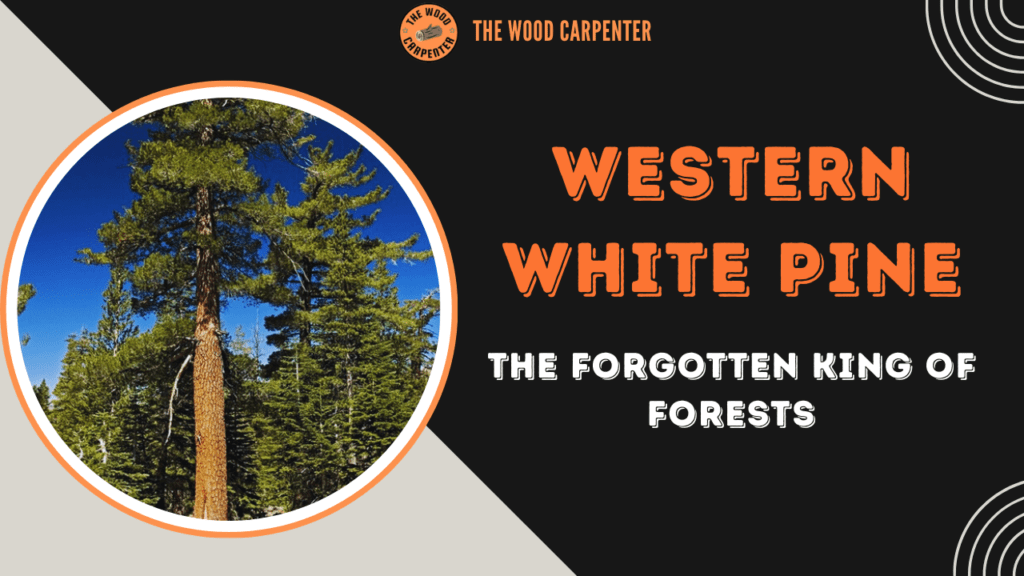
If you walk through the cool mountain forests of Idaho, Montana, or the Cascades, you might see a tall, beautiful pine tree with long, thin cones hanging down like decorations. This tree is called Western White Pine. It was once known as the “King Pine” because it was big, strong, and very valuable.
When early settlers moved to the western United States, they quickly noticed this tree. It looked like the white pine trees they had seen in the East, but this one was taller and even more impressive. For many years, northern Idaho had some of the most valuable white pine forests in the world.
However, disease and wildfires subsequently destroyed most of these forests. A lot of trees were lost. Western White Pine is a survivor and a powerhouse today. Its story is about beauty, loss, and slow recovery over time.
What Is Western White Pine?
Western white pine is a large evergreen tree that belongs to the white pine group — the pines that grow five needles in each bundle. It is native to the mountains of the Pacific Northwest and the northern Rocky Mountains.
It is also the official state tree of Idaho, chosen because it shaped the state’s forests, economy, and history.
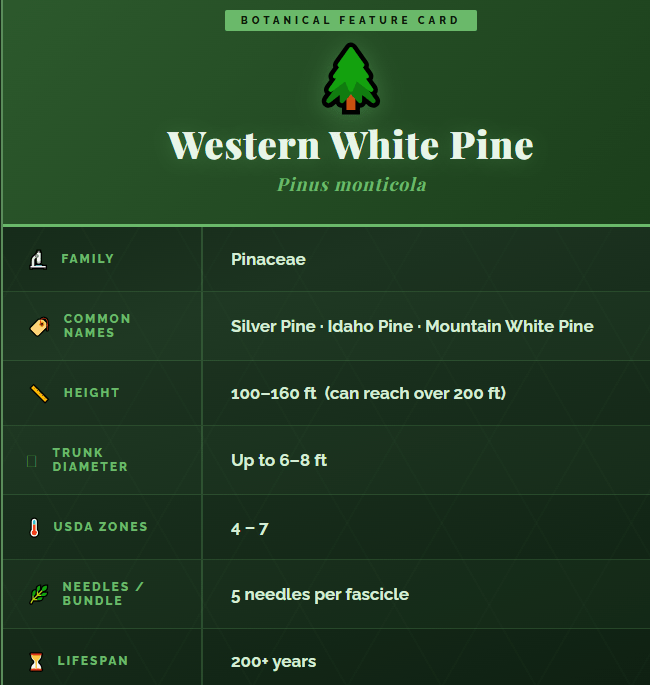
In the wild, these trees grow tall and straight, forming narrow pyramids when young and broader crowns as they age.
How to Identify Western White Pine
You don’t need to be a forester to recognize this tree. A few simple features make identification easier.
The needles grow in bundles of five, soft but slightly firm, with a blue-green color. They stay on the tree for about three to four years.
The cones are one of the easiest clues. They are long, thin, and slightly curved — many people say they look like small bananas hanging from the branches.
Young trees have smooth gray bark. As the tree matures, the bark develops distinct rectangular or hexagon-shaped plates, almost like a reptile pattern. This is one of the most unique features of the species.
The overall shape is tall, straight, and elegant. In dense forests, the crown stays narrow. In open areas, it spreads wider.
Where Western White Pine Grows
This tree is a deeply mountain and cool, moist environment loving tree.
Its native range stretches from British Columbia, Washington and Oregon, Idaho and western Montana, and as far south as the Sierra Nevada in California. We see it grow from near sea level on the coast to high elevations above 9,000 feet.
You’ll often find it:
- In moist valleys or north-facing slopes
- Near streams or deep forest soils
- Mixed with Douglas-fir, western hemlock, and cedar
Young trees tolerate some shade, but older trees grow best in full sun.
A real-life example: after a wildfire or logging, western white pine is often one of the first large trees to grow back and fill open spaces.
Why Wildlife Depends on It
Western white pine supports a wide range of forest life.
Its seeds provide nourishment to squirrels, chipmunks, deer mice and numerous birds, including crossbills and grouse. Deer may browse young needles. Cavities found in mature trees that become homes for woodpeckers and other nesting birds.
As the tree also stabilizes mountain soils and offers protection from wind and snow. In high-elevation forests, it plays an important role in keeping the ecosystem balanced.
The Wood: Light, Strong, and Easy to Work
One reason western white pine became so valuable is its wood.
It is:
- Lightweight but strong
- Straight-grained and smooth
- Easy to cut, nail, glue, and paint
- Very stable (doesn’t warp much)
Because of these qualities, it has been used for:
- Window frames and doors
- Interior paneling and trim
- Furniture and carving
- Construction lumber
- Boxes, matches, and toothpicks
- Plywood and millwork
Older carpenters often say it was one of the easiest woods to work with.
The Disease That Changed Its History
The biggest challenge for this species is white pine blister rust, a fungal disease introduced to North America around 1910.
The disease spreads between white pines and plants like currants and gooseberries. It creates cankers that slowly kill branches and eventually the entire tree.
This disease wiped out huge areas of western white pine forest. In many places, the tree almost disappeared.
The good news is that some trees naturally resist the disease. Today, forestry programs grow and plant rust-resistant seedlings, helping the species slowly recover.
Growing Western White Pine at Home
This tree can be planted in landscapes, but it’s best suited for large spaces.
It grows well when:
- Planted in full sun or light shade
- Soil is moist but well-drained and slightly acidic
- Rust-resistant nursery stock is used
- Space of at least 20–30 feet is available
Young trees grow quickly, often 2–3 feet per year once established.
One practical tip: avoid planting near patios or parked cars. The cones can drip sticky pitch in warm weather.
Western White Pine vs Eastern White Pine
These two species look similar, but a few differences help tell them apart.
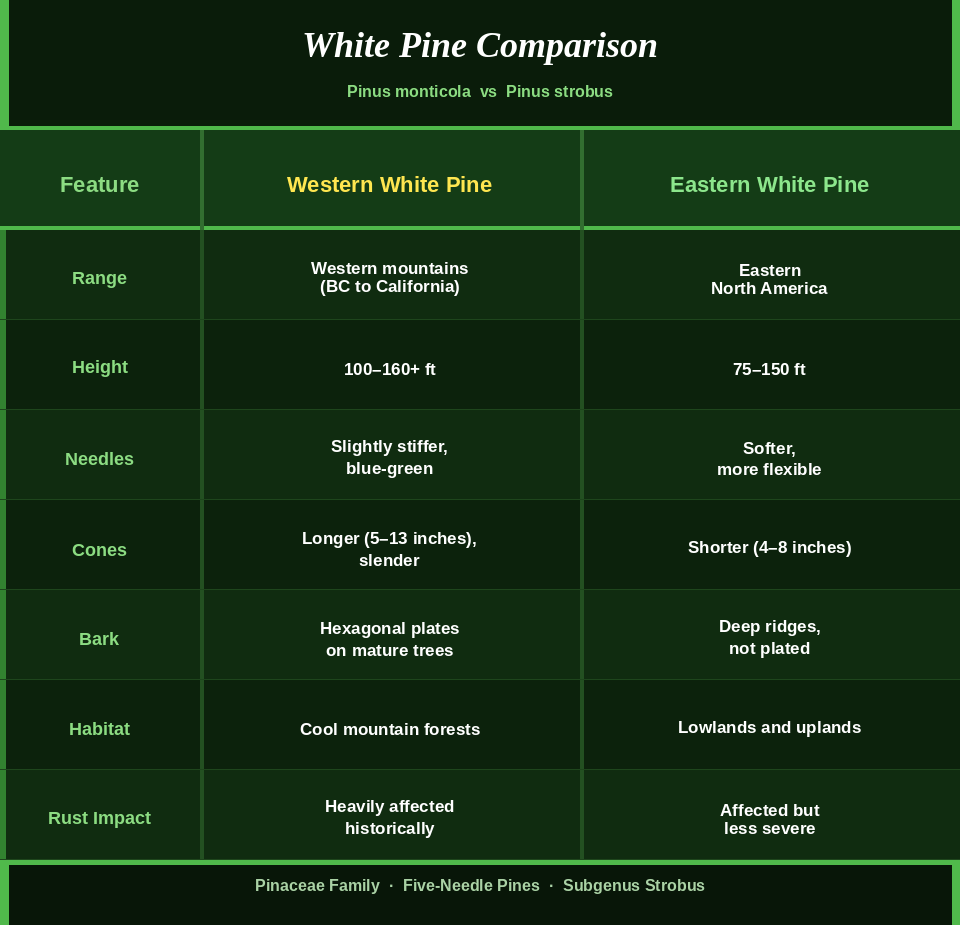
In simple terms, western white pine has longer cones, denser growth, and distinctive plated bark.
Common Questions
Why is it Idaho’s state tree?
Because it once dominated the region’s forests and supported the state’s timber economy.
How tall can it grow?
Old trees can exceed 200 feet, though 100–160 feet is more common.
Is it resistant to blister rust?
Some modern nursery varieties are bred for resistance.
Can I plant it in my yard?
Yes, if you have enough space and choose rust-resistant plants.
Why This Tree Still Matters
Western white pine is not only a timber tree. It’s a part of Pacific Northwest history, a wildlife home, a forest recovery symbol.
There was a time when many had feared this species would go extinct. Now, due to amazing efforts in conservation and the refinement of resistant seedlings, it is beginning to reclaim the landscapes where it once reigned.
Sometimes the strongest trees are the ones that survive the hardest challenges — and western white pine is a perfect example of that quiet strength.