
Last Updated on May 11, 2026 by Sam Wood Worker
There’s a certain kind of wood that doesn’t try to impress you at first glance. It sits there, a little rough around the edges, maybe a bit resinous, and you think — alright, nothing special here. Then you work with it. You see how it handles a blade, how it weathers a season, how it looks after a good oil finish. And somewhere along the way, without any fanfare, it earns your respect.
That’s Siberian larch.
It’s not the flashiest wood in the yard. It won’t turn heads next to walnut or cherry. But if you need something tough, stable, and genuinely long-lasting — the kind of timber that shrugs off rain, rot, and rough use without complaining — Siberian larch deserves a serious look.
What Is Siberian Larch, Exactly?
Siberian larch (Larix sibirica) grows across the vast boreal forests of Russia, stretching into parts of Mongolia and Kazakhstan. These trees grow slowly — really slowly — through some of the harshest winters on earth. That slow, grudging growth is exactly what gives the wood its character.
Tight growth rings. Dense grain. High resin content. All of it earned through decades of pushing through brutal cold and short growing seasons. There’s something almost poetic about that, honestly — a tree that suffers to become something worth building with.
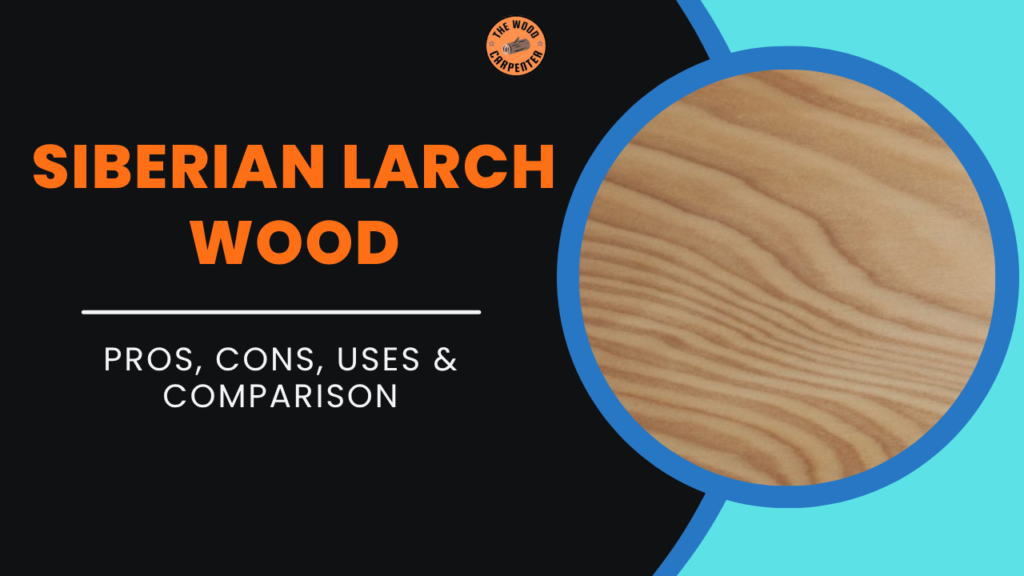
The wood itself comes out of the mill a warm yellowish-brown to amber, deepening over time to a richer honey or reddish-brown as it ages and catches light. The grain is generally straight with a fine, even texture — though you’ll occasionally hit wavy sections depending on how the log was milled, so don’t be surprised.
There’s a natural luster to it that responds beautifully to oil finishes. First time you wipe a coat on it and the color just wakes up — that never really gets old.
One thing you’ll notice the moment you pick up a plank: it’s heavier than it looks. Reach for it expecting something like pine and your arm will know the difference immediately.
Workability — What It’s Actually Like to Cut and Finish
Here’s where most articles either oversimplify or skip the honest part. Let’s not do that.
Cutting and machining: Larch cuts well — but only with sharp tooling. That’s not a suggestion, it’s a requirement. Dull blades tear the grain rather than slice it, especially around knots, and there will be knots. The resin content also gums up blades faster than you’d expect coming from softer woods.
Build cleaning your tools into the routine. A quick wipe with blade cleaner between sessions isn’t fussiness — it’s just how you work with this wood without fighting it.
Routing needs a bit more respect. Lighter passes, appropriate speed for the density, and with the grain wherever possible.
Go against the grain near a knot and you’re asking for splintering. In my experience that’s the one mistake people make twice before they stop making it.
Sanding: It sands well, but the resin loads sandpaper up quickly — more so in warm weather when the resin is a little more active. Start coarser than you think you need, work up gradually, and swap paper out before it stops cutting. Trying to push through a clogged sheet doesn’t save time; it just burnishes the surface and makes finishing harder.
Finishing: Honestly, this is where larch surprises people most. Oil finishes — linseed, tung, hardwax — soak in beautifully and bring out those warm amber tones in a way that looks completely natural, not applied. Staining is possible but rarely worth the effort; the wood has more than enough going on without it.
Painting is a different story. Resin will bleed through paint over time, especially on exterior surfaces baking in summer heat. A shellac-based primer or a proper resin-blocking coat before you paint is non-negotiable if you want the finish to hold. Skip it and you’ll be repainting within a year wondering what went wrong.
One more thing worth saying: if you’re working with freshly milled stock, let it acclimatize before you do anything with it. It will move as it dries. Finish it too early and you’re locking in moisture that will find a way out later — usually in the most inconvenient way possible.
Durability and Strength — Where This Wood Really Stands Out
This is where Siberian larch stops being interesting and starts being genuinely impressive.
The resin that makes it fiddly to finish is the same thing that makes it fight off rot, fungi, and insects without any help from a tin of preservative.
It’s one of the few softwoods that can hold its own outdoors without heavy treatment — particularly in the right applications. Vertical cladding, for example, where rain runs off cleanly rather than pooling on the surface. Use it right and it just quietly gets on with it.
Hardness-wise, it sits well above most softwoods — around 1,000–1,100 lbf on the Janka scale depending on the tree and source. That’s meaningfully harder than Scots pine or European spruce, and you feel it in use.
It resists denting and surface wear in ways that catch people off guard the first time they specify it for a floor or a deck. “But it’s a softwood” — yes, technically. Doesn’t behave like one.
Once properly dried, it’s also dimensionally stable. The tight grain structure from all those cold, slow growth years doesn’t react dramatically to humidity changes. Not teak-level stability, but genuinely good for what it is.
Structurally, it’s been trusted in Scandinavian and Russian building traditions for centuries. These aren’t cultures that build with timber on blind faith — they know cold climates, they know what fails and what doesn’t, and larch has been the answer for a long time. That kind of track record is hard to argue with.
Where Woodworkers Actually Use It
Exterior cladding and decking: The most common use, and with good reason. Left unfinished, larch weathers to a silver-grey patina that plenty of people genuinely love — there’s a whole design movement built around it.
Oil it regularly and it holds that warm amber tone for years. Either direction works. It performs outdoors without demanding constant attention, which is more than you can say for a lot of alternatives.
Structural timber: Beams, joists, posts — larch handles structural work well, especially where you want natural rot resistance baked into the material rather than applied on top of it.
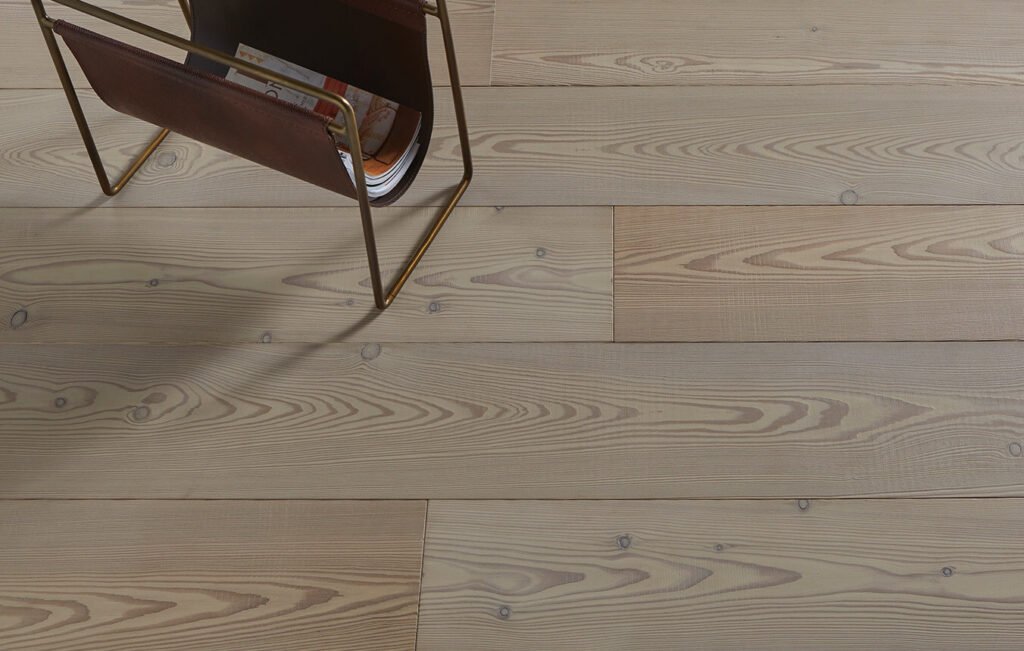
Flooring: Increasingly popular in Scandinavian-style interiors, and you can see why. The hardness makes it practical for high-traffic areas, and the warm color tones pair well with natural, unfussy interiors. It will dent under something heavy dropped from height — it’s still a softwood at the end of the day — but for normal everyday foot traffic, it holds up better than its classification suggests.
Joinery and furniture: Not the first wood people reach for in fine cabinetry, and that’s fair. But for rustic or utilitarian pieces, it’s genuinely nice to work with once you understand it. The knots, the grain variation, the natural character — all of that becomes an asset rather than a problem if the aesthetic fits.
Boat building: Traditionally used across Northern Europe for this, and the reason is simple — the natural oils and density give it water resistance that other softwoods can’t match without heavy treatment. Old-school choice, still valid.
Pros and Cons — Honest Assessment
The good stuff:
- Exceptional natural durability for outdoor use
- Harder and denser than most softwoods — noticeably so
- Beautiful natural color that deepens and improves over time
- Takes oil finishes extremely well
- Sustainably sourced — the Siberian forests are vast and well-managed operations exist
- More affordable than tropical hardwoods for comparable outdoor performance
- Dimensionally stable once properly dried
The things to watch out for:
- Resin is a genuine nuisance — blades gum up, paint bleeds through without proper priming
- Knots are common and hard, which causes real issues when machining if you’re not prepared for them
- Not the right wood for fine detail work or intricate joinery
- Needs proper drying and acclimatization — genuinely, don’t rush this
- Can be harder to source than common softwoods depending on where you are
- Rough stock splinters are sharp and resinous — gloves aren’t optional here
How It Compares to Similar Woods
Siberian Larch vs. Douglas Fir: Fir is more widely available, slightly easier to work, and less resinous to deal with. But outdoor durability? Larch wins, not even close. If you’re building exterior structures and want to cut down on treatment schedules, larch is the better long-term choice.
Siberian Larch vs. Western Red Cedar: Cedar is lighter, easier to cut, and naturally rot-resistant — the classic outdoor timber for good reason. But it’s softer and less structurally capable than larch. For decking and cladding that takes real foot traffic and physical stress, larch holds up better over time.
Siberian Larch vs. Accoya: Accoya is chemically modified softwood — acetylated, if you want the technical term — and it outperforms larch on some durability metrics with better dimensional stability too.
It’s genuinely impressive material. But it costs significantly more. For exterior projects where budget matters and performance expectations are high, Siberian larch is a natural alternative that punches well above its price point.
Siberian Larch vs. Oak: Not a direct comparison — oak is a hardwood and the two occupy different spaces — but both show up in flooring and exterior applications, so it’s worth addressing.
Oak is harder, more refined-looking, and generally more forgiving to work with. Larch is more rustic in character, handles outdoor exposure without treatment better than oak does, and typically comes in cheaper. Different tools for different jobs.
| Feature / Wood Type | Siberian Larch | Douglas Fir | Western Red Cedar | Accoya | Oak |
|---|---|---|---|---|---|
| Availability | Moderate | Very high | High | Limited | High |
| Workability | Moderate (needs sharp tools) | Easy | Very easy | Easy | Easy–moderate |
| Resin Content | High (can be messy) | Low–moderate | Low | Very low | Low |
| Durability (Outdoor) | Excellent (natural) | Moderate | Good (natural) | Exceptional | Moderate (needs treatment) |
| Rot Resistance | High | Moderate | High | Extremely high | Moderate |
| Strength / Hardness | High (for softwood) | Moderate–high | Low | Moderate | High (hardwood) |
| Dimensional Stability | Good | Moderate | Good | Excellent | Good |
| Maintenance Needs | Low | Moderate–high | Low | Very low | High (outdoors) |
| Cost | Moderate | Affordable | Moderate–high | Expensive | Moderate–high |
| Best Use Cases | Decking, cladding, outdoor builds | Structural framing | Cladding, fencing | Premium outdoor projects | Flooring, furniture |
| Overall Advantage | Best balance of durability & cost | Easy to work & widely available | Lightweight & naturally resistant | Top-tier performance | Strength & refined look |
Quick takeaway:
- Choose Siberian larch for durability + value outdoors
- Choose Douglas fir for easy, affordable construction
- Choose cedar for lightweight outdoor use
- Choose Accoya for premium, long-lasting performance
- Choose oak for strength and interior quality
Final Thoughts
Siberian larch is the kind of wood that rewards patience and punishes shortcuts. Rush the drying, skip the acclimatization, paint over it without blocking the resin first — and it will let you know about it. Treat it with a bit of care and understanding, and it pays you back in kind, quietly and reliably, for a very long time.
It’s tough, honest, and ages gracefully. There’s something satisfying about working with timber that came out of a Siberian winter and has the density to prove every year of it.
If you’re planning an exterior project and want something durable and natural without reaching for expensive tropical species — give Siberian larch a proper look. It might not be the most glamorous wood in the shed. But it’s the kind of material that makes things that last.
And in woodworking, that still counts for everything.