
Last Updated on August 14, 2026 by Sam Wood Worker
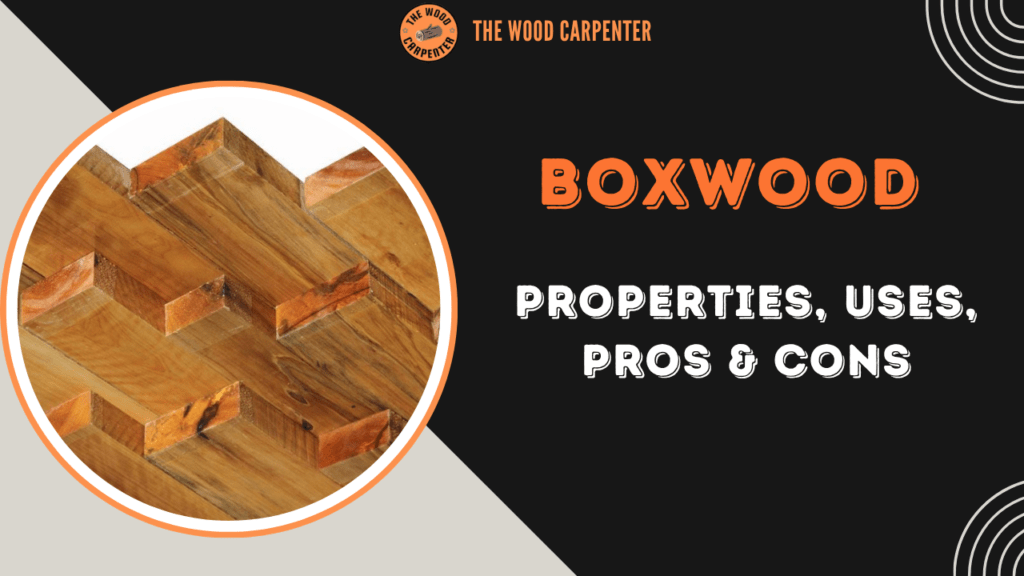
Boxwood is one of the densest, finest-grained hardwoods you will ever hold in your hand, and most people walk right past it at the lumber yard without a second look. Whether you are a craftsman hunting for the perfect inlay material, a DIY owner curious about small-scale woodworking projects, or a contractor sourcing specialty wood for detail work, box-wood deserves serious attention.
This guide covers everything from its physical properties and woodworking uses to honest cost figures, real pros and cons, and exactly where to find it. No fluff, just what you need to make a smart buying decision.
What Is Boxwood and Where Does It Come From?
Box-wood is the common name for wood harvested from trees and shrubs in the Buxus genus, a slow-growing, evergreen family found across Europe, Asia, and parts of Africa. The most commercially relevant species are European box-wood (Buxus sempervirens), also called common box and its relatives including Caucasian box-wood.
The buxus tree grows extremely slowly, sometimes as little as 3 to 6 inches per year, which is precisely why the wood develops such exceptional density and uniformity. Most box-wood lumber comes from relatively small-diameter stems. The practical working dimensions are typically:
- Narrow strips suited for inlay and stringing work
- Short billets for carving and turning projects
- Small turning blanks for handles, pegs, and instrument parts
- Thin veneer cuts for marquetry and decorative panel work
The common box-wood shrub and winter gem box-wood used in box-wood landscaping and potted box-woods belong to the same botanical family. However, the wood harvested for woodworking typically comes from larger, older specimens of European or Caucasian box-wood, not the compact garden varieties like buxus winter gem or globe box-wood shrubs grown for hedges.
Box-wood has been used by craftsmen since ancient Egypt. Rulers, mathematical instruments, engraving blocks, musical instrument components, and fine carving have relied on it for millennia, and those same properties make it highly relevant to precision woodworking today.
Boxwood Wood Properties: Density, Grain and Hardness
Understanding what makes box-wood physically unique is the foundation for knowing where to use it and where not to.
Density and Hardness
Box-wood is one of the heaviest hardwoods in the world relative to its size. European box-wood has a Janka hardness rating of approximately 2,840 lbf, placing it well above:
- Hard maple at 1,450 lbf
- White oak at 1,360 lbf
- Black walnut at 1,010 lbf
- American elm at 830 lbf
Only lignum vitae, ebony, and a handful of tropical species exceed it in hardness. In practice this means box-wood resists denting, compression, and abrasion at an exceptional level. It holds crisp edges and fine detail in carved or turned work better than almost any other wood. The trade-off is that it is genuinely difficult to work and dull tools will not cut it cleanly.
Grain Structure and Workability
Box-wood has an extremely fine, even, and diffuse-porous grain structure. Unlike oak, ash, or elm which have visible open pores, box-wood grain is essentially invisible to the naked eye. This is what makes it ideal for:
- Fine engraving and printing blocks where ink needs to sit in clean, sharp channels
- Precision inlay work where grain texture would interfere with the visual result
- Smooth turnings where a glassy surface is achievable directly off the tool
- Carving work requiring clean, chip-free detail with no tearout on cross-grain cuts
How to carve box-wood without chipping the detail? Use very sharp, narrow gouges and chisels. Work with light cuts across the grain rather than heavy passes. Keep tools stropped frequently because box-wood will dull edges faster than most domestic hardwoods. The reward is that box-wood holds detail that softer or coarser woods simply cannot.
Color and Appearance
Fresh-cut box-wood is a pale, creamy yellow, sometimes described as the color of old ivory. Key appearance facts worth knowing before you buy:
- Minimal color difference between heartwood and sapwood
- Darkens slightly with UV exposure, shifting toward a warm golden tone over time
- No distracting grain bands through inlay strips or turned pieces
- Consistent color makes it ideal as a contrast element against darker species like walnut or mahogany
Physical and Mechanical Properties
Boxwood is one of the hardest and heaviest of domestic lumbers. Its average reported dried weight is between 58 and 64 pounds per cubic foot (930–1,030 kg/m³), it is one of the heaviest woods in North America.
Its Janka hardness rating comes to approximately 2,940 lbf (13,080 N), so it’s very hard and not prone to dents and wear.
Here’s a quick look at its mechanical profile:
| Property | Value |
| Specific Gravity (12% MC) | 0.80 – 0.96 |
| Janka Hardness | 2,940 lbf (13,080 N) |
| Modulus of Rupture | 19,800 lbf/in² |
| Elastic Modulus | 1,779,000 lbf/in² |
| Crushing Strength | 10,334 lbf/in² |
| Shrinkage (Volumetric) | ~19% |
Box-wood Uses in Woodworking: Where It Genuinely Excels
Box-wood is a specialist material. Knowing exactly where it performs best will save you from using an expensive, difficult-to-work wood in an application that does not need it.
Inlay, Marquetry and Decorative Detail
Box-wood is the benchmark material for inlay work and marquetry. Its uniform color, near-invisible grain, and extreme workability at fine scales make it ideal for:
- String inlay around furniture borders and drawer fronts
- Geometric marquetry panels on cabinet doors and table tops
- Decorative banding on high-end cabinetry
- Period furniture restoration where original box-wood stringing must be matched
For scenario: For traditional stringing inlay on a drawer front or table edge, box-wood cut into thin strips produces clean, crisp lines with no grain interference. The pale yellow color contrasts beautifully against walnut, mahogany, or cherry backgrounds without needing any staining.
How to use box-wood for marquetry? Cut thin veneers from box-wood billets using a fine-tooth saw or veneer saw, keeping cuts consistent at 1/32 to 1/16 inch thickness. The even grain cuts cleanly in any direction, which gives marquetry artists directional freedom that figured veneers do not allow.
If you enjoy working with specialty woods for detailed furniture projects, our guide on choosing the right wood for furniture joinery covers how density and grain structure affect joint quality across species.
Carving and Turning
Box-wood’s combination of density, fine grain, and workability under sharp tools makes it a top-tier choice for:
- Relief carving and chip carving requiring fine surface detail
- Spindle turning for handles, knobs, and decorative elements
- Chess pieces and small figurines
- Architectural ornaments and period-style applied moldings
How to prevent tearout when planing box-wood boards? Use a bevel-up plane at a high cutting angle of 50 to 55 degrees effective. Always confirm grain direction before a full pass. Sharp, freshly honed blades are non-negotiable for clean results.
Musical Instruments and Precision Objects
Historically box-wood was the material of choice for woodwind instrument components, mathematical rulers, and printing blocks. Its dimensional stability and resistance to wear made it uniquely suited to objects needing tight tolerances over years of use. Even today, traditional woodwind instrument makers and luthiers use box-wood for:
- Tuning pegs and mechanical components
- Decorative trim and binding strips
- Precision rules and measuring tools
- Small furniture hardware and decorative pulls
Our article on wood selection for small-scale furniture details walks through how grain density affects carving and inlay results across common species.
Boxwood Cost: What to Budget Before You Buy
Boxwood is expensive relative to domestic hardwoods, and for good reason. The slow growth rate, limited stem diameter, and high demand from specialist woodworkers all drive the price up.
Price Per Board Foot
Its pricing varies significantly by form and supplier. Here is a realistic breakdown:
- Small billets and turning blanks (2×2 to 3×3 inches, 12 to 18 inches long): $8 to $20 each
- Narrow boards and strips for inlay and marquetry work: $15 to $35 per board foot
- Larger, clear pieces suitable for carving: $25 to $60 per board foot
- Exceptional quality Caucasian box-wood: $60 and above per board foot
A finished decorative piece using box-wood inlay adds relatively little material by volume, but the cost per board foot is significant. Budget carefully and buy slightly more than you need since box-wood offcuts have genuine value for small future projects.
Wholesale box-wood in quantity from specialty suppliers can reduce costs modestly, but box-wood is not a bulk commodity material. Its plugs and short offcuts from instrument makers are sometimes available at lower prices and work well for inlay and small carving projects.
Where to Buy Boxwood for Woodworking
Where to buy box-wood for woodworking? Your best sources are:
- Specialty exotic wood dealers who stock European and Caucasian box-wood billets
- Online marketplace suppliers focused on musical instrument tonewoods and carving blanks
- Period furniture restoration suppliers stocking traditional inlay materials
- Estate sales and antique shops where old box-wood rule stock occasionally appears
Standard home improvement stores do not carry box-wood. This is a specialist sourcing job that rewards doing your research before you need the material on a deadline.
How to inspect a box-wood log before buying? Look for:
- Even, pale color with no significant green or dark streaking, which indicates moisture problems
- Centered pith on the end grain since off-center growth produces boards more prone to cupping and internal stress
- A dense, high-pitched ring when you tap the piece, which indicates properly dried stock
- No visible checking or end splits that penetrate more than a few inches
Boxwood Pros and Cons: The Honest Assessment
Every wood has a genuine trade-off profile. Here is exactly where box-wood earns its reputation and where it creates real challenges.
Pros of working with box-wood
- Exceptional hardness at 2,840 lbf Janka resists denting, compression, and surface wear at a level few domestic hardwoods approach
- Extremely fine, even grain cuts cleanly in all directions, essential for inlay, engraving, and precision carving
- Holds crisp carved and turned detail better than any common domestic hardwood
- Takes a high natural polish directly from sharp tools without requiring heavy finish coats
- Pale, uniform color works beautifully as a contrast element in multi-wood decorative work
- Historically proven material with a track record measured in centuries for precision objects
Cons of working with box-wood
- Expensive and difficult to source in large or wide pieces since box-wood is not a sheet goods or wide-board material
- Dull tools will burnish rather than cut cleanly, and sharp freshly honed edges are non-negotiable
- Produces very fine, dense dust classified as a respiratory irritant when sanded or machined
- Small available dimensions limit its use to detail and accent work rather than structural or primary surface applications
- Slow growth means supply is limited and prices are unlikely to decrease over time
- Requires more patience and tool maintenance discipline than most domestic hardwoods
How to safely sand box-wood indoors? Always use a dust mask rated N95 or better. Connect your sander to dust extraction equipment rather than sanding open to the room. Work near an open window or run an air filtration unit. Box-wood dust is more hazardous than coarser softwood dust because the fine particles penetrate deeper into the lungs.
Conclusion
Boxwood is not a wood for every project, and that is precisely what makes it special. For inlay work, marquetry, carving, turning, and precision detail where no other material will do, box-wood delivers results that cannot be replicated with softer or coarser alternatives. The cost is real, the sourcing takes effort, and working it demands sharp tools and patient technique.
But for craftsmen and detail-focused DIY owners who want the finest quality in small-scale decorative work, box-wood is the correct choice. Buy from a reputable specialty supplier, confirm moisture content and grain quality before committing, and treat it as the precision material it is.
For more guidance on working with specialty and exotic hardwoods, explore our posts on how to finish small decorative wood pieces, best exotic hardwoods for furniture details, and wood inlay techniques for beginners for practical, experience-based advice built around real woodworking projects.
Frequently Asked Questions
1. What is box-wood used for in woodworking?
Boxwood is used for inlay work, marquetry, fine carving, spindle turning, musical instrument components, and small decorative furniture details. Its extremely fine grain and exceptional hardness make it ideal for precision work requiring crisp detail and a smooth, polished surface that coarser hardwoods simply cannot produce.
2. Is box-wood a hardwood?
Yes, box-wood is hardwood. European box-wood registers approximately 2,840 lbf on the Janka hardness scale, making it one of the hardest woods in the world. It far exceeds domestic hardwoods like white oak at 1,360 lbf and hard maple at 1,450 lbf in density and surface hardness.
3. How do you carve box-wood without chipping?
Carve box-wood using very sharp, narrow gouges and work with light, controlled cuts. Strop tools frequently because box-wood dulls edges fast. Use a bevel-up approach at high cutting angles to shear the dense grain cleanly. Avoid heavy passes because fine, incremental cuts produce chip-free results in box-wood.
4. Where can I buy box-wood for woodworking projects?
Buy box-wood from specialty exotic wood dealers, musical instrument tonewood suppliers, or period furniture restoration suppliers. Standard home improvement stores do not carry it. Online specialty suppliers are often the most reliable source for small billets, turning blanks, and narrow strips suited to inlay and carving work.
5. How much does box-wood cost per board foot?
Boxwood costs approximately $15 to $60 per board foot depending on piece size and quality. Small billets for carving run $8 to $20 each. Narrow strips for inlay work are typically $15 to $35 per board foot. Caucasian box-wood of exceptional clarity commands premium pricing at the higher end of that range.
6. Is box-wood dust dangerous to sand indoors?
Yes, box-wood produces very fine, dense dust classified as a respiratory irritant. Always wear an N95-rated dust mask when sanding box-wood. Work in a well-ventilated space or connect your sander to dust extraction. Boxwood dust is more hazardous than coarser softwood dust because the fine particles penetrate deeper into the lungs.
7. Can box-wood be used for furniture inlay and marquetry?
Boxwood is the historical standard for furniture inlay and marquetry. Its pale, uniform color, invisible grain, and clean cutting in all directions make it the preferred choice among period furniture restorers and fine furniture makers. It contrasts beautifully against darker woods like walnut, mahogany, and cherry in decorative banding and stringing work.