
My first encounter with chestnut wood came when I was assisting in the restoration of an old barn. The boards were a warm, golden brown with straight, bold grain that caught our eye immediately. I didn’t know what it was then. That’s chestnut,” said an older carpenter with a smile. You don’t see it much any more.” That point ignited an appreciation for one wood that long built nations.
Chestnut wood isn’t trendy or flashy, but it has something many modern woods don’t—history, durability, and natural strength. Whether you are a carpenter, woodworker or just someone curious about quality lumber —the chestnut is a species worth learning about.
What Is Chestnut Wood ?
Chestnut wood comes from trees in the Castanea family. When people discuss chestnut lumber, they’re generally referring to one of two species: American chestnut or European chestnut, also known as sweet chestnut.
The wood from both trees is very similar. It’s light to medium brown, straight grained, and naturally resistant to rot. The one big difference today isn’t in how the wood performs — it’s in how easy it is to find.
American chestnut once covered forests in the eastern U.S. These trees were tall, and they were big producers of timber. European chestnut, however, continues to be widely found in Europe and is still cut sustainably.
The Rise and Fall of American Chestnut
For centuries, the American chestnut was one of the most magnificent trees in North America. It was called the “redwood of the East.” It was used to make homes, barns, fences and furniture, as well as railroad ties. The wood held up for decades untreated, even when it was used outdoors.
Then, in the early 1900s, everything changed.
A disease called chestnut blight was accidentally introduced from Asia. American chestnut trees had no natural resistance. Within a few decades, billions of trees were wiped out. One-quarter of the eastern hardwood forest disappeared.
Today, the mighty American chestnut trees are almost gone. Little sprouts shoot up from old roots, but you don’t get many long-lived trees. For this reason, fresh American chestnut wood is an extremely rare find.
What Is Wormy Chestnut?
Following the blight, many of those dead chestnut trees continued to stand for years. Bugs bore into them, opening up the holes and dark streaks in the wood. As these old-timers were later salvaged from barns, houses and commercial buildings, the wood was named wormy chestnut.
This wood was no longer considered damaged, but instead desirable. And the holes and nail marks, and aged color, of wormy chestnut give it a rustic, worn-in look that can’t be replicated.
Today, wormy chestnut is a prized material which can be reclaimed and at times used for floors for walls, furniture. It’s expensive because it is rare.
What Does Chestnut Wood Look Like?
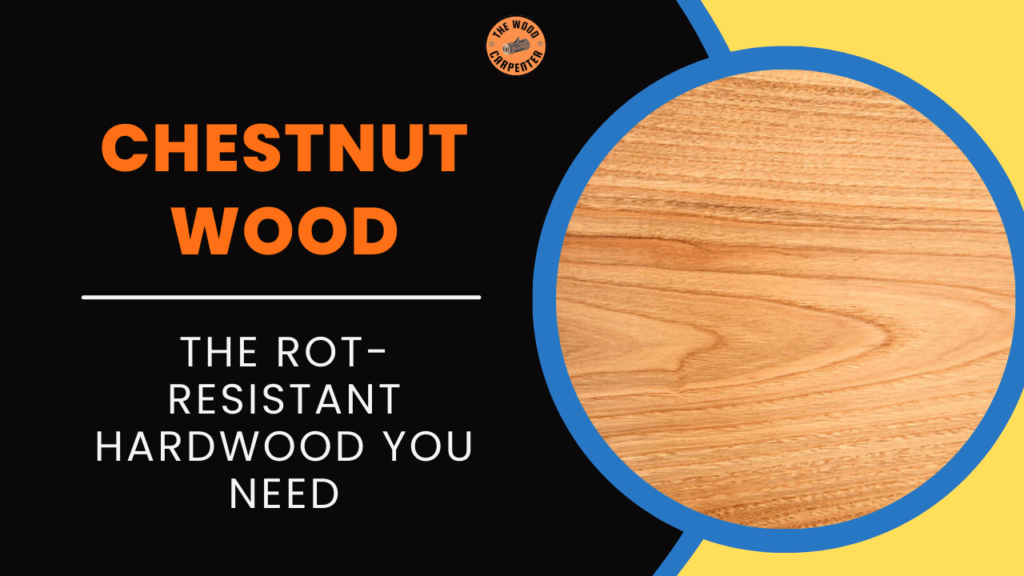
Chestnut wood looks nice and warm. New boards are light brown in colour, and slowly darken with age. Older chestnut usually develops into a rich, reddish-brown tone.
The grain is straight and bold, similar to oak but softer in appearance. It has a coarse texture that gives it character without looking rough or messy. That makes chestnut a compatible fit in both the rustic and modern designs.
How Strong and Hard Is Chestnut?
Chestnut is considered a soft hardwood. It’s much softer than oak or maple, but stronger than most softwoods like pine.
Because of this, chestnut is:
- Easy to cut and shape
- Gentle on tools
- Comfortable to work with
However, it can dent more easily than harder woods. That’s why it’s not the best choice for very high-traffic floors.
Chestnut is also lightweight, which makes it easier to handle for furniture and construction.
Why Chestnut Is Naturally Rot-Resistant
This is chestnut’s biggest strength.
Chestnut contains high levels of natural tannins. These are the tannins that help resist rot, fungus and insects in the first place. That’s why fence posts made from chestnut can last 15 to 25 years in the soil without chemical treatment.
This natural toughness is why a lot of centuries-old chestnut beams and barns remain standing to this day, after 100 years or more.
It doesn’t require chemical treatment, making chestnut great for green-minded and outdoor projects.
Working With Chestnut Wood
Chestnut is a pleasure to work with if your tools are sharp. It cuts, planes, sands, and turns easily. The straight grain helps prevent tear-out, and the wood responds well to both hand tools and power tools.
One thing to remember is that chestnut splits easily near edges. Pre-drilling for screws and nails is always a good idea.
Chestnut glues and finishes well. Most woodworkers love to apply a clear coat finish that shows its color. Oils and varnish and polyurethane all look awesome.
Chestnut also steam bends very well, and is popular for making another type of curved furniture part in traditional woodworking.
Common Uses of Chestnut Wood
Chestnut has been used for centuries in both indoor and outdoor projects.
Indoors it is suitable for furniture, cabinets, drawers, beams and wall panelling. Reclaimed chestnut has become something of an icon for homes that desire a warm, historic look.
Outdoors is where chestnut truly shines. It is frequently used for fencing, garden furniture, posts, gates, pergolas and exterior cladding. In Europe, chestnut is still widely used for vineyard stakes and garden structures.
It can also be for residential flooring, particularly in things like reclaimed chestnut where character is of more import than having a perfectly flat surface.
Sweet Chestnut vs Horse Chestnut
This confuses many people.
Sweet chestnut (and American chestnut) produce useful timber and edible nuts. Horse chestnut does not. Horse chestnut wood is soft, weak, and rots quickly. It’s mainly an ornamental tree.
If someone is selling chestnut lumber, they mean sweet or American chestnut—not horse chestnut.
Availability and Sustainability
European sweet chestnut is still widely available and grown using sustainable methods like coppicing. This makes it an environmentally friendly choice.
American chestnut, however, is mostly available only as reclaimed wood from old buildings. Because of its rarity and history, it often sells at a premium.
Efforts are underway to restore American chestnut through disease-resistant breeding, but large-scale forests are still a long way off.
Pros and Cons of Chestnut Wood
The primary benefits of chestnut include its resistance to rot, warm color, ease of working and light weight. It’s ideal for outdoor with no chemicals and great for a project that appreciates history and character.
The only downsides include a somewhat moderate softness, that it can sometimes split near the edges and limited availability — especially for American chestnut!
Final Thoughts
Chestnut is evidence that the best materials are often those already tried out by history. It constructed homes, barns and fences that remain standing to this day. It is naturally resistant to rot, easy to work with in the shop and it ages beautifully.
If you’re looking for a wood that can withstand the elements without the aid of chemicals, chestnut is hard to beat. If you crave warmth and character inside, reclaimed chestnut comes with a story for every board.
Chestnut may not be as famous as oak or walnut, but for the right project, it performs just as well—sometimes even better. It’s a wood that commands respect without demanding it, and after you’ve worked with it, you’ll understand why.
Chestnut Wood FAQs
Is chestnut wood expensive?
European chestnut is moderately priced. American chestnut is rare and expensive.
Is chestnut wood good for outdoors?
Yes, it naturally resists rot and insects.
How long does chestnut wood last outside?
Around 15–25 years in ground contact, much longer above ground.
Is chestnut wood hard or soft?
It’s a soft hardwood, easy to work but dents more easily.
Can chestnut be used for flooring?
Yes, for low-traffic areas and homes.
What is wormy chestnut?
Reclaimed chestnut with insect holes and rustic character.
Is chestnut the same as horse chestnut?
No. Horse chestnut is not suitable for lumber.
Does chestnut need treatment?
No, it’s naturally rot-resistant.
Is chestnut easy to work with?
Yes, but pre-drilling near edges helps prevent splitting.
What finish suits chestnut best?
Clear oils or varnish highlight its natural beauty.
Why is American chestnut rare?
Chestnut blight destroyed most trees in the early 1900s.
Is chestnut wood sustainable?
Yes, especially European chestnut and reclaimed lumber.