
Last Updated on July 6, 2026 by Sam Wood Worker
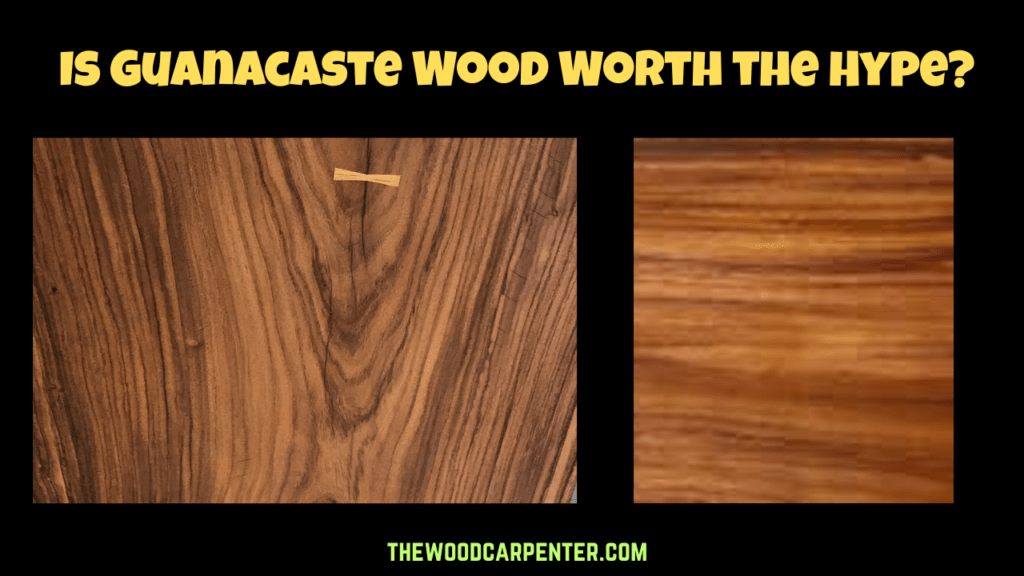
You’ve probably seen those stunning live edge slab tables with sweeping grain, golden-brown tones, and a natural figure that looks almost too good to be real. Chances are, you were looking at guanacaste wood.
Also known as parota wood or huanacaxtle, this Central American hardwood has earned a serious following among furniture makers, DIYers, and home contractors and for good reason. But is it actually durable? Does it warp? Is it worth the price? This guide answers every question honestly so you can decide before you buy.
What Is Guanacaste Wood and Where Does It Come From?
| Botanical Name | Enterolobium cyclocarpum |
| Common Names | Guanacaste, Parota, Conocaste, Kelobra, Rain Tree, Orejo, Jenisero, Timbo, Carocaro, Eartree. |
| Native Range | Southern Mexico through Central America to northern South America. |
| Cultural Significance | The Guanacaste tree is the national tree of Costa Rica, symbolizing resilience and endurance. |
Guanacaste wood comes from the Enterolobium cyclocarpum tree, a massive, wide-spreading tropical tree native to Central America and Mexico. It goes by several names depending on the region: parota in Mexico, conacaste in parts of Central America, and huanacaxtle tree in indigenous Mexican communities. In Costa Rica, the guanacaste tree is actually the national tree.
The trees grow to enormous size, trunk diameters of 6 to 10 feet are common which is exactly why guanacaste wood slabs can be so dramatically wide. A single slab from one of these trees can span 5 to 8 feet across, which makes it highly prized for live edge dining tables and countertops.
Key identifying features of guanacaste wood
- Heartwood ranges from golden tan to medium brown, often with reddish or olive undertones
- Wide, sweeping grain with frequent figure and cathedral patterns
- Interlocked grain that creates chatoyance (a shimmer effect) under finish
- Natural voids, checks, and inclusions that add character common in guanacaste slabs
Does guanacaste wood change color over time? Yes. Like most tropical hardwoods, it darkens gradually with UV exposure, shifting from golden tan toward a deeper, richer brown over several years. This is considered a feature, not a flaw.
Guanacaste Wood Properties: Hardness, Durability, and Stability
Before you commit to a guanacaste wood table or slab project, you need to know how the wood actually performs.
How Hard Is Guanacaste Wood?
Guanacaste registers around 450 to 800 lbf on the Janka hardness scale, depending on the specific tree and growing conditions. That puts it in the soft-to-moderate hardness range softer than walnut (1,010 lbf) and significantly softer than hard maple (1,450 lbf).
Is guanacaste a hardwood or softwood? Botanically, it’s a hardwood that comes from a deciduous flowering tree. But its Janka rating means it behaves more like a medium-density wood in practice. It will show dents and scratches more readily than walnut or oak, which is worth knowing if you’re planning a high-traffic dining table.
Is Guanacaste Wood Durable and Stable?
This is where guanacaste genuinely impresses. Despite its moderate hardness, guanacaste wood is naturally rot resistant and shows good resistance to moisture-related decay, a direct benefit of growing in tropical environments. Is guanacaste wood termite resistant? It has natural oils that offer moderate resistance to insects, though it’s not in the same class as teak for insect deterrence.
How stable is guanacaste wood? Stability is one of its strongest traits. Wide slabs from large, old-growth guanacaste trees are notably stable once properly dried. Does guanacaste wood warp? When kiln-dried correctly and allowed to acclimate to your environment, warping is minimal. Poorly dried slabs, however, can move so always buy from a reputable supplier who specifies moisture content (target 6–8% for indoor furniture).
Guanacaste Wood Workability
Guanacaste wood workability is generally good, but the interlocked grain requires attention. Key points for contractors and DIYers:
- Hand planes and jointers can cause tear-out if used against the grain direction always read the grain before planing
- It sands smoothly and takes finish well oils, hardwax oils, and water-based polyurethane all perform well
- Glue adhesion is reliable on freshly surfaced faces
- Screws and bolts hold well given its density
- Dust can be mildly irritating wear a dust mask when machining
For scenario: For a live edge slab dining table, guanacaste is an excellent choice if you want wide, dramatic slabs with natural figures and you don’t need the extreme hardness of maple or white oak. Finish with a penetrating oil or matte hardwax for the most natural look.
Guanacaste Wood Cost: What Should You Expect to Pay?
Cost is one of the biggest deciding factors for any wood project, and guanacaste sits in an interesting position in the market.
Guanacaste Wood Slab Price
Guanacaste wood slab prices vary based on width, thickness, figure, and supplier. As a general guide:
- Smaller slabs (24–36″ wide, 2″ thick): $15–$35 per board foot
- Medium slabs (36–60″ wide, 2–3″ thick): $35–$65 per board foot
- Large statement slabs (60″+ wide, 3″+ thick): $65–$120+ per board foot
A finished guanacaste wood table slab, legs, and professional finishing typically runs $2,500 to $8,000 depending on size and maker. That’s competitive with high-end walnut live edge tables, which often start at $3,500 for similar dimensions.
Guanacaste wood for sale is available through specialty exotic wood dealers, lumber yards with tropical hardwood inventory, and increasingly through online slab marketplaces. Local pricing in Mexico and Central America is significantly lower if you’re sourcing directly, you can find raw guanacaste live edge slabs for a fraction of U.S. retail.
Guanacaste vs Walnut Live Edge: Value Comparison
Guanacaste and walnut are often compared because both are popular for live edge slab tables. Here’s how they stack up on value:
| Factor | Guanacaste | Black Walnut |
|---|---|---|
| Janka Hardness | ~450–800 lbf | ~1,010 lbf |
| Slab Width Potential | Very wide (up to 8 ft) | Moderate (up to 3–4 ft typical) |
| Price per Board Foot | $15–$65+ | $20–$60+ |
| Grain Character | Sweeping, dramatic figure | Straight to wavy, rich brown |
| Rot Resistance | Good | Moderate |
| Domestic vs Exotic | Exotic (imported) | Domestic (USA) |
For scenario: If you want the widest possible slab with tropical character at a comparable price to walnut, guanacaste is the better pick. If you prioritize hardness, scratch resistance, and a domestic wood with a known supply chain, walnut wins.
Is Guanacaste Wood Good for Furniture? Real-World Uses
Is guanacaste wood good for furniture? For the right applications, absolutely yes. Its wide slabs, stable nature, and attractive grain make it ideal for specific pieces.

Where guanacaste wood excels
- Live edge dining tables and conference tables
- Kitchen islands and countertops (with a durable topcoat)
- Floating shelves and mantelpieces
- Headboards and bed frames
- Reception desks and office statement pieces
- Guanacaste veneer applications for cabinetry and paneling
Where it’s less ideal
- High-traffic flooring (too soft for foot traffic)
- Cutting boards (too porous, harder to sanitize)
- Workbenches requiring dent resistance
Parota wood (the Mexican name for the same species) is widely used in Mexican furniture-making traditions, where it’s shaped into large carved dining sets and benches. The craft tradition around this wood is centuries old, which speaks to its real-world durability in furniture applications.
How heavy is a guanacaste slab? It’s moderately heavy, denser than pine or cedar but lighter than teak or ipe. A 2-inch thick, 48×96-inch slab typically weighs 150–200 lbs, which affects both shipping costs and the structural requirements of your table base.
For scenario: For a home office desk, a guanacaste wood slab with a matte oil finish and steel hairpin legs makes a stunning, functional piece. The soft-moderate hardness is perfectly acceptable for a desk surface, which sees far less abuse than a dining table.
Guanacaste Alternatives and How It Compares to Other Exotic Hardwoods
If you’re weighing guanacaste against other options, here’s how it sits among popular exotic and domestic hardwoods:
Parota wood vs other exotic hardwoods:
Conacaste wood (a related Central American species) is sometimes sold interchangeably with guanacaste but is generally denser and darker. If a supplier offers conacaste, treat it as a slightly harder, less widely available alternative.
Compared to other tropical hardwood furniture options:
- Teak: Harder, more rot-resistant, significantly more expensive better for outdoor furniture
- Acacia: Similar price range, more uniform grain, less dramatic figure
- Mango: Comparable hardness, more color variation, less stable in wide slabs
- Black walnut: Harder, more scratch-resistant, narrower slabs, similar price
Guanacaste alternatives for furniture worth considering include parota (same species, Mexican sourcing), acacia for budget-conscious buyers, and American elm for a domestic live edge option with comparable figure.
Another name for this wood you’ll encounter: huanacaxtle wood in Mexican markets, conacaste in Guatemala and El Salvador. All refer to the same Enterolobium cyclocarpum species.
Also read:
What Makes Jarrah Wood Stand Out !
Bishopwood: A Versatile Tropical Hardwood
Comparison Table: Guanacaste vs. Other Hardwoods
| Feature | Guanacaste (Parota) | Walnut/Oak/Mahogany |
| Grain & Appearance | Dramatic, swirling, coarse, bold | Straight/cathedral, finer, more uniform |
| Weight & Density | Lightweight (~27 lbs/cu ft) | Heavier (Walnut/Oak: 38–47 lbs/cu ft) |
| Durability | High rot, insect, humidity resistance | Generally high, but varies by species |
| Workability | Easy, especially for large slabs | More challenging with dense woods |
| Sustainability | Fast-growing, eco-friendly | Varies; some are threatened/reg. |
| Price | Moderate for exotic wood | Walnut/mahogany often more expensive |
| Typical Uses | Large tables, cabinetry, boats | Fine furniture, flooring, cabinetry |
Conclusion
Guanacaste wood delivers on its reputation for dramatic, wide-slab character and it does so at a price point that’s competitive with domestic walnut. It’s stable, moderately durable, naturally rot resistant, and works well under most finishing systems. The tradeoff is hardness: it will show wear faster than maple or white oak on high-traffic surfaces.
For live edge dining tables, desks, shelving, and statement furniture pieces, guanacaste wood is genuinely worth it. Buy from a supplier who can confirm proper kiln drying, let the slab acclimate before building, and choose a finish that suits your use case.
Ready to start your project? Browse our guides on choosing the right wood for live edge tables, how to finish a wood slab properly, and best exotic wood slabs for furniture for hands-on guidance from real woodworking experience.
Frequently Asked Questions
1. Is guanacaste wood good for outdoor furniture?
Guanacaste wood has good rot resistance and natural oils that help it handle moisture, but it’s not the top choice for fully exposed outdoor furniture. For covered outdoor spaces like patios or pergolas, a quality exterior finish makes guanacaste wood a viable and attractive option.
2. How does guanacaste compare to walnut for a dining table?
Guanacaste offers wider slabs and similar price points to walnut, but walnut is harder and more scratch-resistant. For dramatic, wide live edge tables, guanacaste wins on visual impact. For a harder, more dent-resistant dining surface, black walnut or white oak are stronger choices.
3. Does guanacaste wood warp or crack over time?
Properly kiln-dried guanacaste wood is notably stable and resists warping well. Issues arise when slabs are not fully dried before use. Always confirm the moisture content is 6–8% for indoor furniture, and allow the slab to acclimate in your space for 1–2 weeks before building.
4. What is the difference between guanacaste and parota wood?
Parota wood and guanacaste wood come from the same tree Enterolobium cyclocarpum. “Parota” is the name used in Mexico; “guanacaste” is more common in Costa Rica and the broader international market. There is no meaningful difference in the wood’s properties or appearance between the two.
5. How do I finish guanacaste wood for a dining table?
For a dining table, a hardwax oil or water-based polyurethane works best on guanacaste wood. Penetrating oils give the most natural look but require more maintenance. Avoid wax-only finishes on dining surfaces they won’t hold up to spills. Apply at least two coats with light sanding between coats.