
What Is a Hip Roof?
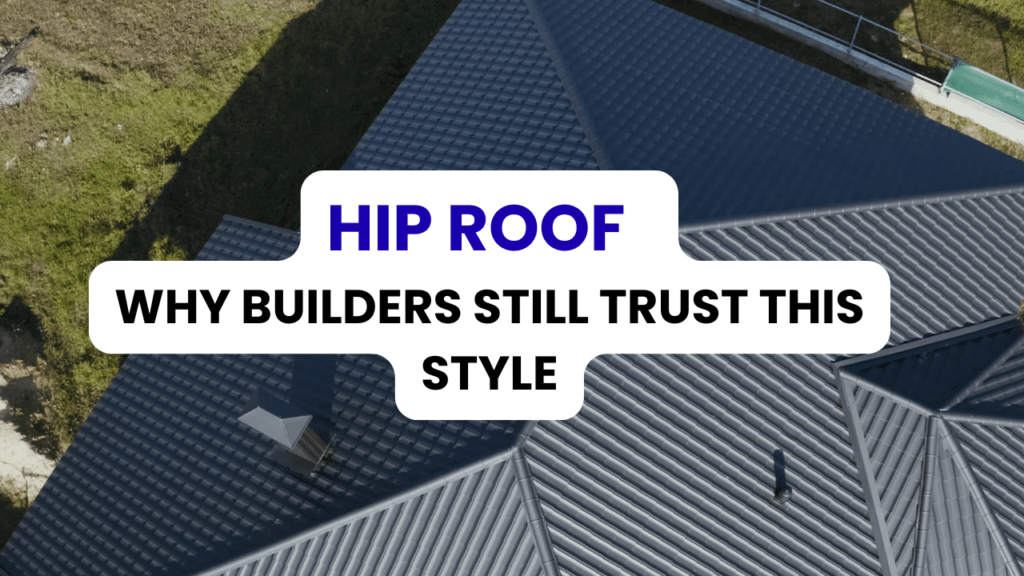
A hip roof has four sides, of which all the sides slope downwards to the walls. There are no flat ends the way a gable roof does. Each side of the house is sheltered by a slanting roofline that makes the home look tidy and even.
On a rectangular house, the roof usually has a short line at the top called a ridge, with slopes coming down on all sides. On a square building, all four sides meet at one point, creating a pyramid shape. In both cases, the roof sits low and feels solid.
Most hip roofs are medium slopes, somewhere in the 4/12 to 8/12 range. That slope is perfect for making sure that rain and snow falls off without a hassle without making construction complicated.
Because all of the sides are angled outward, water runs off away from the walls. This helps prevent damage to siding, paint and even the foundation over time.
How a Hip Roof Is Built (Plain and Simple)
A hip roof is strong because its weight is shared evenly.
At the top, there may be a short ridge board. From each corner of the house, hip rafters run diagonally up to the ridge or peak. These are the main support beams of the roof.
Between these hip rafters, common rafters run straight from the wall to the top. Smaller pieces, called jack rafters, fill in the gaps. All of these parts work together to spread the roof’s weight across the whole house.
Because the weight is balanced, no single wall carries too much pressure. That’s why builders trust hip roofs, especially in areas with strong winds.
Common Types of Hip Roofs
Hip roofs come in a few different shapes, depending on the house design.
A simple hip roof is the most common. It works best on rectangular homes and has four sloping sides that meet at a short ridge.
A pyramid hip roof is used on square buildings. All sides meet at one point. You often see this style on gazebos or small cottages.
A cross-hip roof appears on L-shaped or T-shaped homes. These roofs combine multiple hip sections and create valleys where roof sections meet. They look elegant but need skilled construction.
A half-hip roof, also called a jerkinhead roof, mixes gable and hip styles. The bottom looks like a gable, but the top slopes back. This helps with wind resistance.
A Dutch gable roof adds a small gable on top of a hip roof. This allows more light and airflow while keeping the strong hip roof below..
Hip Roof vs Gable Roof
Choosing between a hip roof and a gable roof can be confusing. Here’s a clear comparison.
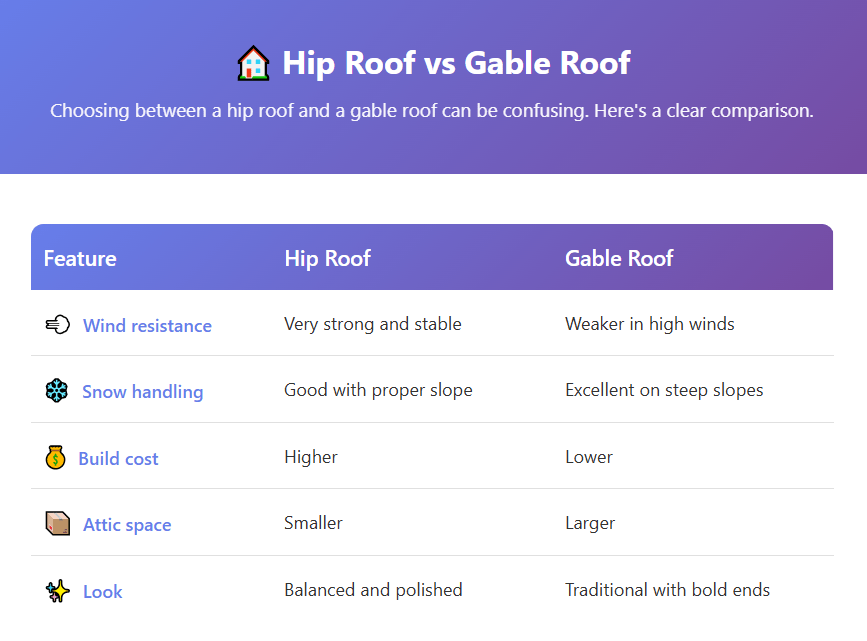
Hip roofs are better in windy areas. Gable roofs are better if you want more attic space.
Why People Choose Hip Roofs
The biggest reason people choose hip roofs is wind protection. Since there are no flat ends, wind flows over the roof instead of pushing against it. This makes hip roofs safer during storms and hurricanes. In some areas, they can even reduce insurance costs.
Hip roofs are also very stable. The balanced design lowers the risk of lifting, twisting, or long-term damage.
They also help protect the outside walls. All sides have roof overhangs, so rain and sunlight hit the house more evenly. This helps siding last longer.
From a design point of view, hip roofs look timeless. They fit traditional homes and modern houses equally well. The shape feels calm, strong, and well-finished, which improves curb appeal.
Is a Skillion Roof Right for You ? Pros, Cons
Disadvantages You Should Know
Hip roofs are great, but they’re not perfect.
They usually cost more to build. The extra framing and skilled labor can raise the price by 10 to 25 percent compared to a gable roof.
They also have less attic space. Because every side slopes, there’s less headroom and storage. If you want a big attic or future loft, a gable roof is better.
Ventilation needs more planning. Since there are no gable walls, airflow depends on ridge and soffit vents. When designed correctly, this works well, but it must be done right.
Best Roofing Materials for Hip Roofs
Hip roofs work with many materials, but some perform better than others.
Asphalt shingles are the most common choice. They are affordable, easy to install, and last around 20–30 years.
Metal roofing works extremely well on hip roofs. It’s lightweight, strong, and excellent in windy areas. Standing seam metal is popular for modern homes.
Clay and concrete tiles look beautiful, especially on Mediterranean-style houses. They are heavy, so the roof structure must be strong.
Slate roofing is the most expensive option, but it can last over 100 years when installed correctly.
Building a Shed House on a Budget: Tips and Tricks
Roof Maxx: Miracle Spray or Money Trap ?
Cost in 2026: What to Expect
On an average-size home (1,500 to 2,000 square feet), a hip roof can cost from $9,000 and up. The cost can rise depending on factors such as roof slope, materials and location.
They cost more up front, but the long-term durability and storm protection can make the lives of homeowners easier.
Maintenance and Lifespan
Hip roofs are low-maintenance, but periodic inspections matters.
Check the roof annually, especially where sections of roof join. Clean gutters regularly, as water runs down all sides of the roof.
With good care, hip roofs often last longer than gable roofs, especially in storm-prone areas.
Common Questions
What is a hip roof in simple words?
A roof where all four sides slope down.
Are hip roofs good in strong winds?
Yes, they handle wind very well.
Do hip roofs cost more?
Yes, usually 10–25% more.
Can a hip roof have an attic?
Yes, but the space is smaller. Dormers can help.
Are hip roofs good for snow?
Yes, if the roof slope is steep enough.
Final Thoughts
Hip roofs have stood the test of time – with good reason. They are strong and stable, and they look good from every angle. They are more expensive and have less space in the attic, but make up for it with durability and safety.
You also live in a windy area, are interested in an aesthetically clean and balanced roof design, and plan to stay within your home for the foreseeable future — because then a well-designed hip roof could be the best decision you ever make.