
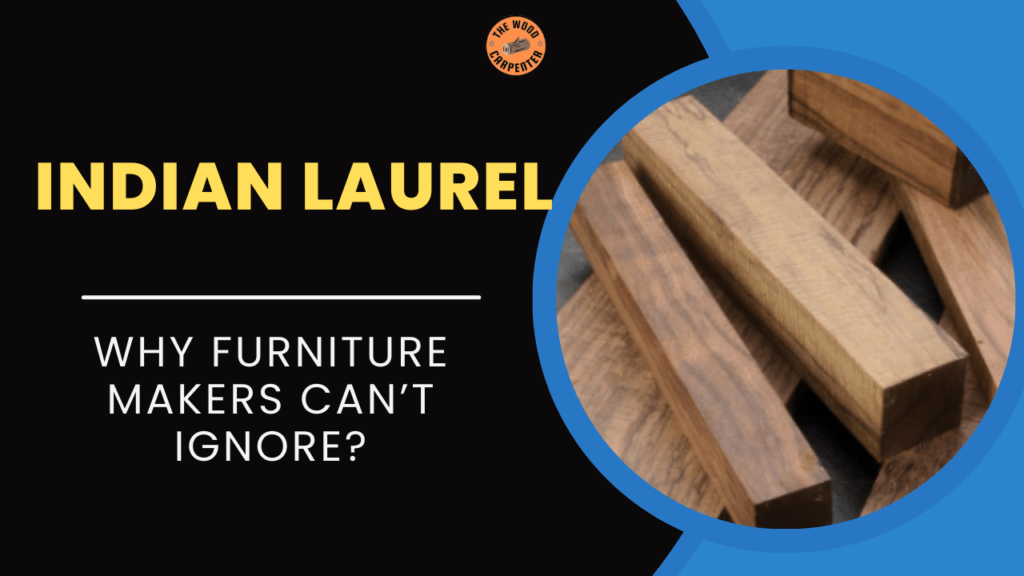
Hearing the name Indian Laurel, people often think of one thing. In fact, however, this name refers to two very different plants. One is a big shade tree that you will find in the cities. The other is a sturdy, lovely hardwood used in guitars and furniture.
This idea is quite popular one, and that is why the name Indian Laurel is indeed an interesting one. In this guide, we’ll demystify it all — and explain everything in a simple way.
Understanding the Two Indian Laurels
There are two different species commonly called Indian Laurel.
The first one is Terminalia elliptica. This is the hardwood used in woodworking, furniture, and musical instruments.
The second one is Ficus microcarpa. This is an ornamental tree often planted along roads and in gardens.
They share the same common name, but they are not related. Their uses, appearance, and properties are very different.
In this guide, we are primarily referring to Terminalia elliptica, the wood favored by guitar makers and woodworkers.
What Makes Indian Laurel Wood Special?
Indian Laurel wood originates from tall trees found throughout southern Asia, in particular India and Myanmar. These trees can get very large and are typically around 65-100ft (20 to 30m) high with robust trunks.
It is famed for its strength and beauty.
Its heartwood is light brown to dark brown. There are darker streaks on many boards that can seem almost black. These natural characteristics make the wood more rich and elegant.
The sapwood is much lighter, often pale pink. This clear contrast makes each piece stand out.
Indian Laurel is also very hard. It has a Janka hardness rating of approximately 2,340, which means it’s considerably harder than red oak. This hardness gives the wood a long lifespan and makes it resistant to wear.
Physical Properties That Matter
Indian Laurel feels solid and strong without being too heavy. When dry, it weighs about 54 pounds per cubic foot.
The grain is usually straight, but sometimes it twists slightly. These grain changes can add beauty, though they may need careful handling during cutting.
The texture is medium to coarse and even throughout the board. The wood does not shine much on its own, but it looks excellent after finishing.
It also stays fairly stable when dried correctly. While it does move with humidity changes, the movement is predictable and manageable for most woodworkers.
Working With Indian Laurel: What to Expect
Most woodworkers find Indian Laurel pleasant to work with, as long as tools are sharp.
Straight-grain sections cut cleanly. Areas with twisted grain need slower cuts to avoid tearout. Both hand tools and power tools work well.
Indian Laurel is great for turning. It takes detail very well and scrubs to a smooth finish. Bowls, pens and small turned items come out really clean.
Finishing is another strong point. It takes stain evenly, and is easy to work fill and finish. With the aid of proper sanding, it creates a velvet-soft surface.
One nice bonus is that the wood has no strong smell, which makes long shop sessions more comfortable.
Indian Laurel and Musical Instruments
Indian Laurel has become well known in the guitar world, especially for fretboards.
Many guitar companies now use it instead of rosewood. This change happened because rosewood is harder to source due to environmental rules.
Indian Laurel offers similar strength and feel. It handles string pressure well and holds up to years of playing.
Players often like the slightly textured feel, which gives good grip. The tone is clear and warm, working well for many music styles.
Besides fretboards, Indian Laurel is also used for guitar backs and sides, where strength and sound quality both matter.
Traditional and Modern Uses
Indian Laurel is used in many ways, not just guitars.
- Furniture and cabinets
It is strong, attractive, and holds finishes well. - Veneer
The grain and color make beautiful decorative surfaces. - Boat parts
With proper treatment, it can be used in certain marine areas. - Turned items
Bowls, pens, and handles turn smoothly and hold detail. - Small specialty items
Knife handles, boxes, and decorative objects benefit from its strength and beauty.
Cultural and Traditional Importance
In Asia, Indian Laurel trees have great cultural significance.
In Buddhist mythology, this tree is considered to have been the Bodhi tree for one of the Buddhas and has spiritual significance.
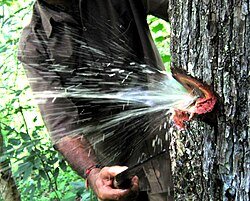
In rural communities, villagers take water from inside the tree where it is stored during dry times of year. You can also drink this water.
In traditional medicine, the bark is used against stomach -related problems. It also holds valuable chemical substances that are utilized in the tanning and dyeing.
The leaves feed silkworms that produce tussar silk, a type of wild silk used in textiles.
Sustainability and Availability
Indian Laurel is not currently endangered. It is not restricted by major conservation laws, which makes it easier to buy and use.
Most commonly, it is sold as veneer. Solid lumber is also available through specialty wood dealers.
Because it is more available and affordable than rosewood, many makers see it as a smart and responsible choice.
Durability and Long-Term Use
Indian Laurel is considered moderately durable.
The heartwood performs well indoors and in protected environments. The sapwood is more vulnerable to insects and should be avoided for important parts.
For outdoor use, proper sealing and maintenance are important. Indoors, it lasts many years with little trouble.
Health and Safety Tips
Some people may experience skin or dust irritation when working with Indian Laurel.
Basic safety steps are enough:
- Use dust collection
- Wear a mask when sanding
- Keep the shop well ventilated
If irritation occurs, reduce exposure or switch materials.
Comparing Indian Laurel to Other Woods
- Compared to rosewood
Similar feel and strength, easier to source, and more affordable. - Compared to maple
Much harder and more wear-resistant. - Compared to walnut
Harder and denser, but walnut is easier to cut. - Compared to oak
Harder than oak and finishes smoother.
Tips for Best Results
Experienced woodworkers suggest:
- Keep tools sharp
- Watch grain direction carefully
- Sand through all grit levels
- Seal lightly before staining
- Choose finishes based on use
Oil finishes highlight beauty. Hard finishes protect high-use items.
Frequently Asked Questions About Indian Laurel
Is Indian Laurel the same as rosewood?
No. They are different species, but Indian Laurel is often used as a substitute.
Why do guitar companies use Indian Laurel?
It is easier to source, costs less, and performs well.
How hard is Indian Laurel?
It is harder than oak and walnut, but softer than ebony.
Can it be used outdoors?
Yes, with proper protection, but it is not ideal for ground contact.
Does the color change over time?
It may darken slightly. UV-protective finishes help reduce this.
Is it hard for beginners to use?
Beginners can use it, but sharp tools and patience are important.
Final Thoughts
Indian Laurel, is a wood that bridges classic and contemporary.
It offers strength, beauty, and versatility without the heavy restrictions placed on other exotic woods.
Whether you are making furniture, guitars or small items Indian Laurel is a versatile and attractive selection.
It is cost-effective, easy to find and enjoyable to work with. Once a lot of woodworkers try it, they come back.
Behind every piece of Indian Laurel is a tree that grew for decades, slowly building the strength and character we value today. With wood like this, making is about more than creating; it’s turning a gift from nature into something enduring and cherished.