If you’ve been in the market for a new cutting board, chances are you’re familiar with your standard options: maple, walnut or bamboo. But there is another contender that’s quietly starting to earn the reverence of chefs, home cooks and woodworkers: larch wood.
Larch wood cutting boards offer a rare combination of beauty, durability, and functionality that makes them stand out in a crowded market. Though not as common in the United States as maple or walnut, larch enjoys a long history in Europe and Canada, where it’s known for being a sturdy softwood that works much more like hardwood.
And once you know why, it’s not hard to see why larch wood boards are turning into an intelligent long-term option for contemporary day kitchens.
In this article, we will discuss what makes larch wood one of a kind, whether it is good for cutting boards, how it stacks up against other woods and what you should know before purchasing one.
What Is Larch Wood?
Larch is a rare species, because it’s technically an evergreen tree, but behaves like a hardwood. It largely hails from colder climates – Denmark, Russia and various parts of Canada – where the slow-growing seasons are perfect for denser, stronger and resin-rich woods.
A few standout qualities include:
- High in resin so it naturally repels water and has an antimicrobial quotient
- Strong, dense grain, offering stability and hardness similar to some hardwoods
- Warm coloring, ranging from golden yellow to reddish brown
- Natural durability, making it a long-lasting material for products exposed to moisture
These characteristics translate surprisingly well into kitchen applications, especially cutting boards.
Is Larch Wood Good for Cutting Boards?
The short answer: Yes—larch is excellent for cutting boards. Its distinct combination of density and natural resins gives it advantages that both home cooks and professionals can appreciate.
1. Naturally Antimicrobial
Larch contains aromatic resins and extractives that inhibit bacteria and mold growth. This gives larch a built-in cleanliness boost—especially helpful for a kitchen tool that sees everything from vegetables to raw meat.
2. Resistant to Moisture and Warping
Thanks to its resin content, larch wood handles moisture better than many hardwoods. This means:
- Less warping
- Less cracking
- Longer lifespan
- Better resistance to repeated washing
For a board that lives near sinks and countertops, that’s a major win.
3. Gentle on Knife Edges
Many people think “harder is better,” but overly hard woods dull knives quickly. Larch strikes a sweet spot:
- Hard enough to resist deep cuts and wear
- Soft enough to preserve sharp knife edges
Your knives will thank you.
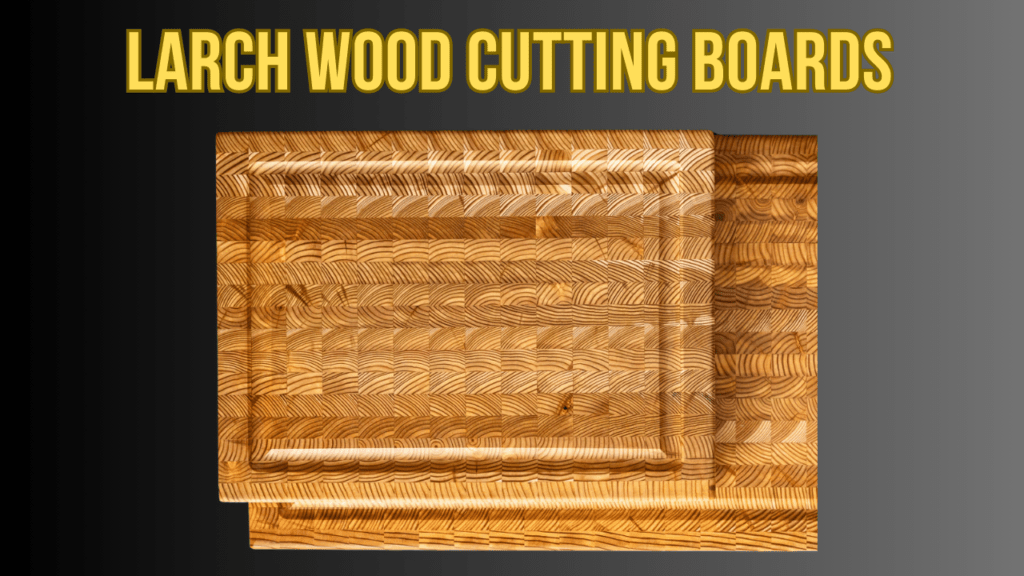
4. Beautiful Grain and Character
Larch’s grain patterns are visually striking—think golden tones, darker streaks, and ring patterns that create natural warmth. If you’re looking for a cutting board that doubles as a serving board, larch is an attractive choice.
5. Durable Like Hardwood, Yet Easier on Tools
Despite being classified as a softwood, larch behaves more like a mid-density hardwood. It resists dents and scratches better than you might expect, and high-quality larch end-grain boards can last for years with proper care.
End-Grain Larch Boards vs. Edge-Grain Boards
Both types exist, but they offer different benefits.
End-Grain Larch Boards
End-grain cutting boards—often known as “butcher block style”—show the ends of the wood fibers facing up.
Benefits:
- Superior knife-friendliness
- Self-healing surface (fibers close around cuts)
- Excellent durability
End-grain larch boards are considered premium and are often handmade.
Edge-Grain Larch Boards
These are made with boards glued edge-to-edge, showing long grain on top.
Benefits:
- More affordable
- Lighter weight
- Still resilient and stable
Both styles are good, but serious cooks and artisans tend to prefer end-grain.
How Larch Compares to Other Popular Woods
Larch vs. Maple
- Maple: harder, very stable, classic North American cutting board wood
- Larch: slightly softer but more moisture-resistant due to resin
Larch also has more natural antimicrobial properties than maple.
Maple Cutting Board: Benefits, Usage & Caring tips
Larch vs. Walnut
- Walnut: more premium, darker coloration, gentle on knives
- Larch: more affordable, lighter tone, higher moisture resistance
Larch is often a budget-friendly alternative to walnut.
Walnut Cutting Boards: Benefits, Comparisons & Care Tips
Larch vs. Bamboo
- Bamboo: extremely hard and can dull knives quickly
- Larch: more knife-friendly, naturally antimicrobial
Most chefs consider larch far superior to bamboo for actual food prep.
Pros and Cons of Larch Wood Cutting Boards
✔ Pros
- Naturally antimicrobial
- Moisture and warp resistant
- Gentle on knife edges
- Attractive grain and color
- Long-lasting when cared for
- Better pricing than many hardwoods
✘ Possible Cons
- Not as widely available in U.S. stores
- Slightly softer than maple (may show knife marks over time)
- Resin scent may be noticeable when new (usually fades quickly)
How to Care for a Larch Wood Cutting Board
Proper care dramatically extends the lifespan of any board. For larch:
1. Wash by Hand Only
No dishwasher. Rinse with warm water and mild soap, then dry immediately.
2. Oil Regularly
Use food-safe mineral oil or board conditioner. Larch absorbs oil well, which keeps it hydrated and protected.
3. Avoid Long Soaks
Excess water exposure can weaken glue joints and cause swelling.
4. Disinfect Safely
Use lemon and salt or a diluted vinegar solution. Avoid bleach.
5. Stand It Upright to Dry
Good airflow prevents moisture buildup.
Following these steps, a larch wood board can last years while still looking beautiful.
Is a Larch Cutting Board Worth It?
If you want a board that’s:
- Durable
- Moisture-resistant
- Naturally antimicrobial
- Knife-friendly
- Beautiful enough for serving
…then yes, a larch wood cutting board is absolutely worth it. It’s an excellent choice for home cooks who want something unique yet highly functional, and a solid alternative to more expensive hardwoods.
FAQ About Larch Wood Cutting Boards
Is larch wood safe for cutting boards?
Yes. Larch is safe, food-friendly, and naturally antimicrobial thanks to its high resin content.
Does larch make knives dull?
No. Larch is softer than many hardwoods, making it gentle on knife edges.
Does larch resist water?
Yes. The resins in the wood help it resist moisture better than typical cutting board woods.
Do larch boards need frequent oiling?
They should be oiled every 2–4 weeks, depending on usage.
Is larch better than bamboo?
For cutting boards, yes. Larch is less brittle, less likely to dull knives, and offers better natural antibacterial properties.