
Last Updated on March 3, 2026 by Sam Wood Worker
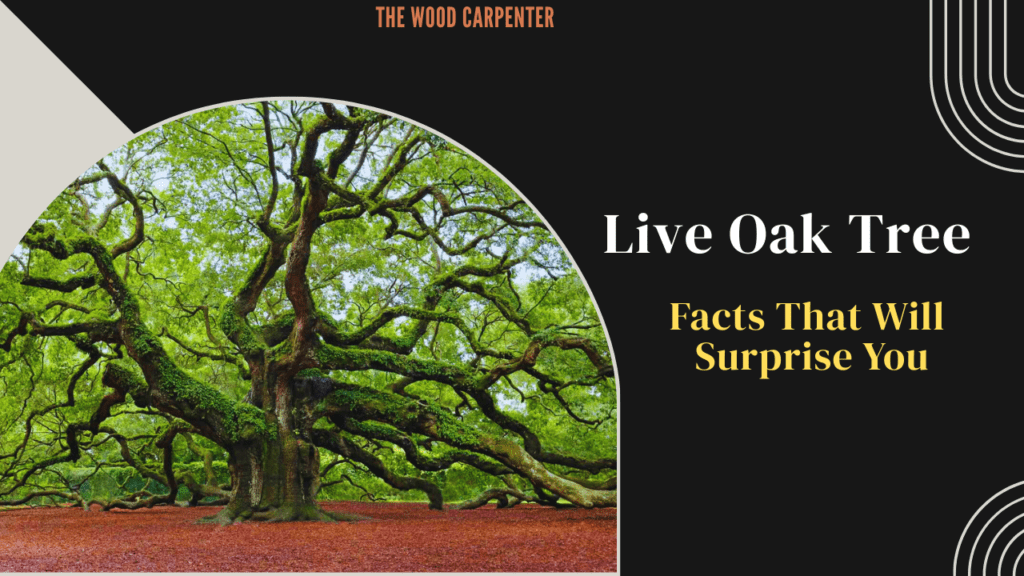
There are trees… and then there are live oaks.
Stand under one, and you immediately feel the difference. The branches stretch wide like open arms. The shade feels cool and deep. The trunk looks ancient, even when the tree is only a few decades old.
One of the most magnificent trees found in the southeastern United States is the southern live oak (Quercus virginiana). Durable, long-lasting, wind-resistant, and deeply embedded in American history and wildlife.
In simple, clear language, this guide merges everything you need know, whether you wish to plant one, identify one, or just understand why people love them so much.
Live Oak at a Glance (Summary Table)

What Makes a Live Oak Special?
Most oak trees lose their leaves in fall. Live oaks do not.
They stay green almost all year. That is how they got the name “live” oak — early settlers noticed these trees stayed alive-looking through winter while others went bare.
But the leaves are only part of the story.
A mature live oak often grows wider than it is tall. Imagine a tree 60 feet high spreading 100 feet across. The branches grow thick and horizontal, sometimes dipping toward the ground before curving back up. It creates a natural cathedral of shade.
In many Southern towns, streets are lined with live oaks draped in Spanish moss. Their presence gives neighborhoods character and history.
Where Live Oaks Naturally Grow
Live oaks are native to the southeastern United States. Their natural range stretches from southeastern Virginia down through Florida and west to Texas along the Gulf Coast.
They thrive in:
- Warm, humid climates
- Coastal plains
- Sandy or well-drained soils
- Areas with salt spray
They grow best in USDA Zones 7 through 10. They can handle brief cold snaps, but long periods below 10°F can damage them.
One reason they are so popular in coastal states is their wind resistance. Their deep roots and heavy wood help them survive hurricanes better than many fast-growing trees.
How to Identify a Live Oak
If you are trying to recognize one, look for these signs:
The leaves are small, oval, thick, and leathery — usually 2 to 5 inches long. They are dark green on top and lighter underneath. They do not have the deep lobes most oak leaves have.
The trunk is often short and thick. Large branches grow outward instead of straight up.
The bark is dark gray-brown and deeply furrowed on older trees.
Acorns are small, slender, and dark when mature.
If it is winter and the tree still has green leaves while other oaks are bare, there is a good chance you are looking at a live oak.
How Long Do Live Oaks Live?
Live oaks are extremely long-lived.
Most live 200 to 500 years. Some are believed to be older than that.
For example:
- Angel Oak in South Carolina is estimated to be 400–500 years old.
- Seven Sisters Oak in Louisiana has been estimated at over 1,000 years.
- Treaty Oak in Texas is believed to be around 500 years old.
When you plant a live oak, you are planting something that may outlive generations.
The Historical Importance of Live Oak
Live oak wood is extremely dense and strong. In early American history, it was one of the most valuable timbers in the country.
The famous warship USS Constitution, also known as “Old Ironsides,” was built using live oak. During battles, cannonballs reportedly bounced off its thick wooden sides.
The U.S. government even passed the Naval Stores Act of 1799 to protect live oak forests for shipbuilding.
This tree literally helped build American naval power.
Planting a Live Oak the Right Way
Planting a live oak is a long-term decision. This is not a small yard tree.
Before planting, make sure:
You have space. A live oak should be planted at least 15–20 feet away from buildings — more if possible. Their roots spread wide and can lift sidewalks or compete with lawns.
Choose a healthy young tree, ideally 4–6 feet tall from a good nursery.
Plant in full sun for best canopy shape.
Dig a hole twice as wide as the root ball but not deeper. The root flare should sit at ground level.
Water regularly for the first 2–3 years. After that, the tree becomes very drought tolerant.
Mulch 3–4 inches deep around the base, but do not pile mulch against the trunk.
Once established, they require very little maintenance.
Everyday Care in Simple Terms
Young trees need regular watering.
Mature trees mostly take care of themselves.
Pruning should be done carefully. In areas where oak wilt is present, avoid pruning during spring when the disease spreads most easily. Late fall and winter are safer.
Live oaks drop leaves in early spring — not autumn. So do not panic if you see a leaf shower around March. That is normal.
They also drop acorns in fall, which can feel messy — but wildlife loves them.
Also read:
Red Oak vs. White Oak: What’s the Difference and Which Is Better?
Common Problems to Watch For
Live oaks are tough, but no tree is invincible.
Oak wilt is a serious fungal disease that spreads through roots and fresh cuts. Avoid unnecessary pruning during high-risk months.
Anthracnose can cause leaf spots in wet springs but is rarely deadly.
Wet soil can lead to root rot.
The majority of issues occur when trees have undergone stress due to drought, soil compaction, or damage due to construction.
Healthy trees resist disease much better.
Wildlife and Environmental Benefits
A mature live oak supports hundreds of species.
Deer, squirrels, turkeys, and many other birds feed on acorns.
Songbirds nest in the thick branches.
Insects live in the bark and leaves, providing food for migrating birds.
Widespread rooting systems help inhibit soil erosion, especially along the coasts.
In neighborhoods, their shade lowers air temperatures and can reduce cooling costs in summer.
Planting a live oak is not just a matter of landscaping — it is habitat construction.
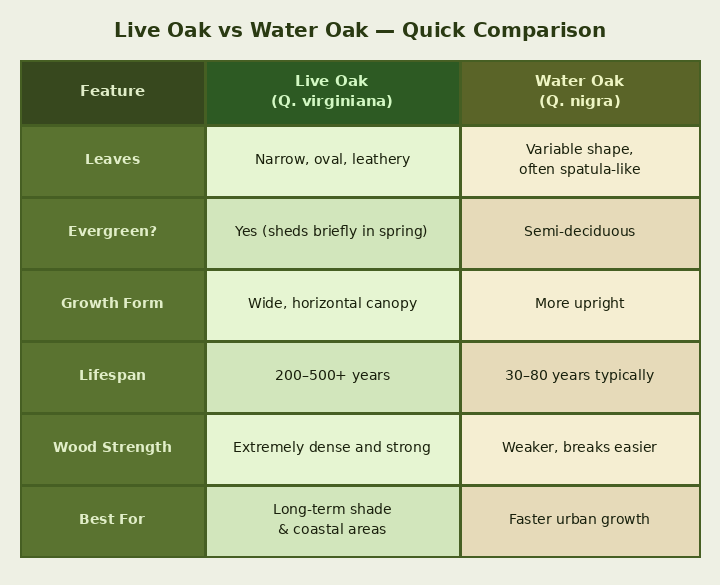
Live Oak vs Water Oak (Quick Comparison)
Frequently Asked Questions
How fast does a live oak grow?
Young trees grow about 1–2 feet per year. Growth slows as they mature.
Are live oaks messy?
They drop leaves in spring and acorns in fall. Surface roots can lift lawns. Many people feel the beauty is worth it.
Can they survive cold winters?
They tolerate short cold snaps but do not thrive in climates colder than USDA Zone 7.
Is live oak wood good firewood?
Yes. It burns hot and long because it is so dense.
Can live oaks grow in pots?
Only temporarily. They need open ground to reach full size.
Final Thoughts
A live oak is not a quick landscaping fix. It is a lifetime tree — and beyond.
Plant one today, and you are creating shade your grandchildren may sit under. You are adding wildlife habitat. You are planting history.
Few trees combine beauty, strength, longevity, and ecological value the way the Southern live oak does.
If you have the climate and the space, it may be one of the best long-term decisions you ever make for your land.