
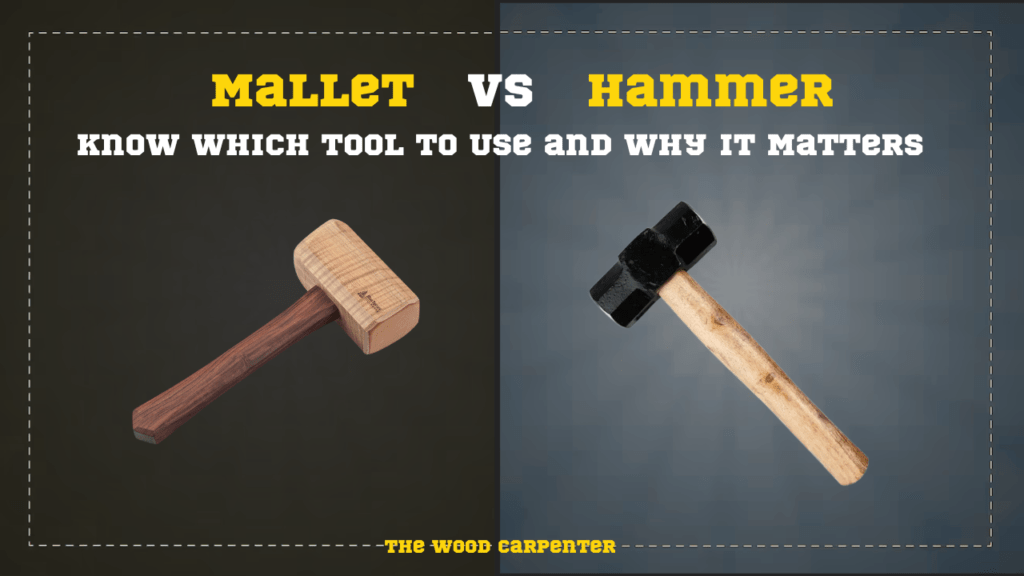
If you have ever found yourself inside a hardware store staring at hammers and mallets, you are not alone. At first glance, they appear similar. Both have a handle. Both are meant to hit things. But the wrong one can mess up your work, hurt your tools or even hurt you.
People learn this in the worst ways. A steel hammer and a wooden chisel handle can cause the wood to crush, split and make the chisel unsafe. A wooden mallet would’ve done the trick safely and soundly.
There’s a reason both of these tools exist side by side; and once you know the reason, your work will be smoother, safer and more pro.
The Hammer: Built for Power and Impact
A hammer is designed to deliver strong, focused force. Most hammers have a hardened steel head attached to a handle made from wood, fiberglass, or steel. The striking face is relatively small, which concentrates energy into a powerful blow.
This design makes hammers perfect for driving nails, breaking materials, shaping metal, and demolition work. The classic claw hammer, found in almost every home, drives nails efficiently and pulls them out just as easily using the curved claw on the back. Carpenters rely on it daily for framing, decking, and general construction.
Other hammer types serve more specialized roles. Ball-peen hammers are used in metalworking to shape steel, set rivets, and form curves in sheet metal. Sledgehammers take things even further, using massive weight and long handles to break concrete, drive stakes, and handle heavy construction jobs.
Good hammers are carefully heat-treated. The face remains hard enough to resist wear while the body can absorb shock. The cheapest hammers will skip this step entirely, causing chipped faces or mushrooming and sending sharp metal shards flying.
The Mallet: Control Without Damage
Mallets work differently. They are not made of hardened steel, but rather woods and rubbers or plastics, rawhide as well. This helps impact spread over multiple areas and protect the striking surface from damage.
Wooden mallet are a very popular choice in the woodworking shops. Their wide, flat faces are great for driving chisels, fitting joints and adjusting parts without leaving dents.
Rubber mallets are popular for use in functions such as furniture assembly, flooring installation, and tile work, this is because it will not de-laminate the surface of tiled floor.
Dead-blow mallets are a special type. Inside the hollow head is loose steel shot or sand. When you strike something, the weight moves forward, reducing rebound and delivering more energy into the object.
These are excellent for automotive work, machine adjustments, and precise positioning.
Rawhide mallets lie somewhere between wood and rubber. They are hard but not rigid, which is why jewelers and metalsmiths use them to work soft metals without hammer marks that have to be polished away.
Why the Material Difference Matters
The real difference between a hammer and a mallet comes down to hardness and energy transfer.
A steel hammer transfers energy quickly and directly. That is why it drives nails so efficiently. But that same focused force can crush wood fibers, crack delicate joints, or dent finished surfaces.
Mallets absorb and spread energy. The softer head compresses slightly on impact, reducing peak stress. This protects materials like wood, tile, leather, and finished metal.
Rebound is another key factor. Hammers tend to bounce off hard surfaces, which can waste energy and reduce control. Mallets bounce less, and dead-blow mallets almost eliminate rebound entirely, making them easier to control during precision work.
Where Each Tool Shines
Hammers dominate in construction and demolition. Framing walls, building decks, driving stakes, shaping metal, and breaking masonry all demand the force and durability of steel.
Mallets excel in woodworking and assembly. Driving chisels, fitting mortise-and-tenon joints, tapping boards into alignment, installing tile, or assembling furniture all benefit from the controlled force a mallet provides.
Trying to substitute one for the other usually ends badly. A hammer can destroy a chisel handle. A mallet can barely move a framing nail.
Hammer vs Mallet: Side-by-Side Comparison
| Aspect | Hammer | Mallet |
| Head Material | Hardened steel | Wood, rubber, plastic, rawhide |
| Force Style | Concentrated, high impact | Spread, controlled impact |
| Best For | Nails, metalwork, demolition | Chisels, assembly, delicate work |
| Surface Damage | High risk on soft materials | Very low risk |
| Rebound | Noticeable bounce | Minimal to none |
| Precision | Moderate | High |
Hammers handle most rough work. Mallets handle most precision work. Together, they cover nearly every striking task.
Handles, Comfort, and Control
Hammer handles are often longer to increase swing power. This helps drive nails faster but reduces fine control. Mallet handles are usually shorter and thicker, allowing for accurate, controlled strikes.
Wood handles absorb shock well but can dry out and crack over time. Fiberglass handles are durable and reduce vibration. Steel handles last the longest but transfer more shock to your hand.
Comfort matters more than many people realize. A well-shaped grip reduces fatigue and improves accuracy, especially during long work sessions.
Safety Comes First
Hammers can cause serious injuries if misused. Missed strikes can crush fingers, and flying debris from metal or masonry is a real hazard. Safety glasses should always be worn.
Mallets are generally safer, but they are not harmless. Repetitive use with poor technique can strain wrists and elbows. Loose heads on any striking tool are dangerous and should be fixed immediately.
With both tools, let the tool’s weight do the work. Avoid wild swings. Stay balanced, focused, and patient.
Choosing the Right Tools for Your Toolbox
For most people, owning both is the smart choice. A 16-ounce claw hammer covers everyday repairs and basic construction. A rubber or wooden mallet handles furniture assembly and woodworking tasks without damage.
Professionals often own several versions of each. Quality matters more than quantity. A well-made hammer or mallet can last decades, while cheap tools fail quickly and often dangerously.
Care and Maintenance
Hammers need occasional inspection. Remove burrs from the face, clean off stuck material, and oil wooden handles to prevent drying.
Wooden mallets can be resurfaced when damaged. Rubber mallets should be replaced once they harden or crack. Dead-blow mallets wear out over time and eventually need replacement.
Proper storage helps everything last longer. Hanging tools prevents handle warping and keeps striking faces in good shape.
Frequently Asked Questions
Can I use a hammer instead of a mallet for woodworking?
It is possible, but not recommended. Steel hammers damage wooden tools and surfaces. A mallet protects both your work and your tools.
Why do jewelers prefer rawhide mallets?
They shape metal without leaving marks, saving time and preserving surface quality.
What is a good weight for a first mallet?
A mallet between 16 and 24 ounces offers the best balance of control and power for general use.
Can dead-blow mallets drive nails?
No. They absorb energy and are not effective for fasteners.
Which tool is safer overall?
Mallets are generally safer due to softer impacts, but both require care and attention.
Final Thoughts
Hammers and mallets are not in competition. They are partners. Each was meant to address problems the other can’t. When you know how to use each one, your projects look better, your tools last longer and the work goes faster and feels more comfortable.
Using the right striking tool is one of the simplest upgrades you can make—and one of the most important.