
Last Updated on August 3, 2026 by Sam Wood Worker
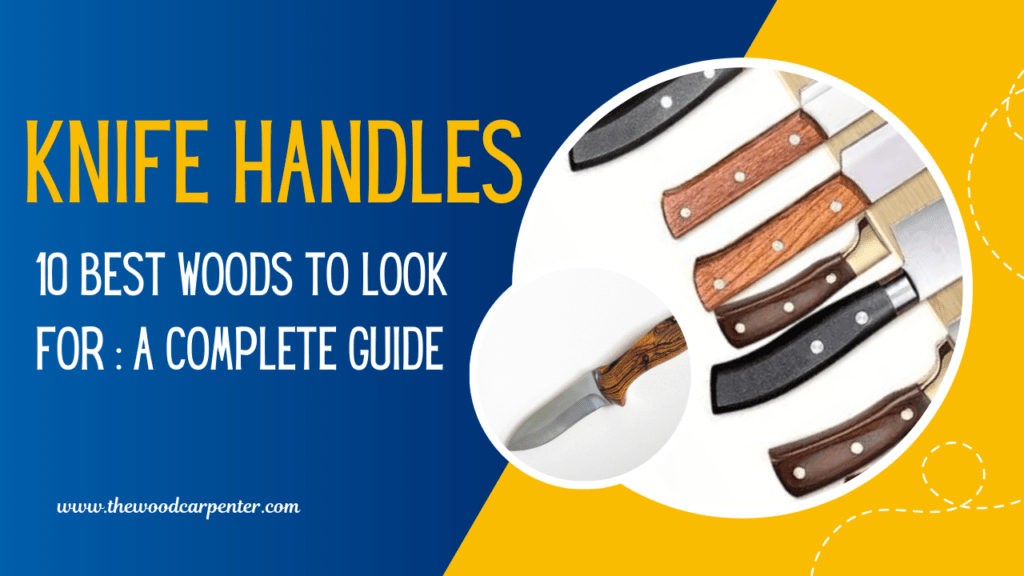
The best wood for a knife handle is a dense, stable hardwood that resists moisture and stays firm under daily use. The top choices are rosewood, cocobolo, oak, walnut, ebony, and African blackwood. Each one has a different feel, look, and price — and the right pick depends entirely on what the knife is for.
Key Takeaways
- Always use hardwood for knife handles — softwood is not strong enough
- The handle needs to be hard, stable, moisture-resistant, and comfortable to hold
- Cocobolo and African blackwood are the most durable options overall
- Oak and rosewood are the best value for everyday kitchen and working knives
- Walnut looks beautiful but is better for display pieces than heavy-use knives
- Exotic woods like ebony and desert ironwood cost more but look stunning
- Always finish the handle with a food-safe oil if the knife will be used in the kitchen
- Stabilized wood solves moisture problems in woods that are naturally porous
Why the Handle Matters More Than People Think
I picked up knife-making as a side project a few years ago. I started simple — a basic camp knife with a store-bought blade blank. I grabbed a piece of walnut from my scrap bin, shaped it, oiled it, and called it done.
It looked great on day one.
Six months later, that walnut handle had started to crack near one of the pin holes. It had been exposed to moisture too many times in a kitchen environment. The wood was too porous, too soft for that kind of daily use.
That mistake sent me down a rabbit hole learning about which woods actually survive the demands of real knife use. What I found surprised me.
The right handle material will complement the finished knife and add to its beauty and function. Choosing the appropriate wood type is essential for creating an effective and dependable knife. This decision influences both aspects of the knife’s production: the handle not only determines the knife’s functionality but also its aesthetic appeal and tactile experience.
The blade gets all the attention. But in terms of daily comfort and long-term performance, the handle matters just as much.
What Makes a Wood Good for Knife Handles ?
Before I give you the list, here is what to look for in any wood you are considering.
Hardness. The wood needs to be dense enough to hold its shape under regular grip pressure and impact. Hardwoods make the best choice for knife scales because they are durable. They can maintain thin sections and fine curves like flutes and finger grooves without chipping, splintering, or breaking.
Moisture resistance. A knife handle gets wet. Oil, water, food residue — it deals with all of it. Wood that absorbs moisture will swell, crack, or warp over time. Unstable wood could swell, shrink, warp, or even crack over time, compromising the integrity of your handle. It’s essential to choose naturally dense and stable woods.
Workability. You need to be able to shape, drill, and sand the wood without fighting it the entire time. Some very hard woods are a nightmare to work by hand.
Grip. Smooth wood can get slippery when wet. Grain texture and the right finish make a big difference in how securely a handle sits in your hand.
Appearance. A knife handle is also something you look at every time you use the knife. The color and grain pattern matter — especially for custom or display pieces.
The Best Woods for Knife Handles
1. Rosewood — Best All-Around Choice

If I had to pick one wood for a beginner to start with, it would be rosewood. It hits every mark — hardness, moisture resistance, beauty, and availability — without requiring expert skills to shape.
Rosewood is great for all things knives — kitchen knives, hunting knives, and ornamental knives. Because of its durability, it is best to choose it for knives used in day-to-day activities.
Indian rosewood is the most widely available variety and the one I recommend for most projects. It has a rich dark tone with subtle grain movement, and it takes an oil finish beautifully. It is also one of the more affordable options in the exotic hardwood category.
One thing to know: always wear a dust mask when sanding rosewood. The dust is irritating and can cause skin and respiratory reactions.
2. Cocobolo — Best for Durability and Looks
Cocobolo is arguably one of the most durable woods available — if not the most durable of all. It possesses natural resistance to a variety of factors, including insect damage. This wood is also suitable for both dry and humid environments, making knife handles made from cocobolo extremely long-lasting, no matter how frequently they are used.
The color is what first catches your eye — deep orange to red, with darker brown and black streaks running through it. On a well-made knife, a cocobolo handle looks almost too good to use.
But it is not just decorative. The natural resin content makes it highly water resistant. It holds its shape over time. And it feels substantial in the hand.
The challenge: Cocobolo is one of the most beautiful woods for knife handles. It is perfectly processed on a lathe and planed, but it is almost impossible to process manually due to its high hardness. The wood contains a lot of resins that provide shine when polished, but this makes gluing difficult.
If you want to dive deeper into cocobolo as a wood, we have a full breakdown in our cocobolo wood guide.
3. Oak — Best Budget Option
Oak gets overlooked in knife-making circles because it is so common. But common does not mean bad. Oak is one of the most reliable and workable woods for kitchen and hunting knife handles.
Oak is a highly popular choice for knife scales. It is affordable and results in a beautiful, durable, and stable handle. Because oak is so effortless to work with, artisan knifemakers will often add inscriptions or designs to the finished handle to boost its aesthetic value. Its unique combination of affordable price and resilient composition makes it an ideal choice for utilitarian projects like kitchen or hunting knives.
The light brown color is familiar and clean. It does not have the exotic drama of cocobolo, but it looks right on a working knife. If you want to know more about oak as a wood species, our red oak wood guide and oak wood overview cover everything in detail.
4. Walnut — Best for Display Pieces
Walnut is the wood that looks the best in photographs. The deep chocolate-brown color with subtle grain movement photographs beautifully and looks elegant in the hand.
Walnut has decent qualities as a knife material. It indeed has a luxurious appearance. However, the elegant appearance can easily break on the user if the demand is too much. The knife handles made from walnut maintain their lavish appearance best in not-so-humid environments.
My honest take after that cracked walnut handle experience: use walnut for knives that sit in a display or get used occasionally. For a kitchen knife that gets washed daily or a hunting knife that sees real outdoor use — choose something denser and more moisture-stable.
If you want to read more about walnut as a species, our guide to black walnut wood goes deep on its properties.
5. African Blackwood — Best for Hardness
African Blackwood is one of the hardest woods available. Known for its dark, rich color and fine grain, African Blackwood is perfect for knives with wooden handles due to its natural strength and ability to resist distortion. Its durability makes it a perfect wood knife handle for frequent use. The natural oils in the wood protect it from moisture, so the handle does not easily decompose or suffer structural damage even in humidity.
This is the premium option if you want the absolute hardest, most stable, most durable handle material. It is dense enough that it behaves almost like working with metal. The deep near-black color with fine grain is stunning.
The downside is price. African blackwood is one of the more expensive handle materials. For a full breakdown of this wood, see our African blackwood guide.
6. Ebony — Best for Luxury Custom Knives
Ebony is one of the most luxurious woods available for knife handles. Its deep black color and smooth finish make it a favorite for high-end knives. It is elegant in appearance, very hard and very durable — but very expensive and difficult to work with.
Ebony is not a wood for beginners or everyday kitchen knives. It is for the collector piece, the gift knife, the display item that someone will pass down through the family. If you are making something special and budget is not the first concern, ebony delivers a look and feel that no other wood matches.
Our detailed guide on ebony wood explains more about its properties and where to source it.
7. Desert Ironwood — Best for Outdoor and Hunting Knives
Desert ironwood is renowned for its exceptional hardness and density, making it a fantastic choice for crafting durable and reliable knife handles. It is incredibly durable, resistant to decay, and has a striking appearance with dark grain patterns that stand out. This wood does not shrink or expand much, which ensures the handle remains stable over time.
Desert ironwood is heavy in the hand — but in a satisfying way. It feels like quality the moment you grip it. For an outdoor knife or hunting knife that will get knocked around in a pack, this wood holds up better than almost anything.
The limitation is availability. Desert ironwood is not easy to source outside of specialty suppliers. We wrote more about its properties in our desert ironwood guide.
8. Bocote — Best for Exotic Appearance
Bocote is the one that makes people stop and stare. Bocote has an exotic yellowish color with a distinctive black striping, so it creates an impressive knife handle. It is also wear-resistant and can be used for a wide range of applications. However, it is as expensive as it is stylish, making it a better choice for custom or ornamental knives.
Those bold yellow-and-black stripes are completely natural. Every piece is different. If you want a handle that looks unlike anything anyone else has — bocote is the one. Learn more in our bocote wood guide.
9. Bloodwood — Best for Bold Color
Bloodwood has it all: gorgeous red color, silky feel, and wear resistance. It is a great exotic alternative to traditional oak, walnut, or rosewood, and works for kitchen knives, hunting knives, and showpieces. Just make sure to keep its color vivid through regular cleaning and oiling.
The deep red color of bloodwood is unlike any other natural wood. It does not look stained or treated — it is just genuinely that red. Our full breakdown of bloodwood covers its properties in depth.
10. Olive Wood — Best for Kitchen Knives
Olive wood brings a beautiful, warm grain pattern with pale yellow and darker brown swirls. Olive wood is famous for its spectacular grain, made up of yellow lines and dark brown swirls. It is a dense, hard wood naturally rich in oil, which gives it good resistance to humidity.
It looks stunning on kitchen knives especially. The natural oil content helps it resist moisture from repeated washing. And there is something satisfying about having an olive wood knife handle on a kitchen blade — it just feels like it belongs there. See our full olive wood cutting board guide to understand more about how this wood performs in kitchen environments.
Quick Comparison Table
| Wood | Hardness | Moisture Resistance | Workability | Best For | Cost |
| Rosewood | High | High | Easy | Everyday use, all knives | Moderate |
| Cocobolo | Very High | Very High | Difficult | Custom, display, outdoor | High |
| Oak | Medium-High | Medium | Very Easy | Budget kitchen/hunting | Low |
| Walnut | Medium | Low | Easy | Display, occasional use | Moderate |
| African Blackwood | Extremely High | Very High | Difficult | Premium working knives | Very High |
| Ebony | Very High | High | Difficult | Luxury/collector knives | Very High |
| Desert Ironwood | Extremely High | Very High | Moderate | Outdoor, hunting | High |
| Bocote | High | High | Moderate | Custom/ornamental | High |
| Bloodwood | High | Medium | Moderate | Display, show knives | Moderate |
| Olive Wood | Medium-High | High | Moderate | Kitchen knives | Moderate |
Practical Scenario: Choosing Wood for a Kitchen Chef’s Knife
You are making or buying a chef’s knife that will be used every day. It will get washed regularly, handled with wet hands, and set on a cutting board hard enough to feel the impact through the handle.
For this scenario, here is how I would rank the options:
First choice: Rosewood. The natural oil content resists moisture. It is hard enough to handle daily impact. And it costs a reasonable amount for the quality you get.
Second choice: Oak. Even more affordable, easy to grip with wet hands, and holds up beautifully under daily kitchen use. Not glamorous, but very capable.

Avoid: Walnut. Too porous for daily kitchen moisture exposure. It will develop cracks near the pins over time.
For cutting board pairing ideas and kitchen-safe wood knowledge, our guides on maple cutting boards and best food-safe oils for cutting boards give useful context for kitchen wood choices.
Practical Scenario: A Custom Hunting Knife
You want to build a hunting knife that goes into the field — rain, mud, blood, hard use. It needs to survive.
For this, go with cocobolo or desert ironwood. Both are extremely hard, naturally resist moisture, and hold up under impact. The handle will not crack or swell when it gets wet.
If cost is a concern, rosewood is still a solid choice for outdoor knives. It is not as bullet-proof as cocobolo, but it handles outdoor conditions well with a proper finish applied.
What About Stabilized Wood?
Stabilized wood comes up a lot in knife-making circles and deserves a clear explanation.
Stabilized wood is different from both hardwood and softwood. It goes through a process where it is dried and treated with chemicals. This process is called wood stabilization. The goal is to make the wood stronger and prevent defects.
A modern technique involves impregnating the wood with resin under vacuum, which makes it completely waterproof and inert to humidity variations. This is a perfect solution for using beautiful but naturally fragile woods, such as burls.
Stabilized wood is especially useful for burl pieces — maple burl, walnut burl, and similar figured woods that look spectacular but are naturally too porous or unstable for knife handle use. Stabilization takes care of the weakness while preserving the extraordinary visual character of the burl grain.
If you are interested in burl woods, our ambrosia maple guide and spalted maple article explain their unique properties and how to work with them.
How to Finish a Wooden Knife Handle
The finish you put on a knife handle is what protects it from moisture and daily wear. Get this step right and even a moderately good wood will last for years. Skip it, and even the best wood will eventually suffer.
For kitchen knives: Use a food-safe oil. Linseed oil or mineral oil are frequently used for a natural and food-safe finish, while varnishes and lacquers provide a more durable protective layer. These finishes not only shield the wood from environmental factors like humidity and water but also accentuate the wood’s grain patterns and colors.
Mineral oil is the easiest to find and the safest for food contact. Apply it every few months on kitchen knives — just rub it in, let it soak, wipe off the excess. Our mineral oil for wood guide covers exactly how to do this.
For outdoor and hunting knives: Tung oil or Danish oil gives a tougher, more water-resistant finish that penetrates deep into the wood. Our tung oil vs Danish oil comparison helps you decide which is right for your project.
For display or collector knives: A hard wax oil or thin coat of lacquer gives a rich, polished look that shows off the grain. See our wood finish basics guide and wood finishes 101 to understand all your options before you commit to a finish.
Sanding tip: Always sand progressively through the grits — starting coarse and finishing fine. Our guide on wet or dry sanding explains when to use each method, and our orbital sander secrets post is worth reading if you are doing this work regularly.
What About the Janka Hardness Scale?
If you keep seeing Janka ratings mentioned when researching knife handle woods, here is what they mean in simple terms.
The Janka hardness test measures how much force it takes to push a small steel ball halfway into a piece of wood. A higher number means a harder, more dent-resistant wood.
For knife handles, you generally want a Janka rating above 1,000 lbf. Most of the woods on this list easily exceed that. For context, our Janka hardness explained guide breaks down the whole scale in plain English if you want to dig deeper.
| Wood | Janka Hardness |
| African Blackwood | ~3,670 lbf |
| Desert Ironwood | ~3,260 lbf |
| Cocobolo | ~1,136 lbf |
| Ebony | ~3,000 lbf |
| Rosewood | ~1,370–2,440 lbf (varies by species) |
| Oak | ~1,290 lbf |
| Walnut | ~1,010 lbf |
| Olive Wood | ~2,700 lbf |
Common Mistakes When Choosing Knife Handle Wood
Using softwood. Pine, spruce, and similar softwoods are not suitable for knife handles. They dent too easily and absorb moisture. Always go hardwood. Our guide to different types of wood explains the difference clearly.
Choosing wood based only on looks. A wood can look beautiful and still be wrong for the job. Walnut in a daily-use kitchen knife is a good example of this mistake.
Skipping the finish. Even naturally oily woods benefit from a proper finish coat. Skipping it shortens the handle life significantly.
Not accounting for the knife’s use. A display knife can use almost any beautiful wood. A hunting knife or kitchen knife has to survive daily contact with moisture and impact. Match the wood to the real-world demands.
Not wearing protection when sanding. Rosewood, cocobolo, and African blackwood all produce dust that can cause skin and respiratory irritation. Wear a proper mask and gloves — not just a thin paper dust mask. See our tips on wood working techniques for safe shop practices.
FAQ
What is the best wood for a knife handle overall?
Rosewood is the best all-around choice for most people. It is hard, moisture-resistant, beautiful, and reasonably affordable. For maximum durability, cocobolo or African blackwood are better — but they cost more and are harder to work with.
Is walnut good for knife handles?
Walnut is beautiful but not ideal for knives that get regular use in wet conditions. It is better for display pieces or occasional-use knives kept in dry environments.
Can I use oak for a knife handle?
Yes, oak is an excellent and affordable choice. It is stable, workable, and durable enough for both kitchen and outdoor knives.
What is the hardest wood for knife handles?
African blackwood is one of the hardest, with a Janka rating over 3,600 lbf. Desert ironwood and ebony are also exceptionally hard.
Do I need to stabilize wood for knife handles?
Not always. Dense hardwoods like rosewood, oak, and cocobolo do not need stabilization. Softer or more porous woods — especially burls — benefit greatly from stabilization to prevent cracking and moisture absorption.
What finish should I use on a wooden knife handle?
For kitchen knives, use food-safe mineral oil or pure tung oil. For outdoor knives, tung oil or Danish oil is a good choice. For display pieces, a hard wax oil or thin lacquer coat works well.
Is cocobolo safe to work with?
Cocobolo dust is a known allergen. Always wear a proper respirator mask and gloves when sanding or shaping cocobolo. The finished handle is safe to use — it is the dust from working it that causes irritation.
What wood is used for Japanese kitchen knife handles?
Traditional Japanese knives often use ho wood (magnolia) for the handle because it is lightweight and does not slip. For Western-style handles on Japanese blades, rosewood and ebony are popular choices.
Final Recommendation
After making several knife handles and learning from a few mistakes along the way, here is my honest advice:
For your first project or a working kitchen knife — use rosewood or oak. They are affordable, forgiving to work with, and they perform extremely well in daily use.
For a hunting or outdoor knife — step up to cocobolo or desert ironwood. The extra durability is worth it for a tool that faces real outdoor conditions.
For a showpiece or gift knife — ebony, African blackwood, or bocote will make something that genuinely stops people in their tracks.
No matter which wood you choose, finish it properly and maintain it with regular oiling. A wooden knife handle that is well cared for does not just last for years. It gets better with use — darkening, smoothing, and developing a character that no synthetic material can match.
The handle is where your hand lives on a knife. It deserves the same care you put into choosing the blade.