
If you’ve spent any time exploring exotic hardwoods, whether for woodworking, furniture-making, outside structures or even higher end firewood, you’ve likely heard of Mopane wood.
Mopane is renowned for it’s incredible density, intense hardness and deep red-brown coloring; in terms of durability and beauty, Mopane runs very close to African Blackwood.
This guide will cover everything you need to know about Mopane: what it is, the pros and cons, its uses, concerns around sustainability (if any), and if it’s worth choosing over more traditional hardwoods.
I aim to help you decide, based on real-world performance, whether Mopane is the right material for your next project.
What Is Mopane Wood?
Mopane (pronounced mo-PAH-nee) comes from the Colophospermum mopane tree, a leguminous species native to the hot, dry savannas of southern and south-central Africa. These trees grow in regions such as Namibia, Botswana, Zimbabwe, Angola, northern South Africa, Mozambique, Zambia, and Malawi. Depending on climate and soil type, Mopane may appear as:
- A tall hardwood tree up to 20–30 meters in height
- A shorter “scrub” form, often due to elephant browsing and poor soil conditions
Regardless of size, the wood itself is remarkably dense, heavy, and durable. Mopane wood has historically been used by local communities for fuel, poles, fencing, tools, and cooking, but is also prized by woodworkers, instrument makers, and firewood suppliers around the world.
Appearance: A Beautiful, Distinctive African Hardwood
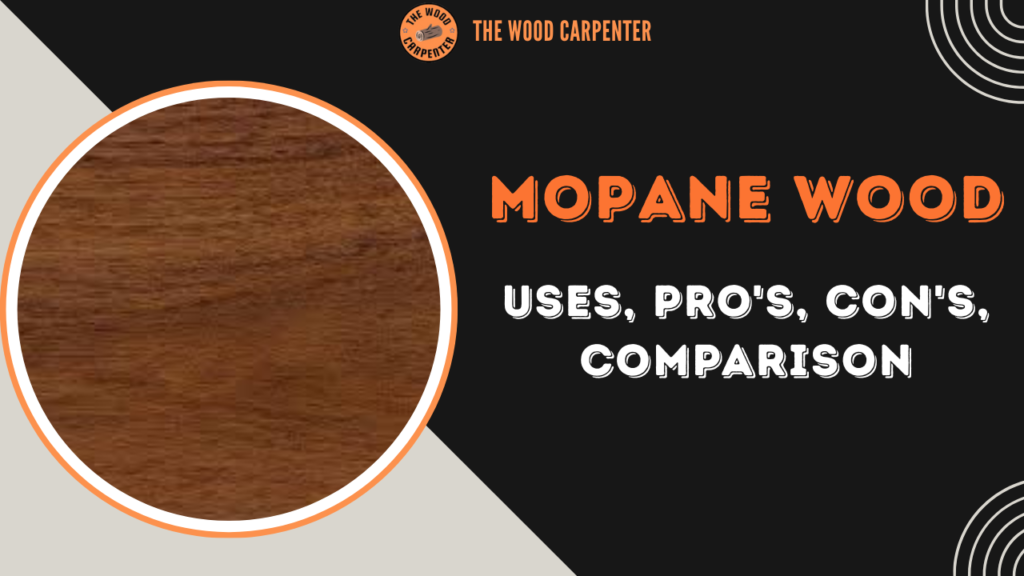
One of Mopane’s standout traits is its deep natural color. The heartwood typically ranges from:
- Medium reddish-brown
- Dark chocolate brown
- Sometimes with rich black streaks
Over time, the wood gently darkens, gaining a warm, luxurious patina. The sapwood contrasts sharply with the heartwood, often showing a pale yellowish tone.
Texture & Grain
- Fine, even texture
- Interlocked grain, which can create interesting figure
- Natural luster, giving finished pieces a smooth, polished look
This makes Mopane highly attractive for fine woodworking, high-end instruments, and decorative turned items.
Density & Hardness: What Makes Mopane Almost “Stone-Like”
Mopane is considered one of the densest commercially available hardwoods in the world. For perspective:
- Density: ~1,075 kg/m³ (67 lb/ft³ at 12% moisture)
- Janka Hardness: ~3,390 lbf
- Modulus of Rupture: ~114 MPa
- Crushing Strength: ~70 MPa
These numbers put Mopane well above many prized hardwoods such as:
And it rivals or surpasses species like African Blackwood and Lignum Vitae in durability.
To put it bluntly: this wood is tough. It will dull steel tools, shrug off decay, and resist termites like few species can.
Durability: Almost Unmatched in Outdoor & Heavy-Duty Use
The density and natural extractives in Mopane give it extraordinary durability. It is:
- Highly resistant to rot
- Unusually resistant to termites and wood-boring insects
- Stable during drying, with low shrinkage
- Naturally protected from fungal decay
This is why Mopane has historically been used for:
- Fence posts
- Poles
- Long-lasting roof supports
- Outdoor structures
- Heavy construction
In many rural African communities, Mopane posts remain standing for decades without treatment.
The Ultimate Guide to Woodworking: Types of Wood
Workability: Amazing Results, But Not for Beginners
Because of its density, Mopane is not a “grab-and-go” wood for hobbyists. While the finish can be incredible, the journey to get there takes patience.
Challenges
- Dulls knives, saws, and chisels quickly
- Difficult to hand-plane
- Burns easily during cutting if blades aren’t sharp
- Can be tiring to work with due to sheer weight
Advantages
- Turns exceptionally well with sharp carbide tools
- Sands to a silky finish
- Accepts oil and polish beautifully
- Produces a stunning mirror-like surface when buffed
For high-end turnings, musical instruments, and luxury furniture accents, Mopane is a dream—if you have the right tools.
Top Uses of Mopane Wood
Because of its unique blend of hardness, beauty, and stability, Mopane is used across a wide range of industries.
1. Fine Woodworking
- Luxury furniture components
- Drawer pulls, turned legs, knobs, inlays
- High-end decorative objects
2. Musical Instruments
Mopane is loved by makers of:
- Woodwind instruments (clarinets, oboes, bagpipes)
- Flute headjoints
- African traditional instruments
It has a tonal profile similar to African Blackwood, sometimes with better availability.
3. Turned Objects
Its density makes Mopane ideal for:
- Bowls
- Pens
- Handles
- Jewelry
Turners appreciate the way it polishes and how it resists tear-out.
4. Outdoor Applications
Because of its decay resistance, Mopane remains a trusted choice for:
- Fence posts
- Outdoor furniture components
- Structural poles
5. Firewood & Charcoal
In Africa, Mopane is considered a premium firewood:
- Produces long-lasting coals
- Burns extremely hot
- Generates minimal smoke
- Creates an excellent cooking bed for grilling (“braai”)
This long, stable burn has made Mopane wood a staple for cooking in southern African homes for generations.
How Does Mopane Compare to Other Firewoods ?
For U.S. readers, a useful comparison is with familiar species:
| Wood Type | Heat Output | Smoke | Coal Quality | Ease of Splitting |
| Mopane | Extremely High | Very Low | Exceptional | Difficult |
| Hickory | High | Low | Very Good | Moderate |
| Oak | High | Low | Good | Moderate |
| Mesquite | Very High | Low | Good | Moderate |
| Pine | Low | High | Poor | Easy |
If your primary use is cooking or smoking meat, Mopane performs almost like a blend of mesquite’s heat with oak’s stability, while producing even cleaner coals.
Sustainability & Ethical Sourcing: What U.S. Buyers Should Know
Because Mopane grows in specific, often fragile ecosystems, there are real concerns about:
- Overharvesting
- Habitat degradation
- Slow regrowth in some regions
- Elephant browsing reducing tree height and health
Some areas produce tall, high-quality Mopane trees, while others are dominated by stunted “scrub” Mopane, which makes sourcing large logs difficult.
Responsible Sourcing Matters
If you are buying Mopane wood in the United States, look for:
- Suppliers who follow sustainable harvesting guidelines
- Importers who work with Namibian or Botswanan conservation-minded sources
- FSC-certified products when available
- Documentation showing legal export
Because demand is rising worldwide, reputable sourcing is essential to protect Mopane woodlands and the wildlife that depends on them—including the mopane worm, an ecologically important species.
Is Mopane Wood Worth It? (Honest Answer)
Yes—if you need what it offers.
Choose Mopane if you want:
- A hardwood that will last for decades
- Stunning deep colors and fine texture
- A premium material for turning or instruments
- Firewood that produces long-lasting, high-heat coals
- A rot-resistant, insect-proof wood for outdoor use
- A durable alternative to African Blackwood
Avoid Mopane if you want:
- An easy-to-work beginner wood
- A budget-friendly option
- A lightweight species
- A wood that planes easily by hand
For the right project, Mopane is exceptional—almost in a league of its own.
FAQ: Mopane Wood
Is Mopane wood good for furniture?
Yes. Its durability and rich color make it excellent for fine furniture, though its hardness means you need sharp tools and patience during fabrication.
Is Mopane better than teak or oak?
For rot and termite resistance, Mopane outperforms both. For ease of workability, teak and oak are much easier to machine. It depends on your priorities.
Can you use Mopane for smoking or grilling?
Absolutely. Mopane is considered one of the best cooking woods in southern Africa. It burns hot, clean, and leaves long-lasting coals—ideal for smoking meats or grilling.
Is Mopane wood sustainable?
It can be, but not all sources follow sustainable harvesting practices. Look for ethical suppliers and certifications when possible.
Why is Mopane so heavy?
Its extremely dense cell structure, high specific gravity, and natural oils contribute to a weight that often exceeds the density of water. This also gives it exceptional durability.
Does Mopane crack easily when drying?
Surprisingly, no. It has relatively low volumetric shrinkage compared to many hardwoods, making it more stable during drying than woods of similar density.
Final Thoughts
Mopane wood is not your average exotic hardwood – as one of the highest performing natural materials available on the market, it combines unparalleled strength with a rare beauty.
If you’re a woodworker, BBQ aficionado, instrument maker or homeowner in the market for outdoor wood that will last a lifetime and probably longer, Mopane just may have characteristics that no other species can boast.
When sourced responsibly Mopane is an amazing wood – it offers longevity, stability and a rich natural character to the owner.