
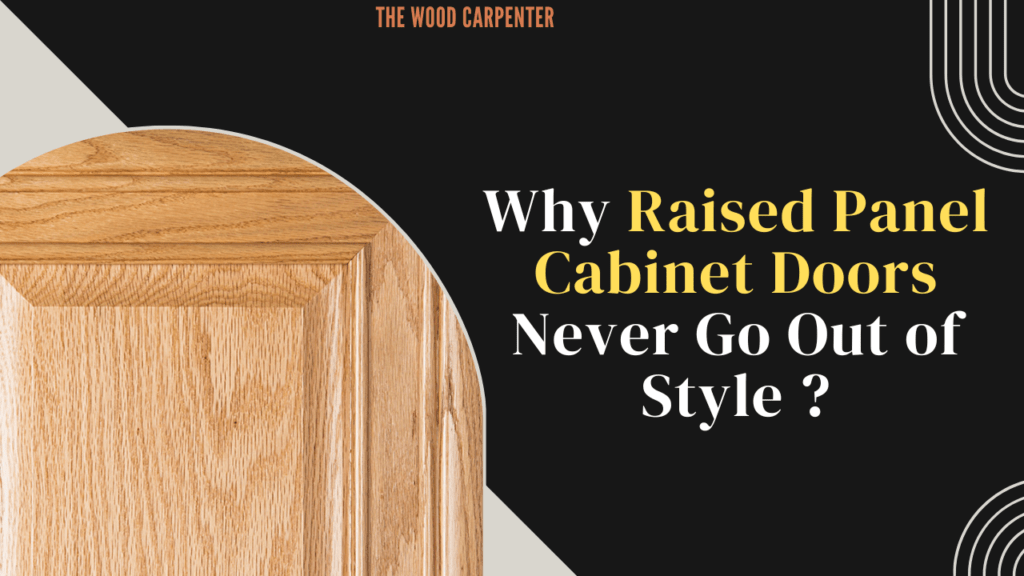
You’d think that picking out cabinet doors would be the quick and easy part of a kitchen remodel but it is one choice you’ll have to live with for years. When you enter a warm, traditional kitchen that feels like homey and appealing to the senses, you’re seeing raised panel cabinet doors. We have been using them for years and that’s because they work and they last.
I went to a cabinet showroom ages ago and stood in front of many door styles. The flat doors looked clean, but also a bit dull. And then I touched a raised panel door. It felt strong and well made. It was well-formed and detailed enough to stand out.
That moment made me want to learn more. I made mistakes, learned from them, and slowly understood why people love these doors. This guide shares that experience, whether you are updating your kitchen, changing old doors, or thinking about making your own.
Let’s break it down.
What Exactly Is a Raised Panel Cabinet Door?
A raised panel door is built from a frame and a center panel. The frame is made from four pieces: two vertical stiles and two horizontal rails. Inside that frame sits the center panel, which is thicker in the middle and slopes or profiles down toward the edges. That “raised” center is what gives the door its depth and shadow lines.
The panel is not glued solidly into the frame. Instead, it floats inside grooves, allowing the wood to expand and shrink with seasonal humidity changes. This is why well-made raised panel doors last decades without cracking or warping.
Profiles can be simple or decorative. Some have gentle bevels, while others feature cathedral arches or stepped edges. The deeper and more detailed the profile, the more traditional and formal the door looks.
Why Raised Panels Still Matter Today
Raised panel doors aren’t just about looks. Their construction is actually smarter than many modern alternatives.
The frame keeps the door straight over time. A wide, flat slab of wood can twist or cup, but a framed door resists movement. The floating panel design prevents splitting, especially in climates with changing humidity.
They also age better. Small dents, scratches, and daily wear are far less noticeable because light doesn’t reflect evenly across the surface. Flat doors show everything. Raised panels forgive a lot.
And when damage does happen, solid wood raised panel doors can be repaired, sanded, and refinished—sometimes multiple times.
Raised Panel vs Flat Panel Cabinet Doors
Here’s a simple comparison to help you decide what suits your space and lifestyle best.
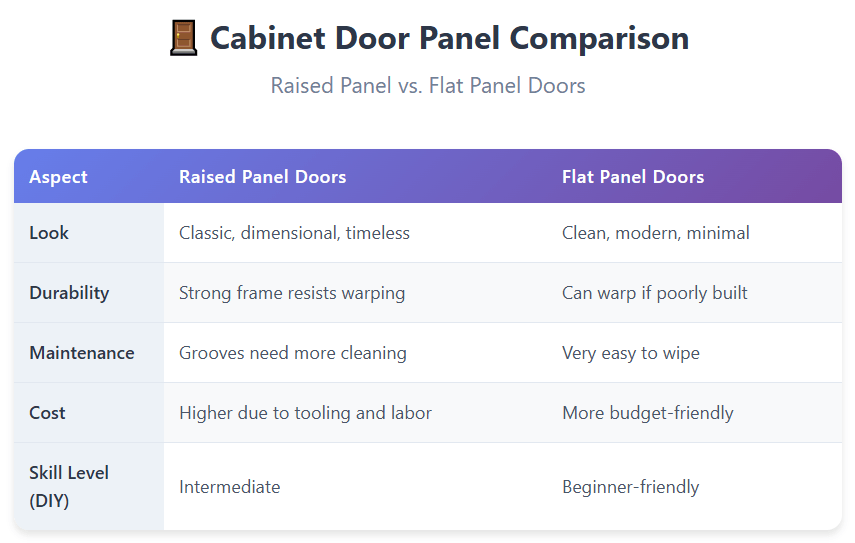
Raised panels win when you want warmth and long-term value. Flat panels shine in sleek, modern spaces or quick renovations.
Materials That Make the Difference
The wood you choose changes everything.
Maple is smooth and perfect for paint. Cherry darkens beautifully over time and feels rich and classic. Oak has bold grain that screams traditional charm. Walnut brings deep, modern elegance.
For painted doors, poplar or MDF panels are often used. MDF paints incredibly smooth and stays stable, but it can’t be stained. Solid wood panels look authentic but move more with humidity.
Quality doors usually use solid wood frames with either solid wood, plywood, or MDF center panels depending on the finish.
How Raised Panel Doors Are Made (Factory or DIY)
Whether made in a professional shop or a home garage, the process follows the same logic.
The frame pieces are cut precisely, most often joined using cope-and-stick or mortise-and-tenon joinery. Mortise-and-tenon is the strongest and used in high-end doors, while cope-and-stick is faster and very reliable with modern router bit sets.
The center panel is shaped using a raised panel bit. This removes material from the edges, leaving the center thicker. It’s done in multiple shallow passes to avoid burning or tear-out.
Modern CNC machines now handle much of this work, making raised panel doors more affordable without sacrificing consistency. Still, hand-built doors remain unmatched for customization and craftsmanship.
Tools You’ll Need If You’re Building Your Own
You don’t need a full professional shop, but accuracy matters.
A router table is essential, along with matched rail-and-stile bits and a raised panel bit. Clamps keep everything square during glue-up. A table saw helps rip clean, straight stock. Featherboards and test cuts save fingers and frustration.
One door can take a few hours once you’re comfortable. Batch work makes a huge difference.
Finishing Makes or Breaks the Door
Finishing is where patience pays off.
Stained doors need careful sanding because stain highlights every flaw. Painted doors need proper priming to prevent bleed-through and uneven texture.
Always pre-finish the panel edges before assembly. When wood shrinks slightly in dry seasons, you won’t see raw lines appear in the grooves.
Factory finishes last longer, but DIY finishes can look incredible when done slowly and correctly.
Installation and Hardware Tips
Raised panel doors are heavier than flat ones, so hinges matter. Soft-close European hinges are popular for a clean look and easy adjustment. Traditional exposed hinges suit classic kitchens beautifully.
Handle placement depends on style, but raised panels make it easier because there’s solid wood behind most mounting points.
After installation, expect small seasonal adjustments. This is normal wood behavior, not a defect.
Cleaning and Long-Term Care
You can clean as it comes dirty: with a damp cloth and mild cleaner, every day. Avoid soaking the grooves.
Once or twice annually, clean it on the deeper side to rid of grease buildup. Maintain indoor humidity levels between 35% and 55% to help protect the wood.
With basic upkeep, a raised panel door can easily endure for 25–30 years — and far beyond that if you keep refinishing it.
Are Raised Panel Doors Still in Style?
Absolutely. The one thing that has changed is how they’re used.
Today’s designs favor simpler profiles, matte finishes, and cleaner lines. Raised panels now blend beautifully into transitional and even modern kitchens when paired with the right colors and hardware.
Trends come and go, but solid construction never goes out of style.
Final Thoughts
Raised panel cabinet doors aren’t just a design selection for your cabinets, but an investment that will pay off for years. They add depth, warmth and durability few other looks can rival. Whether you purchase, refinish or construct these pieces yourself, understanding how they work enables you to make better choices.
If you crave a kitchen that feels sturdy, inviting, and stands the test of time every morning when you walk into it, raised panel doors are hard to beat.