
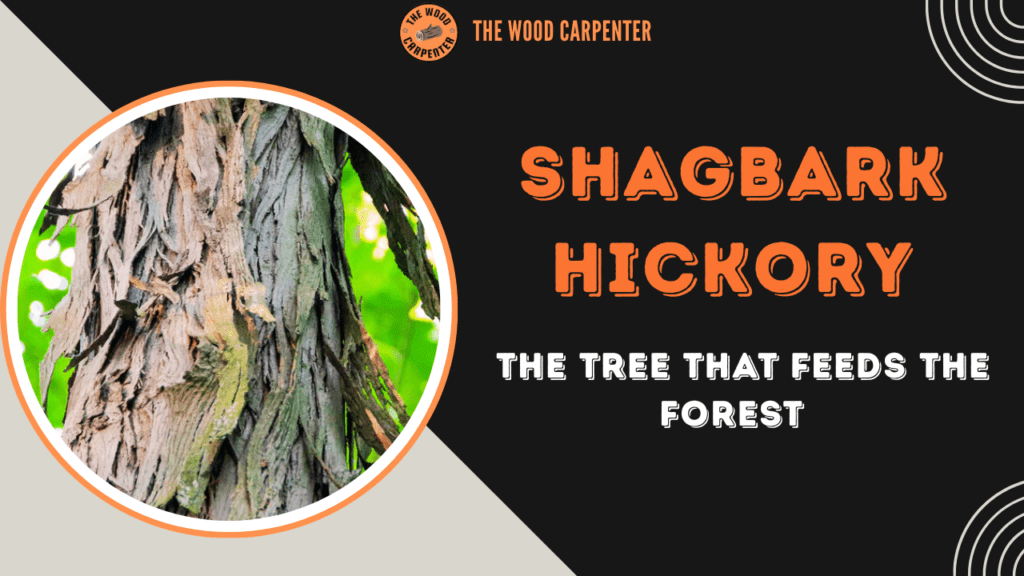
Walk through an old forest in the eastern United States and you might see a tree that looks like it’s wearing a rough, peeling coat. Long strips of bark curl away from the trunk, hanging loose like wooden ribbons. That unforgettable tree is the Shagbark Hickory.
It’s not just beautiful. This is a tree that nourishes wildlife, produces tasty nuts, yields some of the hardest wood in North America, and lives for centuries. It is something that a lot of people go past, unaware of its worth, but once you know it, you will never look at it in the same way again.
What Is Shagbark Hickory ?
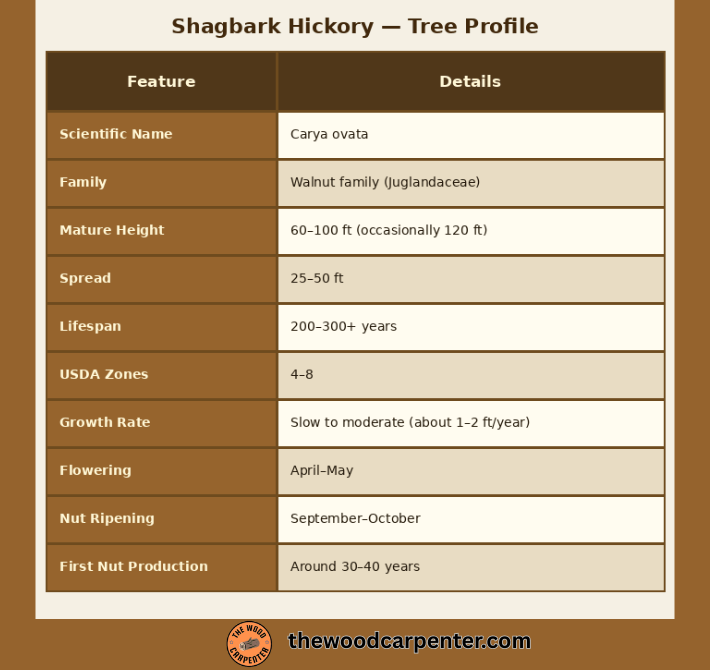
Shagbark hickory (Carya ovata), a large native deciduous tree of the walnut family Sometimes it can grow 60 to 100 feet tall, even more under perfect conditions. The crown extends wide making it very shady, and the tree lives for 200 to 300 or more years.
The name “hickory” comes from a Native American word describing a nutritious food made by pounding hickory nuts into a rich drink or paste. For centuries, Indigenous communities relied on these nuts as an important food source. Early settlers later depended on the tree for tools, fuel, and building materials.
Today, shagbark hickory is appreciated for its beauty (especially the unique, shaggy bark), wildlife (the edible nuts are loved by squirrels and other small mammals), edible nuts, and supplementary timber (it is among the strongest wood available).
Quick Facts at a Glance
How to Identify Shagbark Hickory
Once you see a mature shagbark, identification becomes easy.
Bark
The most obvious feature is the bark. On mature trees, thick gray plates peel away from the trunk and curl outward. Young trees start with smoother bark, but the shaggy look develops with age. This peeling bark is unique and visible even from a distance.
Leaves
Leaves are compound and usually have five leaflets (sometimes seven). The middle three are larger than the outer two. When crushed, they sometimes give off a mild nutty or peanut-like scent. In fall, the leaves turn a warm golden yellow.
Nuts
The nuts are round to oval and about 1.5 to 2 inches long. The outer husk splits into four sections when ripe. Inside is a thin shell and a sweet, rich kernel that tastes similar to pecans.
A simple field tip:
Shagbark usually has five leaflets and shaggy bark, while look-alike hickories often have more leaflets or smooth bark.
Where Shagbark Hickory Grows
Shagbark hickory grows naturally across much of eastern North America, from southern Canada down to the southern United States and west toward Iowa and Texas.
It prefers:
- Well-drained, fertile soil
- Moist slopes, upland woods, or forest edges
- Full sun for best growth (though young trees tolerate some shade)
In northern areas, it often grows on upland slopes. In southern regions, it may appear near river bottoms or richer soils. You’ll usually see it mixed with oaks, maples, and other hardwoods rather than forming pure stands.
Why Wildlife Loves This Tree
If you want a tree that supports nature, shagbark hickory is one of the best choices.
The nuts provide high-energy food for:
- Squirrels and chipmunks
- Deer and black bears
- Rabbits and foxes
- Wild turkeys and ducks
The peeling bark creates natural hiding places. Several bat species use these spaces as daytime shelters. Birds such as woodpeckers and owls nest in cavities, and many insects live under the bark or feed on the leaves.
In real life, a single mature tree can become a small wildlife apartment complex. That’s why conservation groups often recommend protecting older shagbarks whenever possible.
The Wood: Strong, Tough, and Reliable
Shagbark hickory wood is famous for its strength and shock resistance. It bends without breaking and handles repeated impact better than most hardwoods.
Common uses include:
- Tool handles (axes, hammers, picks)
- Ladder rungs and dowels
- Flooring and furniture
- Sports equipment and drumsticks
- Firewood and charcoal
- Smoking meats
If you’ve ever tasted traditional American barbecue with a deep smoky flavor, there’s a good chance hickory wood was involved.
Edible Nuts: Flavor and Nutrition
Shagbark nuts are considered the best-tasting of all hickory species. The kernels are sweet, buttery, and easy to crack compared to other hickories.
Each ounce provides roughly:
- About 180 calories
- Healthy fats (including omega-3 and omega-6)
- Protein
- Magnesium, vitamin E, and B-vitamins
They’re great for snacking, baking, trail mix, or making nut butter.
Harvest tips:
Collect nuts in fall after they drop and the husk splits. Let them dry, then store in a cool place. Roasting at a low temperature brings out their flavor.
Historically, Native American communities used the nuts to make a rich soup or drink called kanuchi.
A Unique Treat: Shagbark Hickory Syrup
Unlike maple syrup, this specialty syrup is made from the bark, not the sap. The bark is roasted, soaked in water, and sweetened to create a smoky, caramel-like syrup. It’s rare but prized by chefs and foragers.
Planting and Growing Shagbark Hickory
This is a tree for long-term thinkers. It grows slowly and develops a deep taproot early, which makes transplanting difficult.
For best results:
- Plant in full sun
- Choose well-drained soil
- Give at least 40–50 feet of space
- Water deeply during the first year or two
After establishment, the tree becomes drought tolerant and low maintenance. Nut production usually begins after about 30–40 years, but the shade, beauty, and wildlife value come much earlier.
Pests and Diseases
Healthy trees rarely have serious problems, but stress from drought or poor soil can invite issues such as:
- Hickory bark beetles
- Nut weevils or shuckworms
- Leaf spots or anthracnose
- Twig girdlers
Good placement, proper watering during dry periods, and minimal disturbance keep the tree strong.
Shagbark vs. Other Hickories
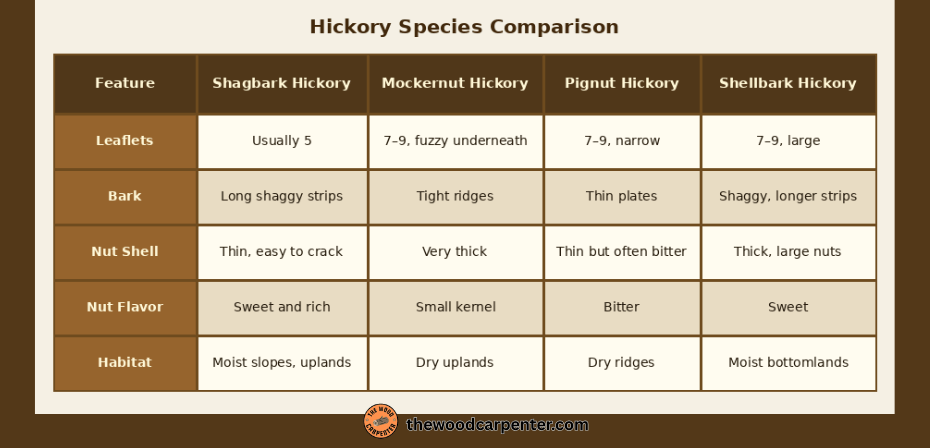
The peeling bark and five leaflets make shagbark easy to recognize.
Frequently Asked Questions
Are shagbark hickory nuts edible?
Yes. They are sweet, nutritious, and widely considered the best-tasting wild hickory nuts.
How fast does shagbark hickory grow?
Slowly. Expect about 1–2 feet per year under good conditions.
Is it good for wildlife?
Excellent. Few native trees support as many mammals, birds, insects, and bats.
How big does it get?
Most trees reach 60–100 feet tall with a wide canopy, so it needs plenty of space.
What’s the difference between shagbark and mockernut?
Shagbark has peeling bark and five leaflets. Mockernut has tight bark and 7–9 fuzzy leaflets with very thick-shelled nuts.
Shellbark Hickory: Know all about the Mighty Kingnut Secret
Why Pignut Hickory Is Stronger Than You Think
Why This Tree Matters
Shagbark hickory is not a fast landscaping tree or a quick reward. It’s something bigger than that. It’s a tree that feeds animals for decades, shelters bats and birds, provides shade for generations, and still stands strong centuries later.
Planting one is a long-term gift. And even if you never plant one, the next time you see a tree with that wild, peeling bark, you’ll know you’re looking at one of the most hardworking and valuable native trees in the forest.